Linear Electric Actuators for Smooth and Reliable Motion
A clean build is easy to admire. A build that behaves predictably is harder to forget. In custom cars and trucks, moving parts show up everywhere, from hidden storage panels and tonneau sections to seat bases, service hatches, and interior features that need to open, close, and stop in the same place every time. When motion is inconsistent, the issue is rarely “the idea.” It is the execution. Hinges flex. Gas struts drift. Manual latches get forced when hands are full. Over time, even a well-fitted panel starts to feel temperamental. That is where controlled linear motion becomes practical. It brings repeatable travel, a defined stop, and the option to package movement in tight spaces without turning the project into a science fair.
Where Controlled Motion Shows Up in Real Builds
A lot of the best mechanical details on show vehicles are the ones most people never notice at first glance. Flush panels that lift without scraping paint. A trunk floor that rises to expose wiring and air management without turning into a wrestling match. A bedside compartment that opens to the same angle so it does not collide with a roll bar or a hinge brace. These are small moments that make a build feel intentional. They also save time in the garage because access points stay usable after the novelty wears off.
Linear motion fits especially well in places where the load is awkward rather than heavy. Think of a long panel that wants to twist. Or a hatch that needs guidance so it does not swing into a speaker pod. In those cases, the goal is not brute force. The goal is controlled travel and predictable geometry. With the right mounting points, the mechanism takes the repeatable path every time, which helps protect paint, upholstery, and trim edges that would otherwise take a beating.
Picking Hardware Without Guesswork
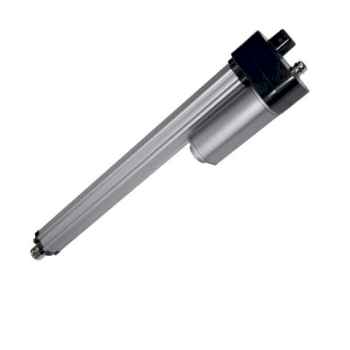
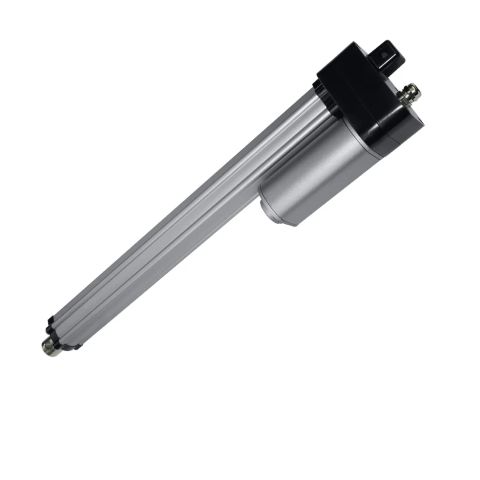
For many builders, a linear electric actuator becomes the most straightforward way to get controlled travel without adding complicated hardware. Selection starts with the basics. Stroke length decides how far the part moves. Force rating determines whether the actuator can push or pull the load without stalling. Speed affects how “factory” the motion feels, especially on panels that are close to the viewer’s face. Power is often simplest at 12V in automotive projects, as long as the wiring is planned like any other accessory circuit.
Mounting style matters as much as specifications. Clevis ends, and pivot points allow slight changes in angle during travel, which reduces binding and stress on brackets. If the actuator is mounted rigidly in a position where geometry shifts, the system will fight itself. That shows up as squeaks, flex, and premature wear. Brackets should be reinforced to the chassis or to a properly braced structure, not to thin sheet metal that can oil-can under load.
Progressive Automations is useful here because its actuator category is laid out around common build needs, including different stroke lengths, load ratings, and mounting accessories. A quick pass through options can clarify what is realistic for a specific panel or mechanism without turning the choice into a guessing game. Mentions should stay short. The build concept stays in the spotlight.
Controls and Wiring That Feel OEM, Not an Afterthought
In many custom projects, the mechanism is fine, and the control scheme is what makes it feel improvised. A clean install treats the actuator like any other electrical component. Current draw determines wire gauge and fuse size. Routing avoids sharp edges, heat sources, and pinch points around hinges. Switching should match the use case. A simple momentary rocker can be enough for a single hatch. A more involved setup can add a relay-based control box or limit protection, depending on what the actuator already includes.
The most common headache is accidental activation or partial travel that leaves a panel hanging. That is solved with disciplined control choices. Momentary switches help prevent the system from running unattended. Thoughtful placement keeps the switch from being bumped while loading gear. Service access matters too. Connectors and fuses should be reachable without removing half the interior. When motion equipment is treated as “set it and forget it,” the first wiring issue becomes a full-day repair.
Progressive Automations also carries control components and mounting hardware that match its actuators, which can help keep compatibility simple. That is not a reason to oversell anything. It is a practical way to avoid mismatched parts that force last-minute workarounds.
A Quick Builder Checklist Before Mounting Anything
A short pre-install check saves more time than any clever fabrication trick. This list keeps the planning grounded and avoids surprises once brackets are welded or bolted in place.
- Confirm stroke length with the panel installed. Measure the real travel, not the travel “in theory.”
- Identify a mounting geometry that stays aligned through the full range. Binding usually starts with angles.
- Leave room for the actuator body, wiring bend radius, and connector clearance.
- Build in a margin on the force rating. A panel that “barely moves” on the lift will feel worse after trim and sound deadening.
- Plan the circuit like any other accessory. Use a fuse. Protect wiring from abrasion and heat.
- Test travel slowly before the final trim goes in. Watch for flex, rubbing, and bracket movement.
- Keep service access in mind. A good-looking install still needs a way to be maintained.
Motion That Still Feels Right After the First Weekend
The best compliment a moving feature can get is that it becomes normal. It works the same way in a show lot and in a dim garage on a cold night. That comes from realistic expectations and clean execution. A linear actuator is not magic. It needs solid mounting, reasonable loads, and wiring that is treated with respect. When those fundamentals are handled, controlled motion stops being a novelty and becomes part of how the build lives day to day.
For custom cars and trucks, repeatable motion often separates a clever idea from a finished solution. Panels open without drama. Access points stay usable. The mechanism is there when needed and invisible when not. That is the kind of detail that fits the Gauge Magazine mindset, because it respects the craft and makes the whole build feel more intentional.
The post Linear Electric Actuators for Smooth and Reliable Motion appeared first on Gauge Magazine.