
The Structure of America’s Domestic Violence Crisis
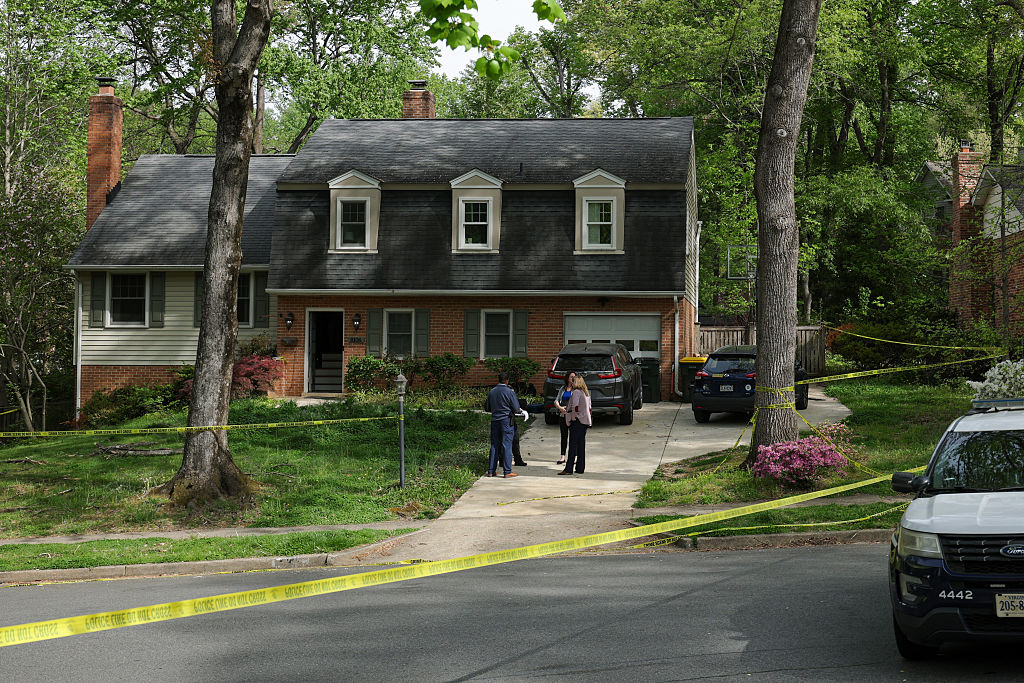
On the morning of April 19, 2026, eight children—the youngest just three years old—were shot in Shreveport, Louisiana. Their alleged killer was Shamar Elkins, 31, their own father. Police have also charged him with shooting his wife, Shaneiqua Pugh, as well as Christina Snow, the mother of three of his children.
That same week—April 16—in Annandale, Virginia, police also determined that former Lt. Gov. Justin Fairfax fatally shot his wife, Dr. Cerina Fairfax, before killing himself, with their teenage children inside the house.
Three women, all Black mothers, were targeted. Across two states, in two very different households, the same devastating logic played out: a man facing the loss of control over his family chose violence as his final act of dominance.
These are not anomalies. They are data points in a domestic violence crisis that has been allowed to persist for generations—and for which Black communities receive a fraction of the prevention resources they need.
What unites these incidents is not simply proximity in time. It is the specific, documented danger of separation. In Shreveport, Elkins and his wife were due in divorce court the morning after the killings. In Annandale, Fairfax had been ordered to vacate the family home by April 30 and was scheduled to appear in court on the very day the murders occurred.
Feminist criminologists have long identified the period of marital separation as among the most lethal for women. Research consistently shows that a woman’s risk of being killed by an intimate partner is highest in the weeks and months after she leaves or initiates a legal separation. These were not random eruptions of violence. They were predictable crises, and in both cases, the warning signs were visible.
News reports based on review of court documents in the Fairfax case described a man whose mental and emotional health had been deteriorating for years—heavy drinking, emotional withdrawal, and mounting financial and legal pressure. In Shreveport, Elkins had voluntarily sought mental health treatment at a VA hospital just months before the killings. In both cases, the systems designed to protect families—family courts, mental health services, domestic violence intervention programs—were present in the background but did not converge in time.
These two cases have catalyzed a necessary national conversation, but that conversation must not flatten the racial dimensions of this crisis. All three victims were Black women. Both men were Black. And while domestic violence crosses every racial and economic line, the data are unambiguous: Black women bear a disproportionate share of its lethal consequences.
According to a 2025 study by the Violence Policy Center, Black women are killed by men at twice the rate of their white counterparts. Domestic violence homicide is one of the leading causes of homicide of women, accounting for 30% to 40% of femicides; the majority were killed with firearms. A separate CDC analysis found that more than four in 10 Black women experience physical violence from an intimate partner during their lifetimes—a rate that exceeds that of white, Hispanic, Asian, and Pacific Islander women. These are not statistics born of individual pathology. They are the result of structural conditions that have been insufficiently addressed by public policy.
Mental health disparities in the Black community are the predictable result of structural racism embedded in employment, education, housing, and healthcare. When financial stress, legal crisis, and inadequate mental health access converge in a household already navigating the volatility of separation, the risk of domestic violence escalates. That is not a mystery. It is a policy failure.
Domestic violence prevention advocates have been clear: the problem is not simply a shortage of shelters or hotlines, though those shortages are real. The deeper barrier is trust. For Black women, a justified historical skepticism toward police and child protective services—institutions with long records of over-policing Black families and under-protecting Black victims—creates a painful calculus. Seeking help can mean inviting the state into one’s home in ways that may bring new harms, including the removal of children or criminalization of a partner whose behavior has not yet risen to the level of a chargeable offense. We would argue that this is not paranoia, but rather a rational response to documented institutional patterns.
At the same time, access to culturally competent mental health care for Black men experiencing crisis—the other side of this equation—remains severely limited. Programs like the YBMen Project, which creates peer-supported spaces for young Black men to address mental health openly, represent a promising model. But they are chronically underfunded relative to the scale of need. Shamar Elkins sought help at a VA hospital. Justin Fairfax’s mental health deterioration was documented in court records, where a judge noted his condition was “very concerning.” In neither case did the available systems succeed in intercepting the trajectory toward violence.
The response to these tragedies cannot be limited to candlelight vigils and expressions of heartbreak from elected officials, however sincere. Several concrete policy interventions deserve serious attention.
First, family courts must develop robust lethality assessment protocols triggered by the conditions most associated with intimate partner homicide: recent or pending separation, history of coercive control, access to firearms, and deteriorating mental health in the respondent. These assessments exist, but they are not universally required or resourced.
Second, federal and state funding for domestic violence services must be directed with equity in mind. Community-based organizations serving Black survivors—organizations with the cultural trust and competency that mainstream institutions often lack—are routinely underfunded relative to their caseloads. The federal Violence Against Women Act provides an important foundation, but its implementation must be evaluated for racial equity in resource distribution.
Third, the mental health dimension of domestic violence cannot be treated as separate from prevention. Expanded access to affordable, culturally competent mental health services—particularly for Black men in economic and legal crisis—is not a peripheral concern. It is central. This means funding community mental health infrastructure, not just crisis hotlines, and ensuring VA mental health services reach veterans before, not after, a household is in acute danger.
And finally, mandatory holding periods for firearm purchases during active divorce and domestic proceedings, combined with better enforcement of existing laws prohibiting individuals subject to domestic violence protective orders from possessing firearms, represent common-sense interventions with documented effectiveness. Both Elkins and Fairfax had legal histories and behavioral red flags. Neither was disarmed.
Dr. Cerina Fairfax was, by every account, a devoted mother and a well-regarded dentist who had done everything the legal system asked of her: she filed for divorce, she sought custody, she cooperated with court proceedings. The mothers of Elkins’ children were also navigating a system meant to protect them. Our legal system failed both.
The eight children killed in Shreveport—Jayla, Shayla, Kayla, Layla, Markaydon, Sariahh, Khedarrion, and Braylon were not abstractions. They were children who played in the yard the evening before they were killed, visible and alive to neighbors who saw nothing coming. Nor were Fairfax’s surviving children, Cameron and Carys.
We failed these families. And we cannot afford to fail anyone else.
If you or someone you know may be experiencing a mental-health crisis or contemplating suicide, call or text 988. In emergencies, call 911, or seek care from a local hospital or mental health provider.