
Bugatti W16 Mistral Fly Bug Extends the Legendary W16’s Farewell in Stunning One-Off Form


Bugatti has unveiled another extraordinary Sur Mesure creation, and in the process it has reminded the automotive world that the W16 is not disappearing overnight. The new W16 Mistral Fly Bug is the latest bespoke masterpiece from Molsheim, created through a close collaboration between Bugatti’s design team and a loyal collector whose previous commissions have all drawn inspiration from the natural world. This time, the dragonfly serves as the muse, bringing with it an elegant mix of delicacy, speed, and quiet visual drama that feels surprisingly fitting for one of the last great expressions of Bugatti’s quad-turbocharged sixteen-cylinder era.
What makes this car especially interesting is that it is not arriving as a stand-alone fantasy. It joins a themed lineage that already includes the Veyron Grand Sport Vitesse Hellbug, the Chiron Hellbee, and the Divo Lady Bug. That continuity gives the Fly Bug a little more meaning than the average ultra-expensive one-off. It is part of a collector’s vision, but it is also part of Bugatti’s ongoing effort to prove that even in a world obsessed with electrification and new powertrain philosophies, craftsmanship and storytelling still matter at the very top of the market.

The design theme itself sounds like classic Bugatti Sur Mesure thinking. Rather than simply dressing up the W16 Mistral with loud graphics or an obvious motif, the company appears to have gone after a more nuanced interpretation of the dragonfly’s character. That is the beauty of the best bespoke projects. They do not just shout exclusivity. They create a narrative around shape, color, detail, and emotion. For a brand like Bugatti, which has always sold more than just speed, that kind of narrative is a huge part of the magic.
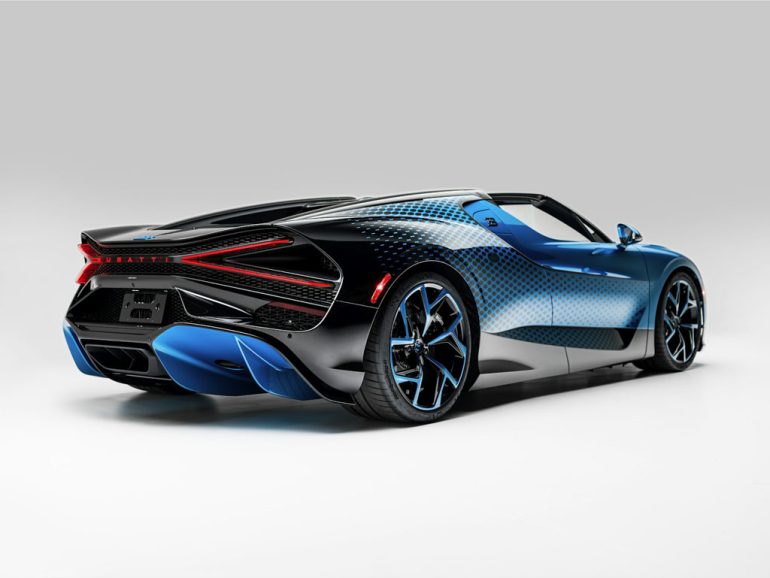
Of course, the bigger subtext here is the engine. It is becoming increasingly clear that Bugatti is not letting the W16 die just yet. Instead, the company seems to be giving it a very slow, almost ceremonial farewell, extending its life through special commissions and extraordinary one-off statements like this. That feels appropriate for an engine that defined an entire era of hypercar excess and engineering ambition. The Tourbillon may represent the future, but the W16 still carries too much mystique to be ushered offstage in silence.

There is something almost romantic about that approach. Most engines disappear with a quiet model-year change or a press release about efficiency and progress. The W16, on the other hand, is being treated like a legend that deserves a drawn-out final bow. In cars like the W16 Mistral Fly Bug, Bugatti is not just preserving the engine’s legacy. It is turning that legacy into rolling automotive art, one commission at a time. For collectors, that makes each car even more significant. For enthusiasts, it gives us one more chance to appreciate what this powertrain represented at its peak.
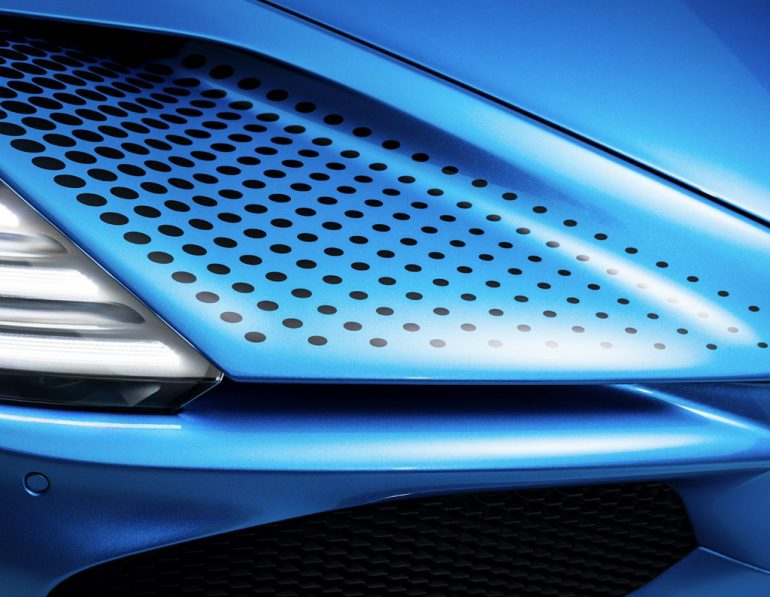
The W16 Mistral Fly Bug feels like more than a beautiful open-top Bugatti with an insect-inspired backstory. It feels like another chapter in the carefully managed goodbye to one of the most iconic modern engines ever built. Bugatti may be moving into a new era, but it clearly understands that the W16 still has emotional value that cannot be replaced overnight. If this is how the brand chooses to wind down that chapter, with patience, artistry, and unapologetic exclusivity, then the W16 is getting exactly the kind of farewell it deserves.