Beijing Auto Show 2026: The foreign brands


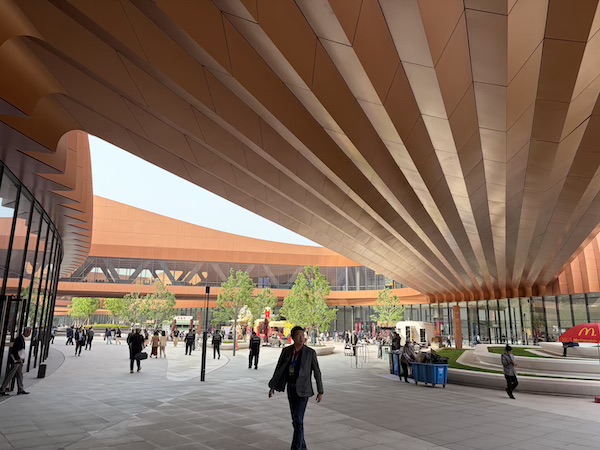
 The new Capital International Exhibition Center of China
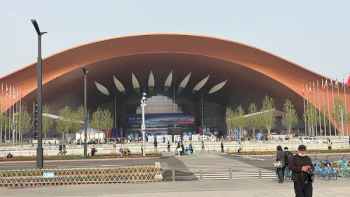
As is the case every year, BSCB had the opportunity to attend the China Auto Show in 2026, this time in Beijing. Firstly the Show is now a dual-venue format, held at the old China Exhibition Center (Shunyi Hall) and the adjacent all new Capital International Exhibition Center of China (CIECC). Combined, the two venues feature no less than 17 indoor exhibition halls across a record-breaking 380,000 square meters, or over 50 football fields. I walked 21 km across two days to cover all brands showcased inside the two buildings. First we study the most impressive foreign brands present at the Show, in alphabetical order.


Audi
Last year Audi made a splash by launching a new China-only brand in cooperation with SAIC: AUDIi in capital letters instead of the four rings. Hopes were high this would revive the German manufacturer, and the E5 sportback was presented. However the E5 EV only accumulated a little more than 10,000 units since its launch in August, peaking at 2,630 sales last month. Only a drop in the ocean of the very competitive Chinese EV market, and as a result Audi sales are down again over Q1 2026. One year on, and with added pressure to succeed, the carmaker presented the E7X electric SUV, featuring the same end-to-end digital dashboard and digital rear view mirrors, and the same LED light both at the front and back as the E5. One more EV is scheduled to start in 2027, a pace of new launches far from what the Chinese are doing.


BMW
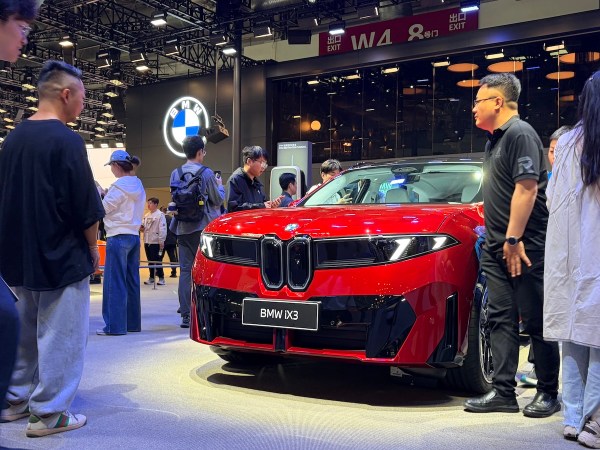
BMW came to the Show all guns blazing with a gigantic stand across two sections of its hall (see picture above). Its main new model is the iX3 SUV, which in my view is one of the most beautiful car designs currently on sale.

Ford
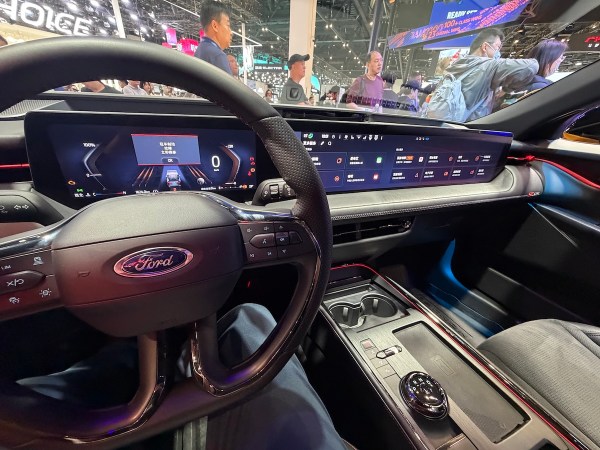
I was very impressed by the large digital tile on the Ford Mondeo’s dashboard. Foreign carmakers are really trying their best to remain competitive. In the case of Ford, it is also badly needed as sales are down -30.9% year-on-year over Q1 2026.



Hyundai
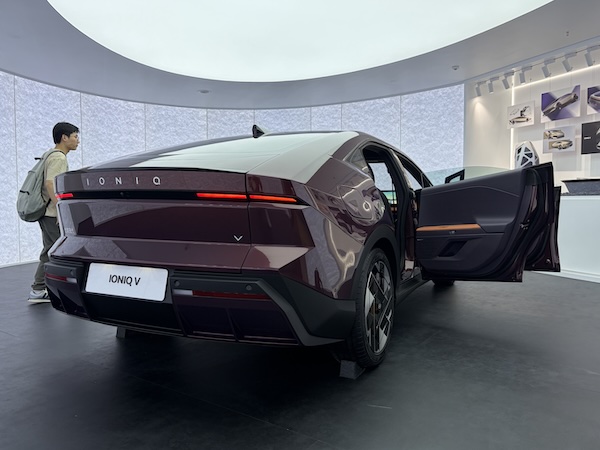
At the Show, Hyundai officially (and belatedly) launched the Ioniq NEV brand in China. It did so with the Ioniq V, a strikingly angular vehicle, as per the brand’s usage of exploring new design frontiers. The dashboard features the now mandatory digital tile expanding to the passenger side.


Jetta
Volkswagen’s attempt at a China-only low cost brand, Jetta, launched in 2019. It has had disappointing results ever since and vegetates at #41 in the brands charts in March with just over 9,000 sales. The issue is it didn’t offer any NEV models. This is all about to change, with the Beijing Auto Show the stage for the brand’s complete relaunch, including a new logo. The only visible vehicle on the stand though is a concept: the Jetta X, a rugged all-electric SUV. The brand says it will launch four new NEV models by 2028, and one sedan was displayed in camouflage.


Lexus
Lexus’s only “news” in China in 2026 is the ES sedan which was unveiled last year at the Shanghai Auto Show. The ES interior is now visible and features a large digital tile extending to the passenger as is now the “norm” in China. The ES is still scheduled to be produced in the brand’s new Shanghai plant in 2027 and will be the first Lexus built in China.

Nissan
Nissan has rightfully embarked on a series of China-only model EV launches. Last year it showcased the N7 sedan. After a fantastic start (10,148 sales last August), the N7 has fallen to just 587 units in February and 1,382 in March. Nissan has also added the N6 which peaked at 6,822 sales in December but dropped to 2,665 last month. Wildly varying scores make it difficult to call them a success or failure so far. Now the brand is launching the NX8 SUV, proposed in EV and EREV versions, and which reportedly secured 8,423 orders within the first 30 minutes of sales. Very encouraging but let’s see whether the model can sustain strong sales after launch unlike the N6 and N7.


 Peugeot
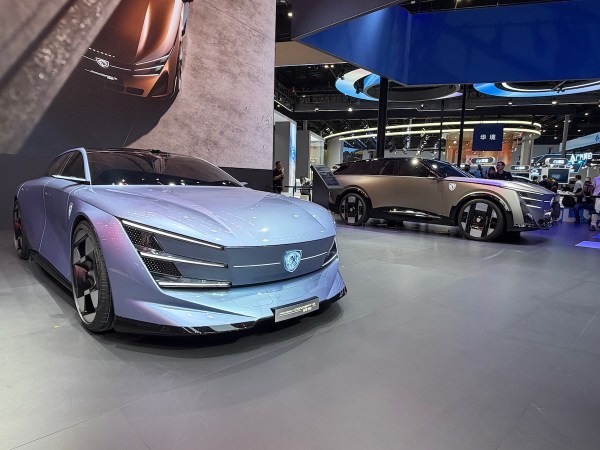
A total surprise for me at the Show is the presence of Peugeot (and Citroen). The French manufacturer, in doldrums sales-wise (975 units in March), presented two new concepts: the Concept 6 shooting brake sedan and Concept 8 SUV. The stand also had the Polygon Concept (an advance look at the future 208) and the Citroen Elo concept. The two new Peugeot concepts prefigure a new line-up of large sedans and SUVs, produced in China for China, as well as for export from China to Peugeot’s overseas markets. The first of these new Chinese-built models is expected to launch in 2027. The stand also featured Peugeot’s new visual identity: three horizontal stripes forming the shape of the head- and backlights.


Smart
Smart, now a Mercedes-Benz/Geely joint venture, has unveiled the #6, its first sedan, which will be confined to China. It is the brand’s largest vehicle to date, and is badly needed as sales figures are dismal (1,717 sales in March). The task will be difficult, and the carmaker has completely changed the way it does interiors with the #6 featuring end-to-end digital tile as is now the norm in vehicles aimed at the Chinese customer.
 Toyota Wildlander


Toyota
Toyota outsold (just) Volkswagen in March and has managed to contain its YoY loss over Q1 to -5%, a strong result given the environment foreign brands find themselves in in 2026. The Show was the opportunity for me to discover the new generation RAV4 (and its twin the Wildlander) in the flesh. Note it’s the Wildlander that uses the international look whereas the RAV4 proposes a more squaring front. Toyota always opts for conservatism and tried and tested features over extravagant advances. True to form, the RAV4/Wildlander’s interior is solid but its screens are rather small in the current context. Toyota also presented the bZ7 flagship sedan secured over 3,100 orders one hour after launch.
 I spent the day exploring the Beijing Auto Show with industry superstar Felipe Muñoz
Volkswagen
Volkswagen was by far the most impressive foreign carmaker at the Show and seems to have finally woken up after losing its market pole position to BYD and then the second place to Geely, plus being outsold by Toyota in March. The German manufacturer had more than a few new EV models at the Show.

The ID. Aura T6 stands for Advanced, User-centric, Reliable, and All-access. The letter T means Travel, and the digit 6 refers to the “golden balance point.” It’s a 6-seater family oriented urban crossover, and looks like a sedan from the front. It has Xpeng tech on board.
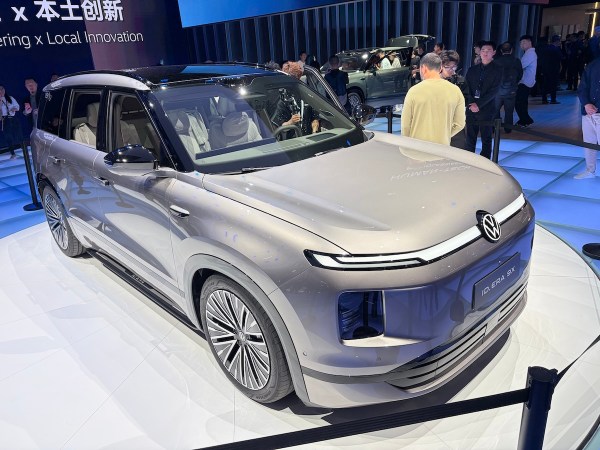

The ID. Era 9X was also unveiled, coming from the SAIC-VW joint venture. It is an EREV (extended range EV) with six seats and will act as the flagship NEV model for the brand. It has the mandatory digital tile extending to the passenger side.
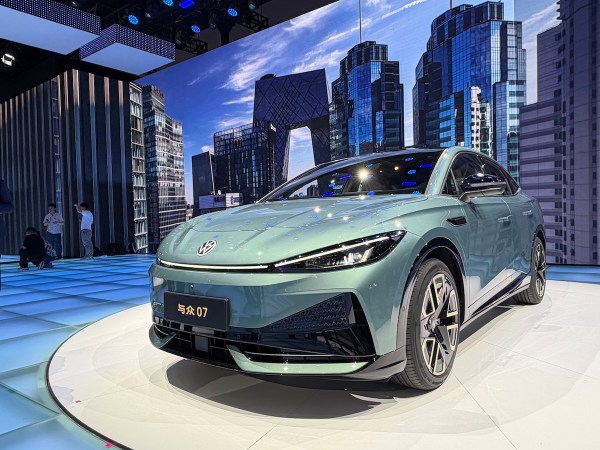

The ID. Unyx 07 was co-developed with Xpeng. It’s a mid-size electric fastback sedan offering a 231 hp electric motor and a 59.9 kWh battery, for a range of 558 km.


The ID. Unyx 08 is Volkswagen’s first mass produced vehicle developed in collaboration with Xpeng. It breaks with the brand’s previous design codes with a distinctive fascia. At 5m long, this is a large SUV but only comes as a five-seater.
This is all for our coverage of the notable foreign carmakers at the Beijing Auto Show 2026. Next we will talk about the domestic manufacturers.