President Trump said the vessel, carrying 100,000 tons of crude, was allowed through on humanitarian grounds
A Russian tanker has arrived in Cuba to deliver a humanitarian oil shipment amid a months-long US blockade that has led to severe fuel shortages and recurring power cuts across the island.
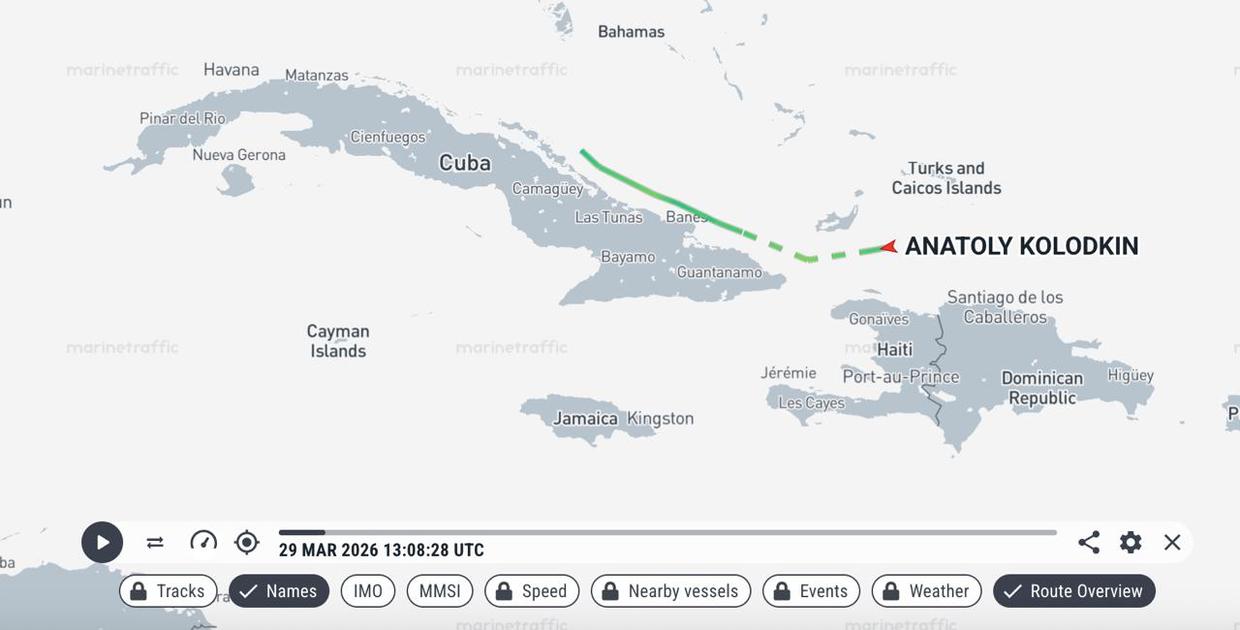
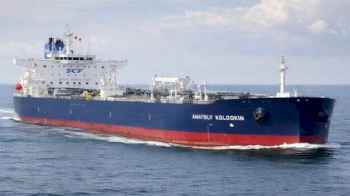
Russia’s Energy Ministry reported that the Anatoly Kolodkin, carrying 100,000 tons of crude oil, has docked at the port of Matanzas and now waits to be unloaded.
Despite US Coast Guard ships being present in the region, “the Trump administration did not order those vessels to act,” an official familiar with the matter told the New York Times.
“Barring orders instructing it otherwise, the Coast Guard planned to let the tanker reach Cuba as of Sunday afternoon,” the source added, speaking on condition of anonymity.
The Russian tanker ANATOLY KOLODKIN carrying 730,000 barrels of oil has essentially reached Cuba, ship-tracking data of @PoleStarGlobal shows. It's in defiance of the U.S. oil blockade, and @jacknicas and @EricSchmittNYT report that the U.S. is not going to stop the vessel. pic.twitter.com/5O9yUCzDTM
— Christiaan Triebert (@trbrtc) March 29, 2026
US President Donald Trump has repeatedly threatened tariffs on countries exporting fuel to Cuba. However, speaking to reporters aboard Air Force One on Sunday, he confirmed that Washington had allowed the Russian tanker through on humanitarian grounds.
“We don’t mind having somebody get a boat load because they need to survive,” he said. “I’d prefer letting it in, whether it’s Russia or anybody else, because the people need heat and cooling.”
Trump, however, added that he still expects Havana to “fail soon,” saying the US would be there to “help it out.”
Read moreTrump threatens Cuba is ‘next’ after Iran and Venezuela
The Caribbean nation has faced severe fuel shortages and power cuts in recent months after Venezuela, once Havana’s closest ally, halted oil shipments following pressure from Washington.
Multiple international fuel deliveries have been disrupted, vessels linked to Havana have struggled to secure supplies, and some have been turned away or intercepted – with at least one escorted away from Cuban waters, according to ship-tracking data.
Earlier this month, Havana agreed to enter talks with Washington in a bid to defuse tensions and avert a humanitarian crisis. Cuban President Miguel Díaz-Canel confirmed that negotiations were ongoing and aimed at “finding solutions through dialogue to the bilateral differences we have between the two nations.”
Trump, however, has not abandoned his stated intention to take over the island “one way or another.” On Friday, he said Cuba could be “next” following what he described as successful US military operations in Venezuela and Iran.