
Rising costs, limited guidance leave DC-area students anxious about college
When Azzarie Brown, 17, thinks about college, the first feeling that comes to mind isn’t excitement — it’s anxiety.
Azzarie, who lives in Southeast D.C. and is a senior at Archbishop Carroll High School, dreams of studying computer engineering and film studies at Niagara University in upstate New York. But the teen worries the cost of higher education might put those aspirations at risk.
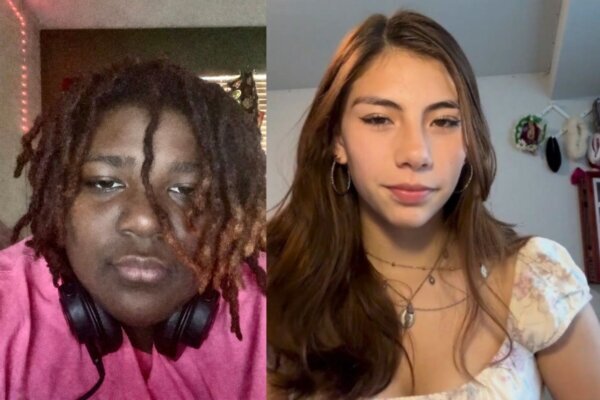
Azzarie, who uses they/them pronouns, works multiple part-time jobs to help supplement their mother’s police officer salary, and acts as a caregiver for their grandmother and younger siblings. Azzarie is concerned that covering the cost of college would require going thousands of dollars in debt.
“I’m scared that I won’t be able to afford school even with scholarships,” Azzarie said. “I’m scared that while attending, my scholarship will not be renewed, and I’ll have to pay for it out of pocket.”
Luciana Diaz, a senior at Wakefield High School in Arlington, Virginia, is equally worried. She is navigating college applications as a first-generation student and English language learner who immigrated from Bolivia at 14.
“I’m really scared because I’m trying really hard to get into college … that’s how I’m pursuing the American dream, right? So, yeah, I feel like that would be a big heartbreak for me to not be able to afford it,” Luciana said.
For many students in the D.C. region, experiences such as these are becoming more common as rising college costs and the region’s high cost of living make it harder to afford higher education. Even as states expand aid and affordability programs, students say gaps in guidance and preparation leave many uncertain, not just about how to enroll but also about whether they can succeed once they get there.
According to a Youthcast Media Group informal survey of 85 students nationwide, about 30% of students were “very worried” about affording college and more than half were “a little worried.”
Their biggest concern was having a lot of debt at graduation, 40%, followed by being a financial burden on their families, 30%.
Undergraduate students rely on an average of three sources to pay for school, such as scholarships, grants, loans and personal savings. Only 37% consider their debt to be manageable, according to a survey of more than 53,000 students by Trellis Strategies.
In the D.C. region, the financial pressure can be even more acute due to the high cost of living. Residents carry the highest federal student loan debt in the country — $54,561 per borrower — and the highest share of borrowers per capita, with 16% of residents in debt, according to the Education Data Initiative.
Studies have consistently shown the District is one of the most expensive places to live in the country. Multiple sources report the cost of living in D.C. is about 40% higher than the national average.
“College costs are one of the single biggest reasons why people say that they’re unable to complete their degree,” said Anika Van Eaton, vice president of policy with uAspire, a national nonprofit focused on college affordability.
A recent national survey by Ellucian found that 59% of students have considered dropping out due to financial stress.
Efforts to assist DC-area students often fall short
Across the region, policymakers in Virginia, Maryland and D.C. have tried to ease the financial burden that comes with pursuing higher education with a mix of tuition caps, grant programs and other affordability measures. But students say those efforts haven’t kept pace with rising costs, leaving many still struggling to afford college.
“Most people I know are either stressing about loans or trying to work full-time while going to school,” Azzarie said. “It feels like college is something you should be able to afford, but unless your family’s got money or you get a ton of scholarships, it’s super hard.”
District residents can get help with tuition through the D.C. Tuition Assistance Grant, which provides up to $15,000 per year for students attending public colleges and universities, and up to $3,750 for private institutions, using a combination of District and federal funding.
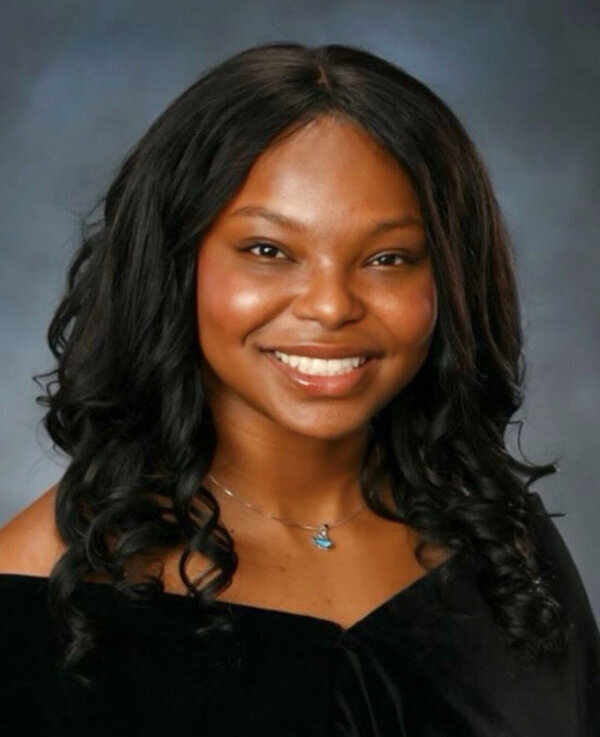
In February, the grant’s tuition cap was increased for the first time ever, addressing longstanding criticism that the award amounts were not keeping pace with the rising cost of tuition nationwide.
In recent years, Maryland has also taken steps to make public universities and colleges more affordable, including expanding financial aid and other support systems. Last summer, however, the university system announced it would need to raise tuition due to ongoing state funding reductions, limiting its ability to fully offset rising costs for students.
Virginia has taken a different approach, freezing in-state tuition across public universities and limiting future increases to less than 3% annually — a policy that benefits more than 250,000 students statewide.
Still, the state faces an “affordability gap” of nearly $4,000 for four-year institutions — almost twice the national average, according to the National College Attainment Network.
Freezing, or even eliminating tuition, only addresses part of the college affordability problem, though.
“Even if you hear all this stuff about free college, free college usually means free tuition, but meanwhile, you have to live,” said Sandy Baum, senior fellow at the Urban Institute. “If you don’t live with your parents, you need to pay rent and you need to buy food.”
What surprised Brooke Sylvestre most about college were the additional, unseen costs, she said.
“Room and board is really expensive, and then you’re expected to buy $130 textbooks you don’t even use,” said Sylvestre, 18, a freshman at the University of Maryland College Park who plans to be a doctor.
Experts told Youthcast Media Group most students will have to borrow money to afford college, even with scholarships or tuition assistance, leaving many worried that they’ll graduate with unmanageable debt.
But “being afraid to borrow can ruin your college opportunities,” Baum said.
Baum encourages students to look at college as an investment.
“The amount you can afford to get a bachelor’s degree, which is likely to pay off very well, has to do with the payoff to that investment,” Baum said. “Even if you have to borrow money to do it, it’s worth it because you’re going to make enough money afterward to pay back those loans, assuming that you go to college and you manage to graduate.”
Students call for more financial, academic prep for college
Every barrier to college access — financial or otherwise — makes it less likely that students in the D.C. area will enroll and complete a degree, says Victor Horton, executive director of Democrats For Education Reform.
“Only eight out of 100 students in the District complete college, while 58% of jobs in D.C. require a degree,” Horton said.
In Prince George’s County, Maryland, 79% of high school students graduated in 2025, as compared to the statewide graduation rate of 86.4%, according to state data. Less than half of those who graduated in 2023 had enrolled in college a year later.
For those who do make it to college, affordability isn’t the only barrier to getting a degree — some D.C. students arrive unprepared for the rigor of college classes.
“Only 20% of District students who took the SAT were considered college-ready,” Horton said.
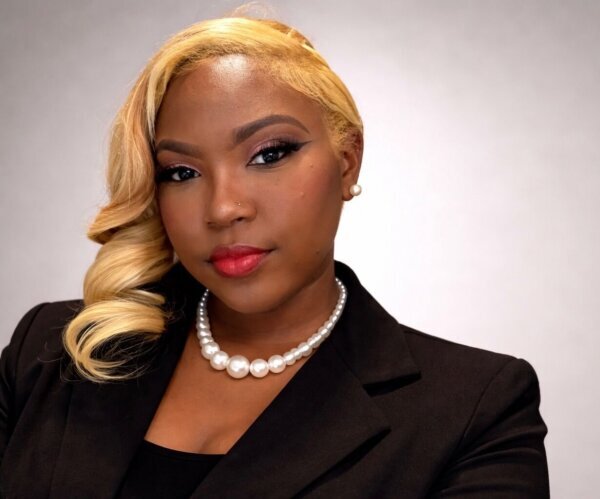
Caitlyn Taylor, 20, dropped out of the University of Arizona after deciding that a major in veterinary medicine was not for her and failing college algebra twice.
While Taylor was salutatorian at Richard Wright Public Charter School in D.C. and received a full-tuition scholarship to Arizona, she said her high school didn’t prepare her well enough in math during the pandemic.
“Due to my math classes being online during COVID … and going back in person with classes, the fundamentals were missed and that’s why it was hard for me to pass it in college,” said Taylor, who later passed the class online.
Taylor also said professors at the University of Arizona weren’t able to provide her with “one-on-one support.”
Outside of academics, Taylor said other factors that played into her decision to drop out included being far from home without a support system, and feeling like she didn’t fit in socially in a predominantly white university. Taylor transferred to Edward Waters University in Jacksonville, Florida, the state’s first historically Black college.
Students in the D.C. region also say the lack of resources at their schools about financial aid affected their ability to apply for college, a problem that’s not limited to the D.C. area. In Youthcast Media Group’s informal survey of high school students, only 7% said their high school was “very helpful” in explaining how to afford college.
“Honestly, I think it would help a lot if schools spent more time actually explaining how financial aid works,” Azzarie said. “Like, not just saying, ‘Fill out the FAFSA,’ but showing us what kinds of scholarships are out there, how to apply and what deadlines matter.”
Zayivion Wallace, 17, a senior at Archbishop Carroll High School in Northeast D.C., agreed.
“We need more programs to guide students through applying for scholarships and understanding the costs before it’s too late,” Zayivion said.
While many students said their schools had limited help available, others said the issue was more about knowing where to go, and being willing to ask for help.
“Sometimes, knowing who to ask or where to find help is half the battle,” said Allysia Anamelechi, 17, another senior at Archbishop Carroll. “Students just need someone to point them in the right direction.”
Luciana, the Wakefield senior, said help is there if you look for it.
“Ask for help if you don’t know how to do something. I feel like at school, we have support if you look for it,” Luciana said. “People are not gonna come up to you and be like, ‘Do you want help to apply to college?’”
Recently, Luciana was accepted to Virginia Commonwealth University. Although she’s not sure yet if she’ll attend, she said hearing back on an application and knowing she has options is “a total relief.”
“I’m excited to begin this new chapter in my life,” she said.
Source