The statistics have yet to account for the impact of the US-Israeli war on Iran
German industries are showing no signs of recovery as of early 2026, with their production output declining even before the US and Israel launched their attack on Iran, according to the state statistical agency Destatis.
The nation’s industrial output fell by 0.5% in January in comparison to December, according to the report published on Monday. The year-on-year decline was even bigger and amounted to 1.2%, the data showed.
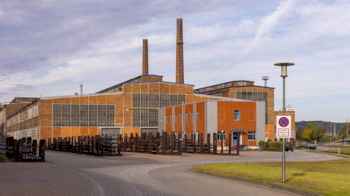
The decline particularly affected the “energy-intensive” industrial branches, Destatis said. The agency named metal products fabrication, pharmaceutics, as well as computer, electronic and optical products manufacturing among the most affected fields, where the month-on-month drop in output amounted to between 7% and 12%.
Read moreGerman businesses sound alarm over record bankruptcies
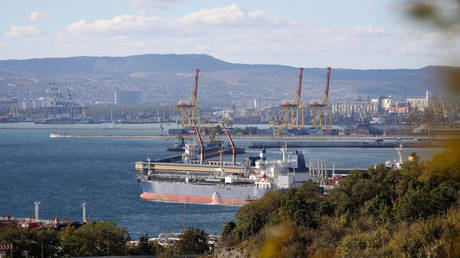
The statistics have yet to account for the fallout from the latest escalation in the Middle East. The US-Israeli strikes on Iran, which triggered Tehran’s retaliation, significantly raised the risks for vessels passing through the Strait of Hormuz. Brent prices peaked at almost $120 per barrel on Monday. EU natural gas prices have nearly doubled since before the attack.
High energy prices have been repeatedly cited by German media and officials as a key factor behind the economic slowdown that has been affecting the EU’s largest economy over the past years.
Germany, which had relied on Russia for 55% of its natural gas, took a heavy blow after the country joined Western sanctions against Moscow following the escalation of the Ukraine conflict in 2022. Russian oil giant Rosneft’s operations also accounted for around 12% of the nation’s total oil-processing capacity, according to Bloomberg.
Read moreWill the war with Iran make Russia richer?
Bild reported in October 2025 that electricity and gas rose by 14% and 74% respectively from 2022 to 2025. The decision to abandon cheap Russian energy imports played a major role in slowing down the economy, which contracted in 2023 and 2024 – the first back-to-back annual drop since the early 2000s.
The Federal Employment Agency warned in December about an unemployment crisis linked to the struggling economy. Its head, Andrea Nahles, said that even well-qualified workers were no longer fully shielded from job losses. In January, the German Chamber of Commerce and Industry named high energy costs as one of the key factors behind what it called an alarmingly high number of bankruptcies.