Ghalili: A safer Middle East is taking shape
For four decades, the Islamic Republic of Iran has been the single greatest source of instability in the Middle East. It armed Hezbollah in Lebanon, Hamas in Gaza, the Houthis in Yemen, and a constellation of Shia militias in Iraq and Syria. It plotted assassinations and fomented unrest from Beirut to Bahrain. It built an infrastructure of coercion that stretched across five countries and threatened every government in the region. Its ballistic missile arsenal and advancing nuclear program gave it coercive leverage that no neighbor could ignore. And its willingness to use proxies against any state that pushed back kept the region in a permanent defensive posture.
That era is ending.
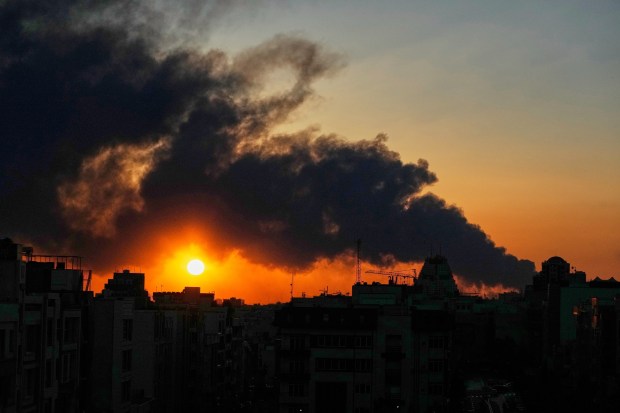
In the span of days, Operation Epic Fury has dismantled the command structure that held this network together. Supreme leader Ali Khamenei, who directed the Islamic Republic’s campaign of regional terror for more than three decades, is dead. Dozens of the regime’s most senior military and security officials were killed. The Islamic Revolutionary Guard Corps leadership that coordinated, armed and funded proxy forces across the region has been gutted. The missile production sites that supplied those proxies have been struck. The nuclear enrichment infrastructure that gave the regime its ultimate leverage has been degraded for the second time in less than a year.
The regime’s response proved the case for acting. Tehran has launched missiles and drones at Saudi Arabia, the United Arab Emirates, Qatar, Bahrain, Kuwait and Jordan. It targeted civilian airports in Kuwait and Dubai. Debris from intercepted missiles damaged the Burj Al Arab, started fires at Jebel Ali Port, and struck near an Aramco refinery at Ras Tanura, forcing a temporary shutdown.
Saudi Arabia’s Foreign Ministry called it “brutal Iranian aggression” and a “blatant violation” of sovereignty. Seven nations issued a joint statement through the State Department condemning the attacks.
Now, consider what Iran’s proxy network did to the region. Iran-backed Houthi forces caused a 90% drop in container shipping through the Suez Canal, disrupting $1 trillion in global trade and driving shipping costs between Asia and Europe up as much as sevenfold. Hezbollah, though significantly degraded by Israeli operations in 2024, had spent decades holding Lebanon captive as an armed state within a state. Iran-backed militias launched 200 attacks against U.S. forces across Iraq, Syria and Jordan since October 2023, while simultaneously intimidating Iraq’s elected government.
The IRGC underwrote and coordinated the entire network at an estimated cost of billions of dollars annually, with personnel, weapons and money flowing through a web that connected Lebanon, Syria, Iraq, Yemen and Gaza.
The command structure behind that network is now shattered. The clerical authority that sanctioned it is no longer in place. The missile infrastructure that backed it has been decimated. And the Arab states that lived under its shadow for decades are, for the first time, watching the source of that threat diminish in real time.
This does not mean the region is out of danger. The operation is ongoing. American servicemembers have given their lives. Iran’s retaliatory strikes have killed civilians in the region. Proxy groups have pledged continued attacks. The situation remains volatile, and the road ahead demands sustained commitment.
However, the trajectory is clear. The regime that held the Middle East hostage with proxy armies, ballistic missiles and a nuclear program inching toward a weapon has lost its leadership, its senior military command and significant parts of its offensive capability.
The Arab world is not mourning. Saudi Arabia, the United Arab Emirates, Bahrain, Kuwait, Qatar and Jordan stood together to condemn the regime that attacked them. Opposition leader Crown Prince Reza Pahlavi told the Iranian people that the time will come to take over their government. The conditions for a region no longer defined by Tehran’s threats are more real today than at any point in half a century.
Andrew Ghalili is the policy director at the National Union for Democracy in Iran, representing the Iranian-American community/InsideSources.com