Folan: USA team carried Gaudreau’s legacy onto the ice
Across New England, boys and girls are in their driveways, firing pucks against garage doors until the winter light fades. They count down imaginary clocks that lead to Olympic overtime.
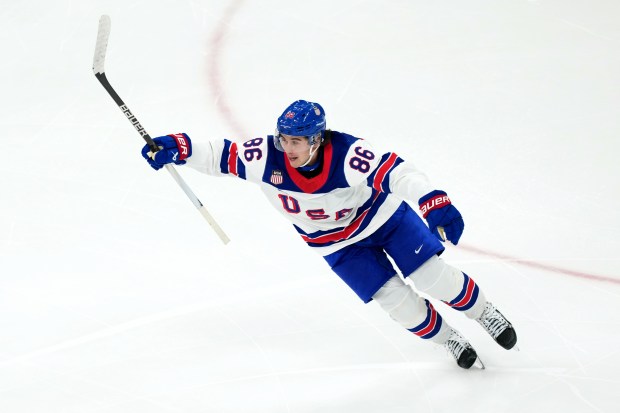
With each generation, the names change but inspiration follows. In 1960, it was the Cleary brothers delivering America’s first men’s Olympic hockey gold. In 1980, it was Mike Eruzione and the question that still echoes: Do you believe in miracles? This winter, it’s Jack Hughes finishing it in overtime, and it’s Megan Keller stepping into a shot with gold on the line. It’s also Matt Boldy striking first in the fiercest rivalry.
Around here, the distance from driveway to destiny feels close enough to imagine. That’s what makes hockey in New England different. The legends never feel out of reach as they skated in our rinks.
But if you watched the men’s Olympic final closely, the most important moment came after the winning goal. After the medal ceremony, two small children were brought onto the ice. They were Johnny Gaudreau’s children.
Most of the world knew him as “Johnny Hockey.” Those of us who watched him at Boston College remember the magic. He wasn’t the biggest player on the ice — heroes rarely come in the shape we expect — but he played with imagination and joy, the kind that made you lean forward because something unexpected was about to happen.
Johnny’s life was cut short in a tragedy that still feels impossible to process — struck and killed by a car while riding his bicycle. A brilliant career. A young family. Yet on the biggest stage in sport, his former USA teammates made sure the world saw something greater than the final score. They carried his jersey. They carried his children onto center ice. They widened their celebration to make space for love.
For the kids in the driveways, the goal will always be the headline; that’s how dreams begin. For the parents watching nearby, the larger story lingers. We saw excellence under pressure and courage in overtime. But we also witnessed loyalty, brotherhood, and humanity overriding everything else.
We saw grown men, bruised and exhausted, refuse to let glory overshadow their grief for a fallen teammate and their devotion to his family. Victory is about what you win. Love is about who you refuse to leave behind.
The Olympics celebrate more than national pride. They remind us what binds us. They show our children that greatness is not just about what you accomplish, but about who you carry with you when you get there.
Miracles do happen on the ice, but they begin long before the medal ceremony. They begin in driveways and frozen ponds — in small choices: who wakes up early, who takes the last shot, who puts in the extra effort. They also begin in the quiet formation of character long before the spotlight finds you.
The moment I will never forget isn’t the golden goal. It’s the image of Johnny Hockey’s children at center ice, carried by teammates who refused to let love be an afterthought. In the exhilarating moment they had dreamed about since they first laced up their skates, those men made space for something quieter and far more enduring: love.
That is the miracle I will remember. This miracle made me cry.
And somewhere tonight, a child will take one last shot before heading inside. They’ll raise their arms in imaginary triumph. Maybe they’ll tumble into the snow in celebration. Maybe a younger sibling will wander into the “rink,” wanting to be part of it. And maybe — just maybe — that older child will pull them into the celebration instead of pushing them away. That’s the legacy worth remembering. Not just the overtime winner.
What matters most is that we widen the circle — for the greatest victories are the ones where we include those we love at center ice.
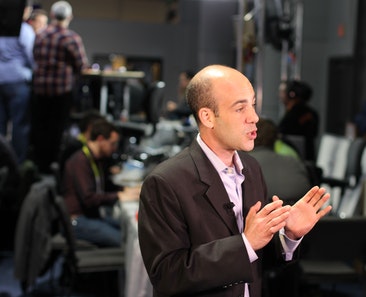
Dr. Peter F. Folan is the Head of School at Dexter Southfield.