
US Private Payrolls Rise by 109,000 in April, Beating Estimates
By Andrew Moran
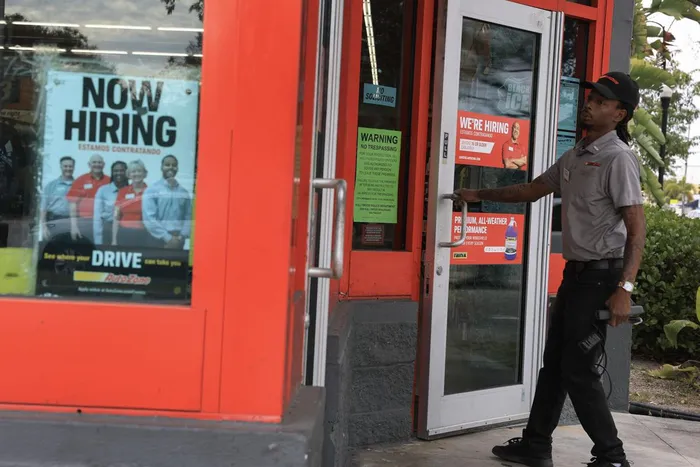
The U.S. private sector added more jobs than expected last month, signaling renewed strength in the labor market as the economy wrestles with war-driven price pressures.
Private payrolls rose by 109,000 in April, up from 61,000 in the previous month, according to new data from payroll processing firm ADP released on May 6.
This came in better than economists’ expectations of 99,000.
Most of the employment gains were in education and health care services, which added 61,000 jobs. This has been the theme over the past year, raising concern that the broader economic landscape might not be as strong as the headline numbers indicate.
Trade, transportation, and utilities created 25,000 jobs. The construction industry added 10,000 positions, and payrolls in financial activities increased by 9,000.
Professional and business services erased 8,000 jobs.
“Small and large employers are hiring, but we’re seeing softness in the middle,” Nela Richardson, chief economist at ADP, said in a news release. “Large companies have resources to deploy, and small ones are the most nimble, both important advantages in a complex labor environment.”
Small businesses—establishments with fewer than 49 employees—added 65,000 jobs. Large employers with more than 500 staff members contributed 42,000 jobs to the report.
Wage gains held steady in April. Pay growth for those who stayed in their jobs eased slightly to 4.4 percent, and wage gains for those who changed jobs stayed at 6.6 percent.
Demand for labor in the private sector has strengthened somewhat in the past two months.
Although job openings were little changed at 6.87 million in March, the number of hires climbed by 655,000 to 5.56 million, according to Bureau of Labor Statistics numbers on May 5.
These figures come ahead of the week’s main event: the April jobs report.
Early estimates suggest the economy added 60,000 new jobs, a significant slowdown from March’s gain of 178,000. But this could be in line with the three-month moving average of about 68,000.
The unemployment rate is also expected to hold steady at 4.3 percent. With the breakeven level—the number of new jobs needed to keep the jobless rate in check—close to zero, unemployment could hover around 4 percent for a while.
“In any case, the range of estimates for the payrolls print is as wide as ever, from -15k to +140k,” Michael Brown, senior research strategist at Pepperstone, said in a May 4 note.
“Though it is important to recall that in an economy with such a low breakeven rate, not only are significant month-to-month swings in job creation more likely, but also that a substantial payrolls decline could be seen in any given month, even if economic growth were running at its potential level.”
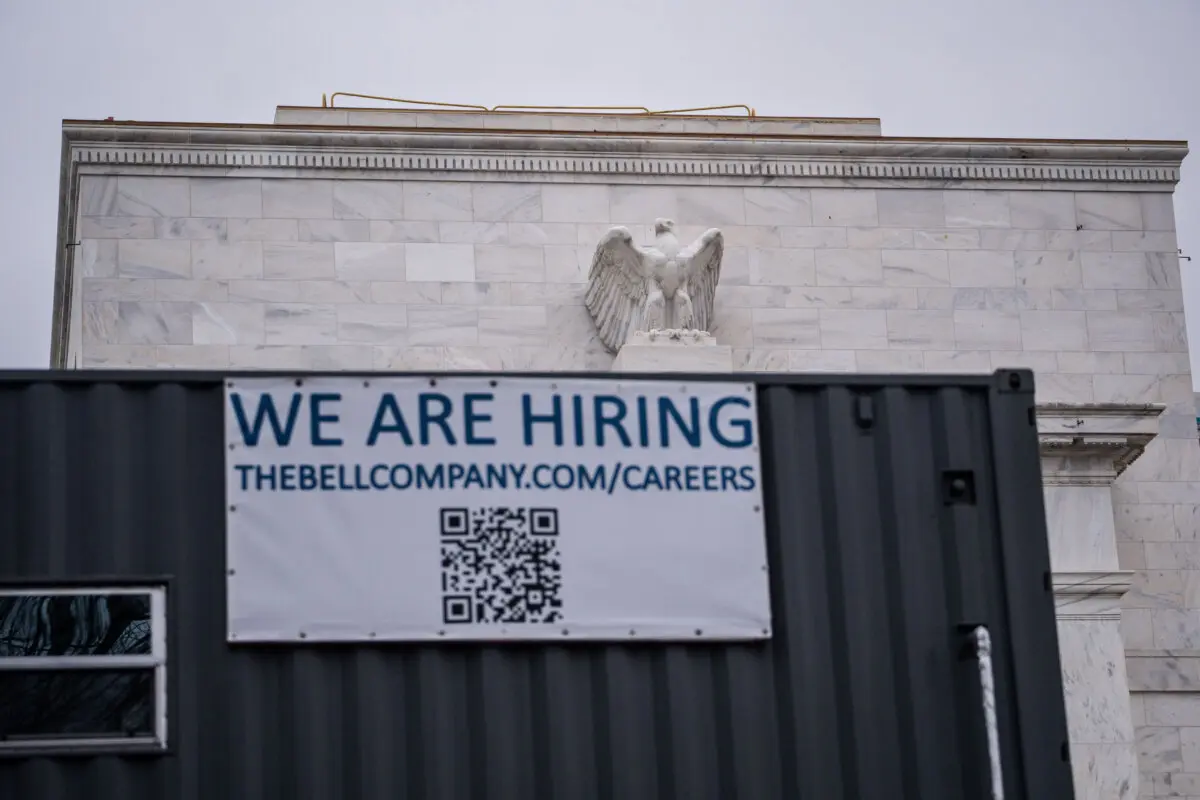
In addition, planned job cuts for April and the latest stretch of applications for unemployment benefits will also be released.
What This Means for the Fed
In his likely final press conference last month, Federal Reserve Chair Jerome Powell offered a mixed assessment of the labor market.
On the one hand, the jobs picture is showing “more and more signs of stability,” he said.
On the other hand, he said, employment is facing an “unusual and uncomfortable kind of a balance where people who don’t have jobs will have a hard time breaking in unless somebody quits their job.”
Incoming Fed Chair Kevin Warsh, meanwhile, told lawmakers during his Senate Banking Committee confirmation hearing last month that the economy is at “full employment.”
Still, the latest tranche of job data could alleviate concerns of downside risks to the maximum employment side of the central bank’s dual mandate. This could leave the Fed squarely focused on combating elevated inflation, potentially leading to a scenario of higher-for-longer interest rates.
Investors are ostensibly pricing in tight monetary policy or even rate hikes.
Futures market data indicate that the odds of a rate hike late next year have increased, according to CME FedWatch.
Likewise, the two-year yield, which tends to track Fed policy expectations, recently reached 3.96 percent.
The current target range for the federal funds rate—a key policy rate that influences short-term borrowing costs for households and consumers—is 3.5 percent to 3.75 percent.
“The Fed is stuck between two bad choices. Cutting rates risks fueling inflation, while hiking rates risks crushing an economy that is already slowing,” Mark Malek, chief investment officer at Siebert Financial, said in a note emailed to The Epoch Times.
“The Fed does not have an elegant policy answer right now.”
Headline inflation numbers have accelerated because of higher energy costs from the 10-week-old war in Iran.
March’s annual consumer inflation rate advanced to 3.3 percent. The April and May readings are forecast to rise to 3.6 percent and 3.8 percent, respectively, according to the Cleveland Fed Nowcasting model.
Underlying trends appear tamer for now. Core inflation, which excludes volatile energy and food prices, is 2.6 percent. The regional central bank’s modeling suggests that core inflation will remain at 2.6 percent in April and May.
The Fed will have a large batch of data to sift through when it holds its next Federal Open Market Committee policy meeting on June 16 and 17.