
Hiking the Coastal Trail in Pukaskwa National Park: A 5-Day Backpacking Guide
The 60 km Coastal Trail in Pukaskwa National Park is one tough trail. The trail weaves along the shore of Lake Superior, typically over a five-day period. It’s worth every minute of agony to hike this section of the Trans Canada Trail – as the scenery is sublime, the campsites ridiculously gorgeous, and the sense of accomplishment, huge.
It, I believe, is one of the very best long distance hikes in Canada. And although 60 km may not sound like much – trust me, on the slippery, lichen-covered rocks of the Coastal Trail it is!
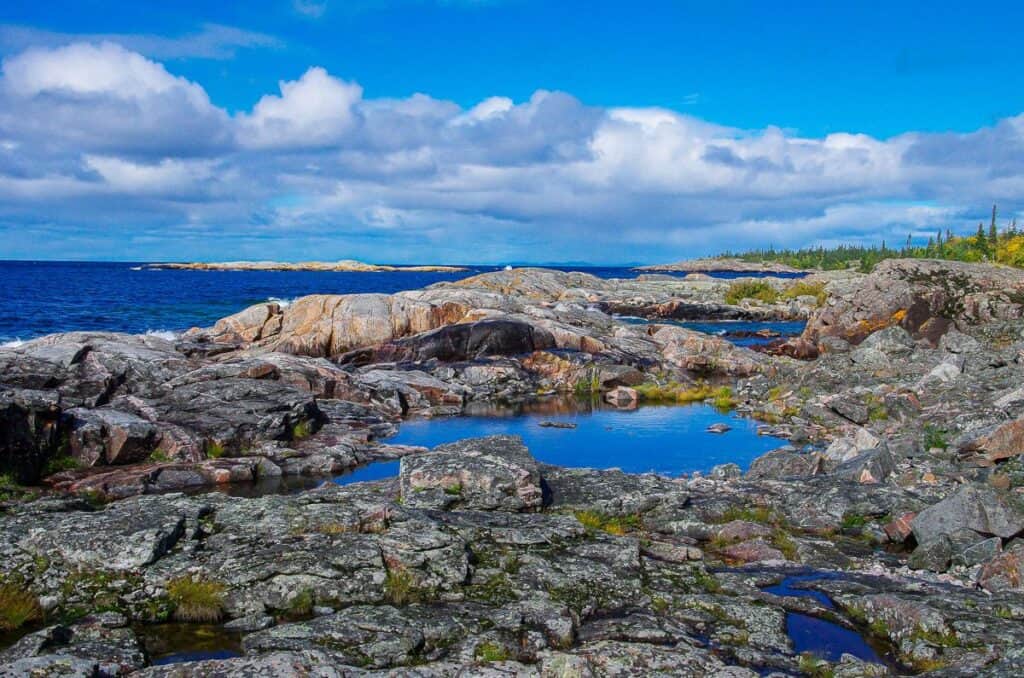
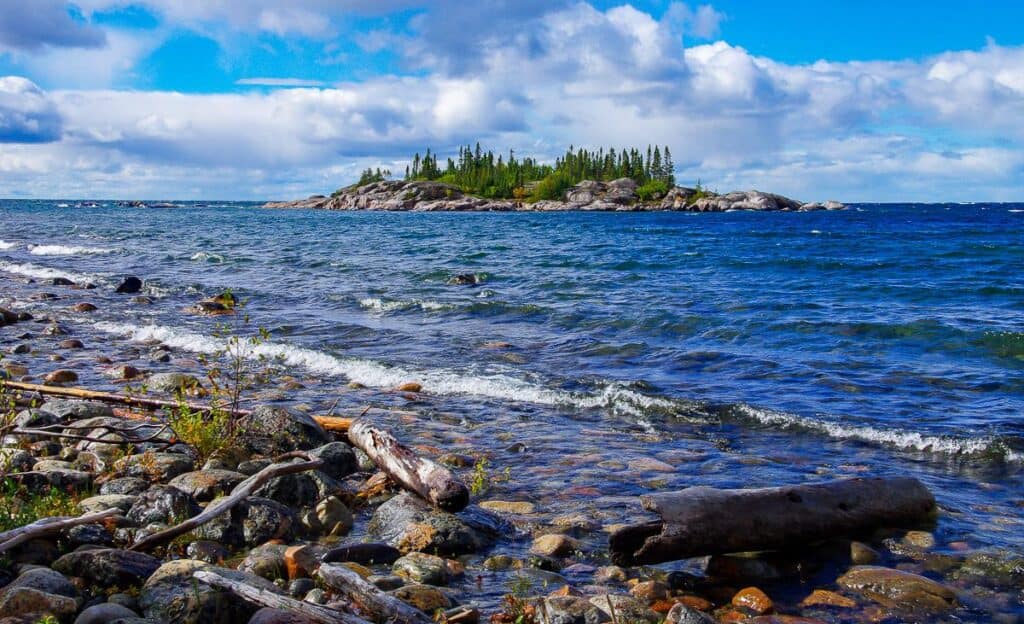
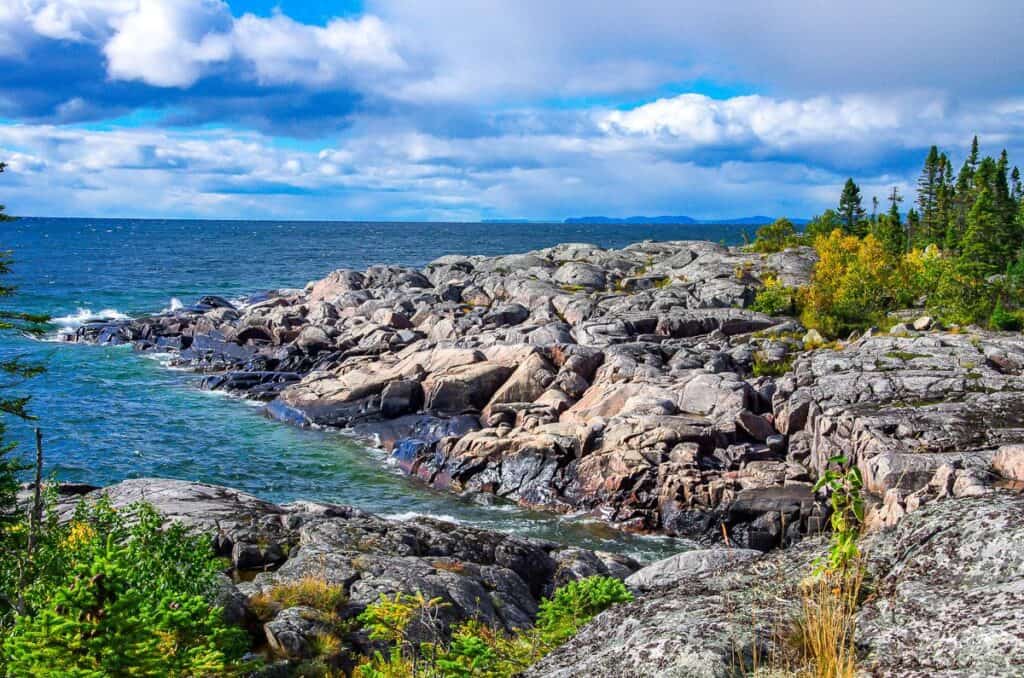
The trail is often beside or in sight of Lake Superior – a lake that behaves like a teenager on hormones. One minute it’s glassy calm and the next it’s thrown a temper tantrum and kicked up waves that swallow ships. It’s a lake you can’t help but respect – especially as it’s the largest lake in the world by surface area. It’s also bloody cold – averaging 4.4°C (40°F) at the surface.
If you’ve got the time the night before the Coastal hike, I think it’s worth doing the Southern Headland Trail in the park.
Originally hiked in 2014, fully updated in 2026 with new photos, logistics, and first-hand trail insights.
This post includes some affiliate links. If you make a purchase via one of these links, I will receive a small commission at no extra cost to you. Thank you very much for your support.
Coastal Trail in Pukaskwa Overview
- Location: Pukaskwa National Park, NW Ontario
- Distance: 60 km
- Elevation gain: 728 m
- Difficulty: Challenging
- Time needed: 4 – 6 days from North Swallow River to Hattie Cove
- Dogs: Permitted on leash
- Park opening dates: May 15 – October 14, 2026
- Boat shuttle: Arrange well in advance with Doug by phone at (807) 228-0709 or by email – contact@northshoreadventures.ca
- Why its special: Remote, quiet, Lake Superior shoreline and campsites, suspension bridges
Getting to Pukaskwa National Park
Pukaskwa National Park is located near Marathon, Ontario. It’s a 3.5-hour drive from Thunder Bay and a 5-hour drive from Sault Ste. Marie. From Toronto, it’s almost a 12-hour drive.
You will need to spend the night nearby as the boat shuttle leaves in the morning.
Some options include:
- Pic River Guest Suite in Pic River
- Travelodge by Wyndham Marathon – about a 30-minute drive away
- Stay at the Hattie Cove frontcountry campground in Pukaskwa National Park. It’s first come, first served.
Coastal Trail Map and Route
South Access to the Coastal Trail (Boat Shuttle)
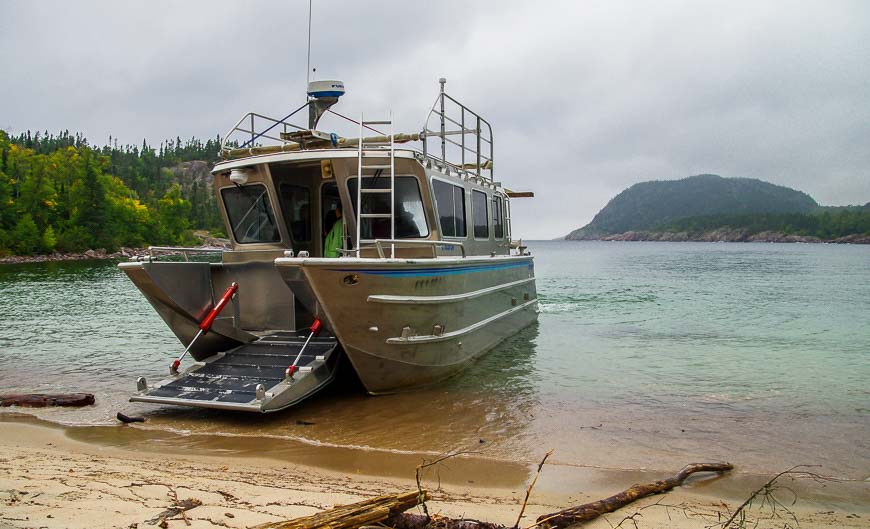
In 2026, plan to use North Shore Adventures. Contact Doug by phone at (807) 228-0709 or by email – contact@northshoreadventures.ca. He will boat you down to the southern trailhead by the North Swallow River campsite – and you can hike back to the northern trailhead and your car from there. Be on time. The boat doesn’t wait around for stragglers.
Costs in 2026 are $265 per person with a 3-person minimum. There is a possibility of a fuel surcharge too.
North Access
Your other option is to start in Hattie Cove and hike south. You can arrange a pickup at the southern trailhead ahead of time – but if you ever have a problem, it may be harder to meet the boat. There is also the option to do and out and back hike – but that’s going to take you the better part of 10 days.
I think getting a boat shuttle to the southern trailhead on the Pukaskwa Coastal Trail is the best and most time efficient way to hike it.
Planning Your Coastal Trail Hike
- Purchase a copy of a paper map of Pukaskwa National Park.
- In September – the best month for hiking if you hate bugs – the sunrise is at 7:30 AM on September 21st and sets at 7:45 PM. There is an average of four inches of rain and morning temperatures are around 6°C. It was 1°C one morning on our trip.
- In May and June expect blackflies, mosquitoes from mid-June into July and horse and deer flies from July to August.
Permits and Registration
Backcountry campsite reservations open on Monday, February 2, 2026 at 8 AM ET. Reserve online or by calling 1-877-737-3783 from North America and 1-519-826-5391 outside North America.
You are required to book individual campsites along the trail, so spend some time figuring out a itinerary and which campsites you’d ideally like to stay at.
A Realistic 5-day Backpacking Itinerary
Their is more mileage on the last day, but your pack is lighter and the trail is much easier overall. And Willow River was a lovely place to spend a night.
- North Swallow River → White Spruce Harbour (10.8 km)
- White Spruce Harbour → Fisherman’s Cove (10.2 km)
- Fisherman’s Cove → Fish Harbour (12.3 km)
- Fish Harbour → Willow River (9.0 km)
- Willow River → Hattie Cove (17.7 km)
Mandatory Orientation
Park staff will contact you via email or phone and set up either an in-person or online backcountry safety orientation. You must do the safety orientation before starting the hike. They will also need additional emergency information to help speed up the on-site registration process. This information will include names of everyone in the group, emergency contact information, equipment description (eg colour and make of tent), and vehicle description.
Best Time to Go
The best time to go is late August into September unless you’re a fan of bugs and head nets. Earlier in the summer you can count on flies, mosquitoes and blackflies. A head net and bug jacket are imperative.
How Many Days Do You Need?
Most people take between four to six days. The more time you have the more relaxed the hike, but the more food you must carry.
Campsites on the Pukaskwa Coastal Trail
There are 11 backcountry campsites along the Coastal Trail. All feature privies and food lockers – and all are suitable for up to 6 people. Most campsites have views and easy water access.
From the south heading north, the campsites are as follows:
| KILOMETRE (Heading north) | Campground (CG) Location | Good to Know |
| 0 | North Swallow River CG | Sandy beachfront but windy |
| 4.0 | Hideaway Lake CG | Close to Lake Superior with pebble beach |
| 10.8 | White Spruce Harbour CG | Large sandy beach with great views |
| 13.9 | White Gravel River CG | Good for large groups |
| 21.0 | Fisherman’s Cove CG | A sandy beach and beautiful view |
| 28.2 | Oiseau Bay CG | Giant sandy beach but campsite set in the forest |
| 33.3 | Fish Harbour CG | Lake Superior views and cobblestone beaches |
| 36.7 | Morrison Harbour CG | Major bear country, blueberries galore |
| 42.3 | Willow River CG | 3 campsites – some with spectacular views |
| 49.9 | Hook Falls CG | A view of the nearby falls |
| 50.9 | Chigaamiwinigum Falls CG | On portage trail from White River |
| 54.2 | Playter Harbour North CG | Nice beach but small |
| 60 | Hattie Cove | A short walk from the parking lot |
Our 5-Day Coastal Trail Itinerary
Start to Wild Camping (90 minutes before White Spruce Harbour)
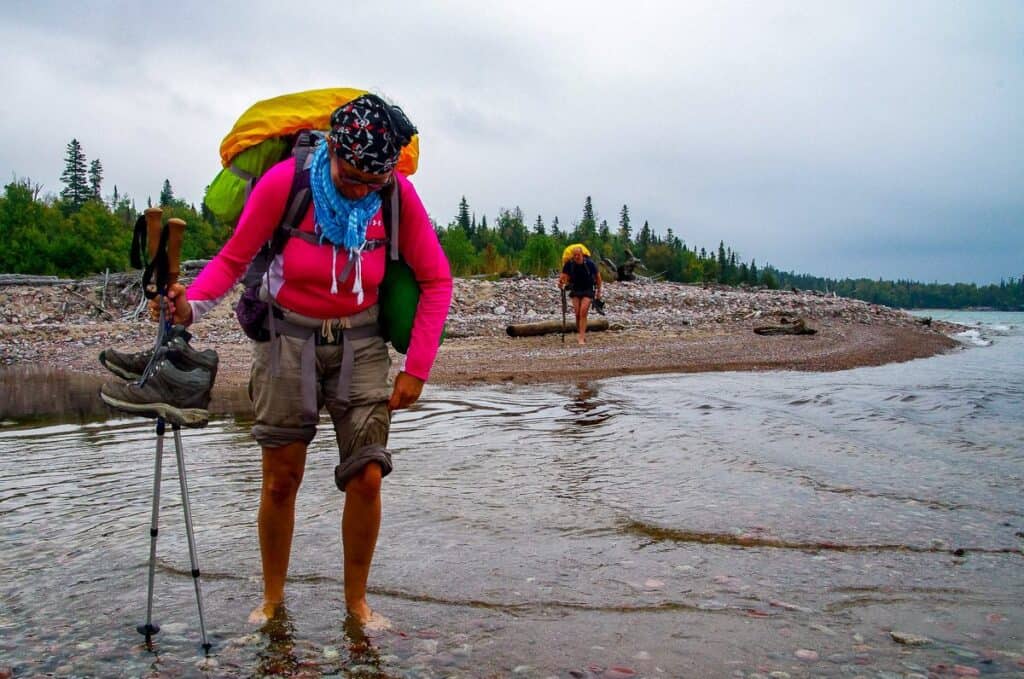
We finally hit the Coastal Trail at 1:30 PM, after a gnarly 3-hour boat ride and we head towards the bear locker instead of Swallow River – another 15 minutes of lost time. It’s 2 PM by the time we’ve taken our shoes off, waded through the Swallow River and start on the right trail. It’s also September with short days.
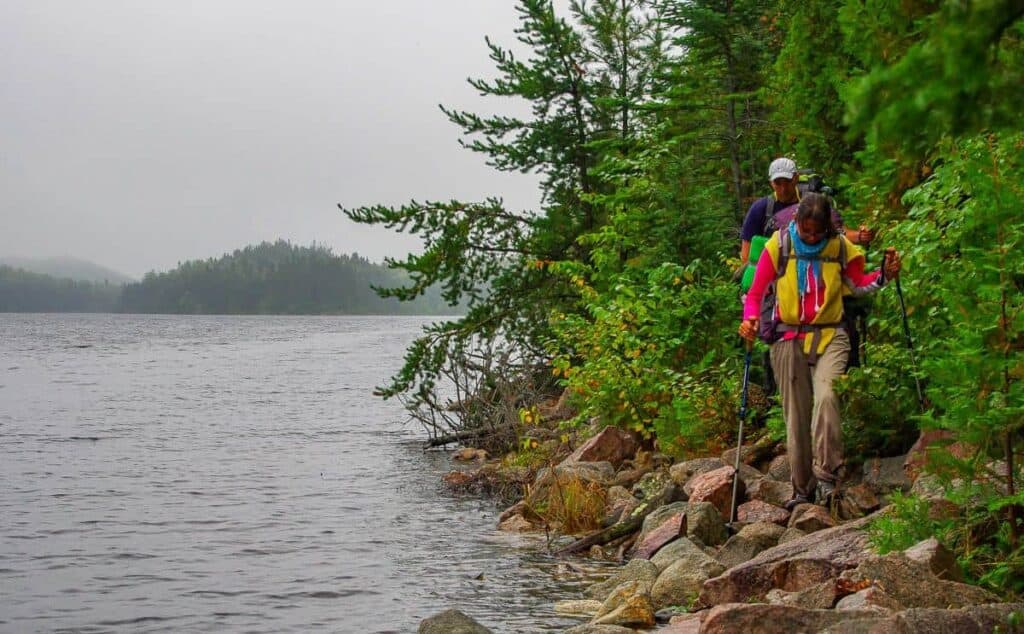
Our goal for the first night is White Spruce Harbour – 10 km away. There’s only one small problem. The trail is tougher than we figured and the rocks are sickeningly slick. So, our pace is slow – way too slow in my mind to get to our campsite. In fact, by 5 PM we are just at the Hideaway Lake campsite – and it looks like slow going ahead.
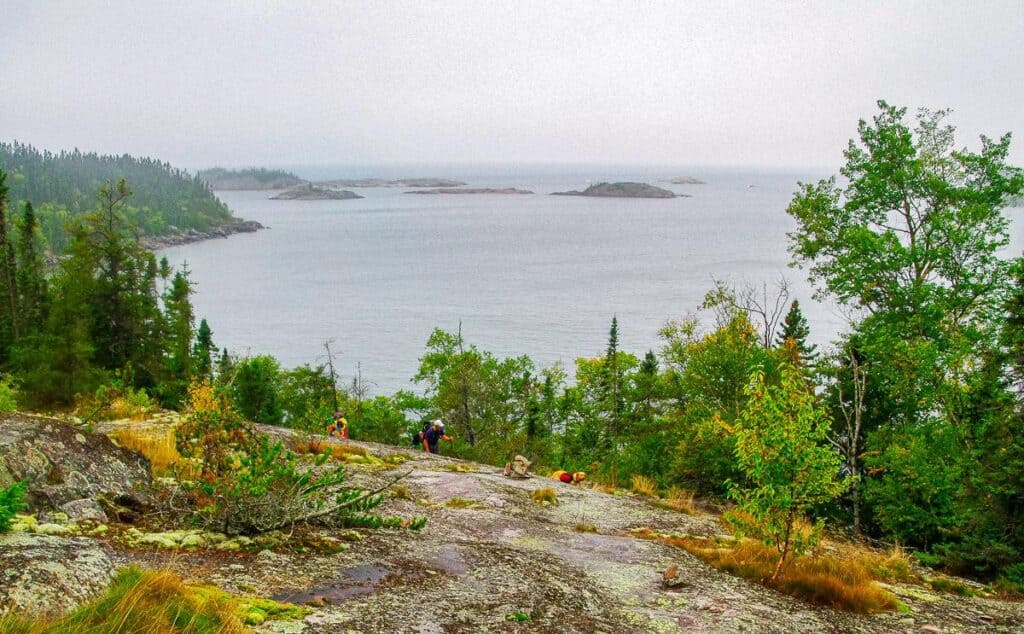
Continuing the Coastal Trail in the dark
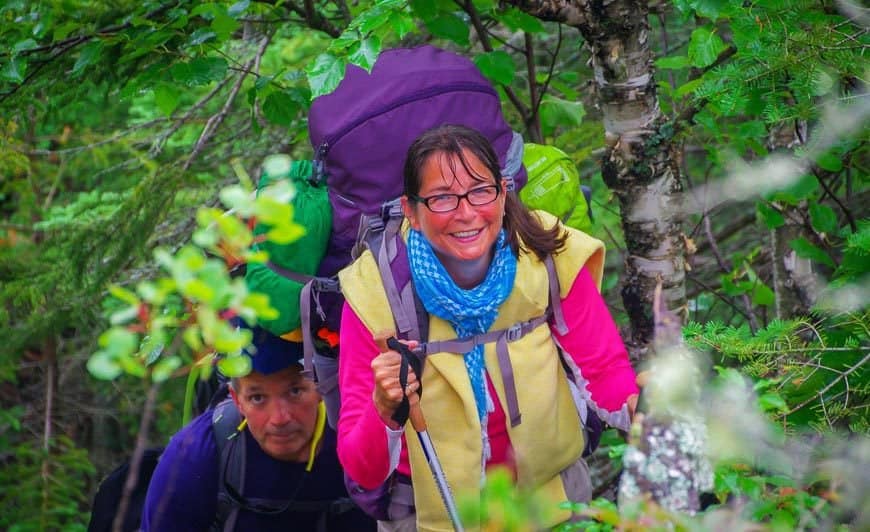
After we pass the Hideaway Lake campsite in Pukaskwa – and the other group who has caught up to us – we are left pondering if we’ll make it all the way to our intended goal. We as a group decide to continue.
The hours march on. I spend a lot of time looking at the map wondering where we might find some flat ground to pitch the tents. I spy a lake, but when we reach it, I’m disappointed. There’s no flat ground.
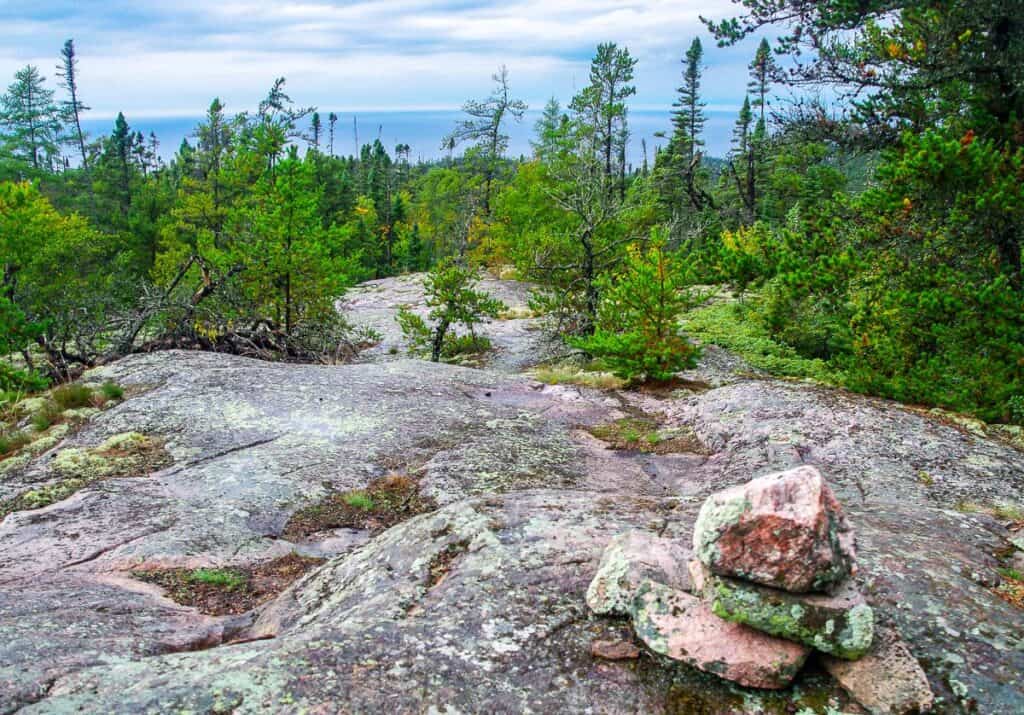
We continue – with headlamps on now – and ever more slowly. Stomachs rumble but we ignore them. When we reach the coast, I can’t find the cairns in the dark and the rock is so slippery that I’m scared of falling and breaking something.
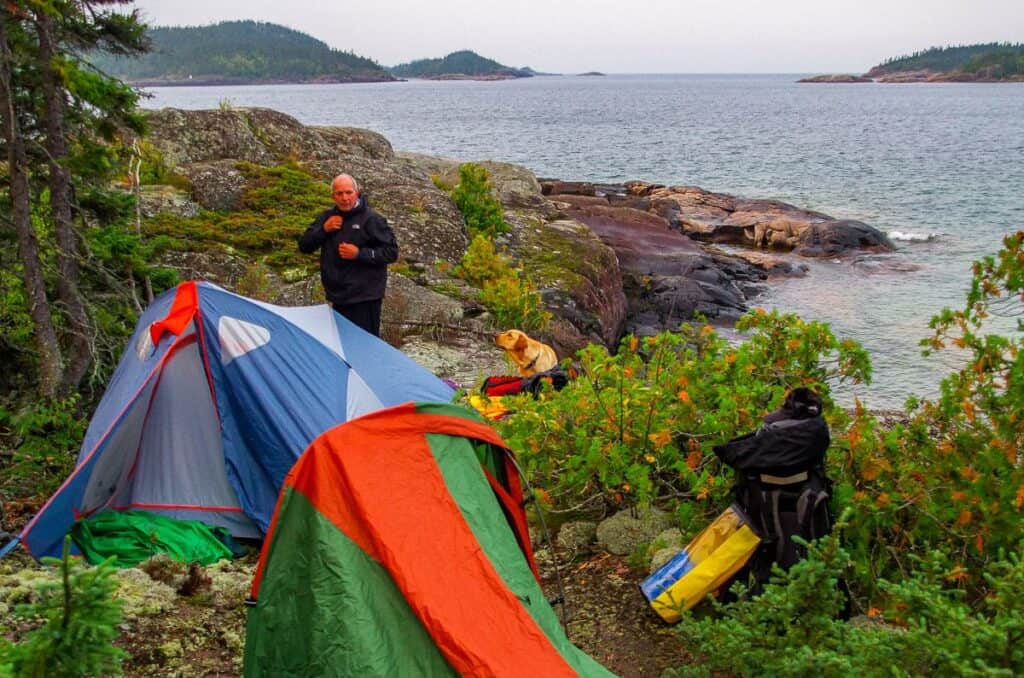
Jo says she can go no further which is fine by me. Somehow, we find two sorts of flatish sections of ground and pitch our tents in the dark. We have a quick snack and fall into bed at 10 PM. Never have I been so happy to be in a tent.
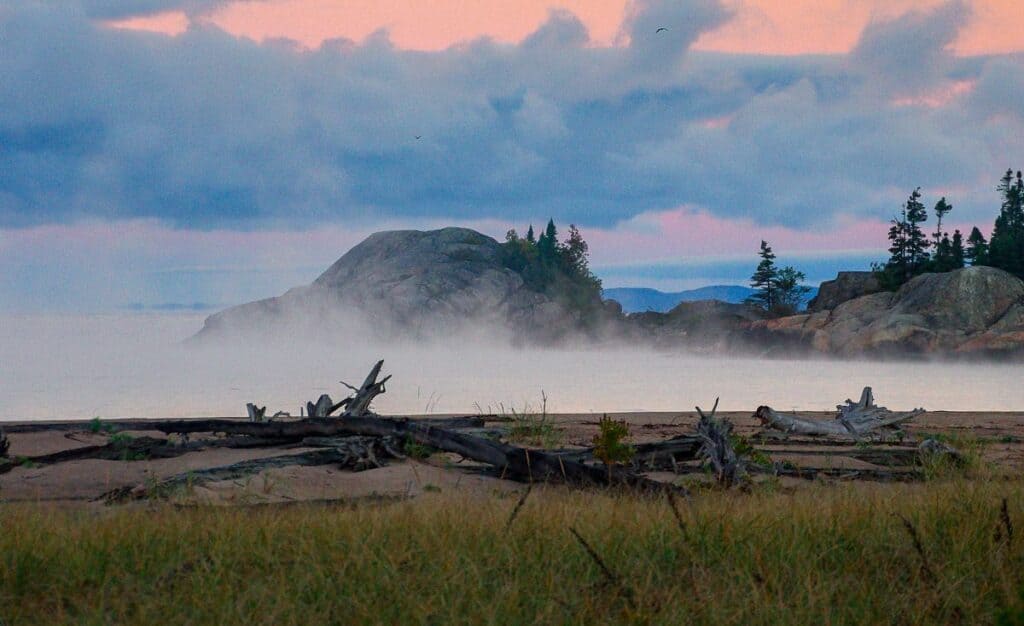
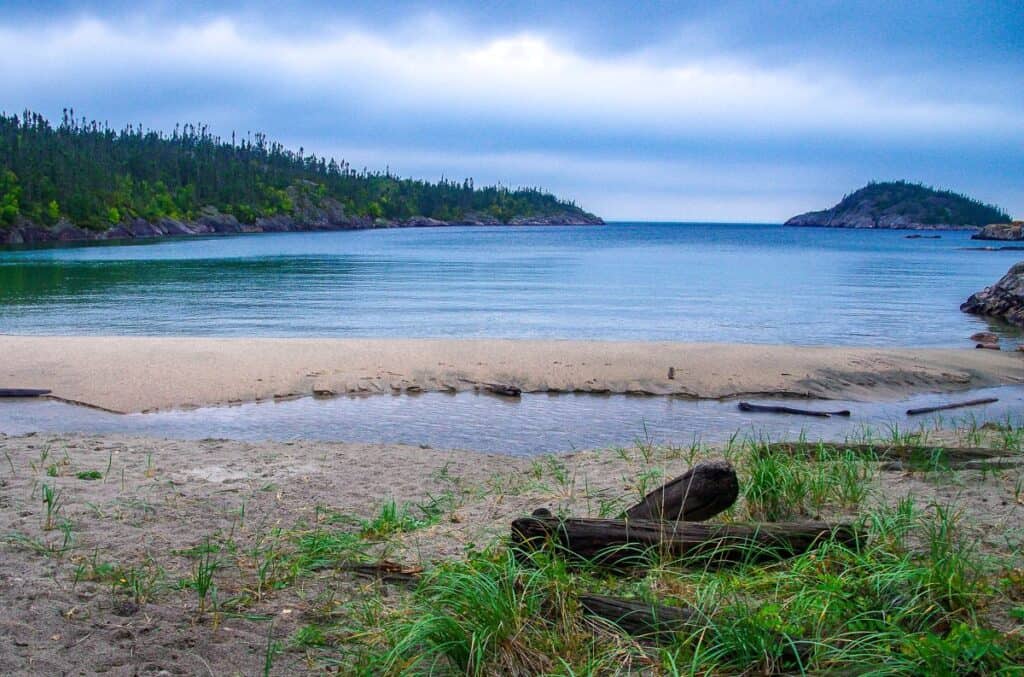
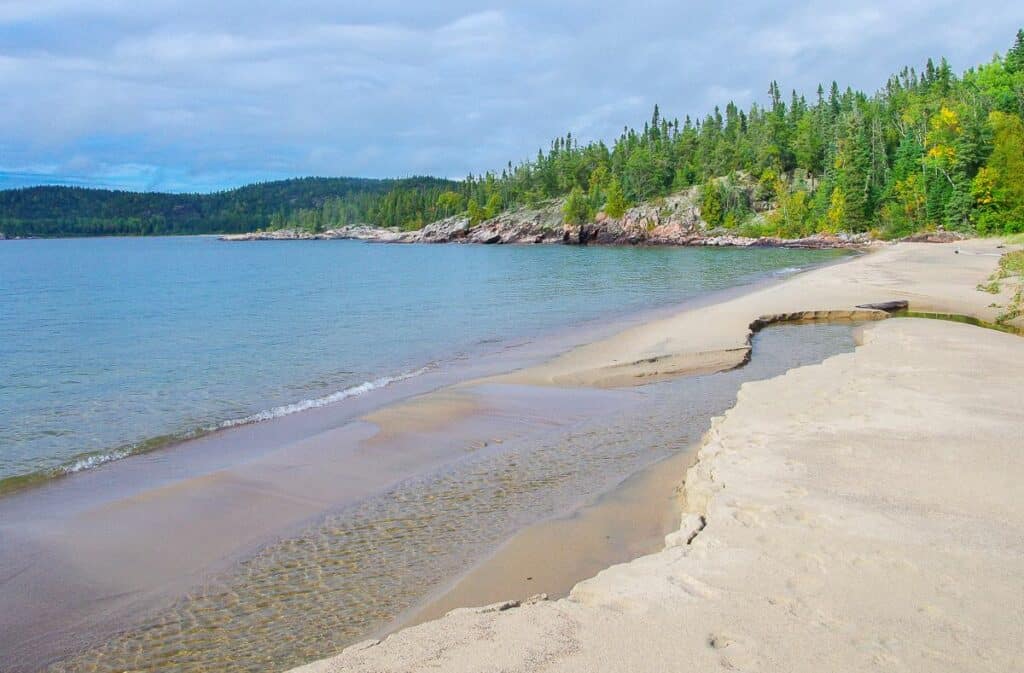
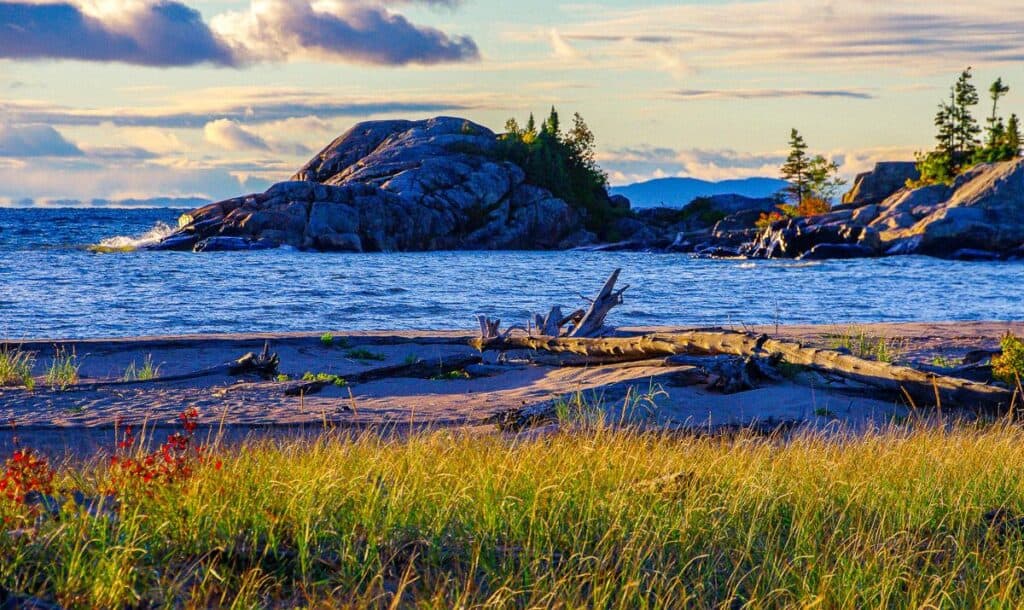
And below is the campsite we wake up to.
Day 2 – Wild camping to Fisherman’s Cove Campground
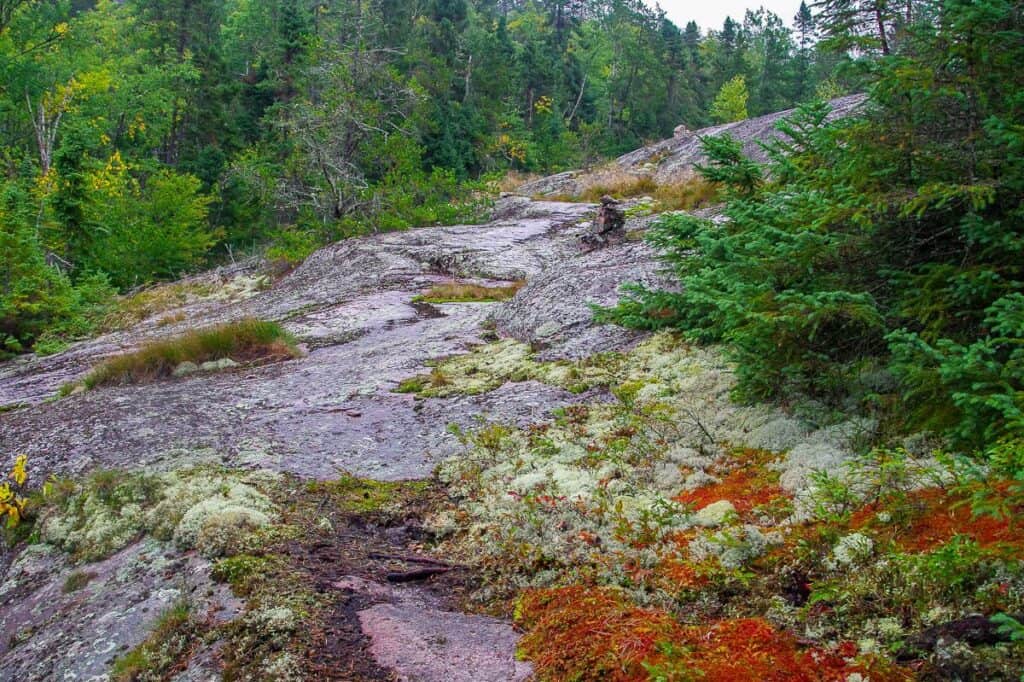
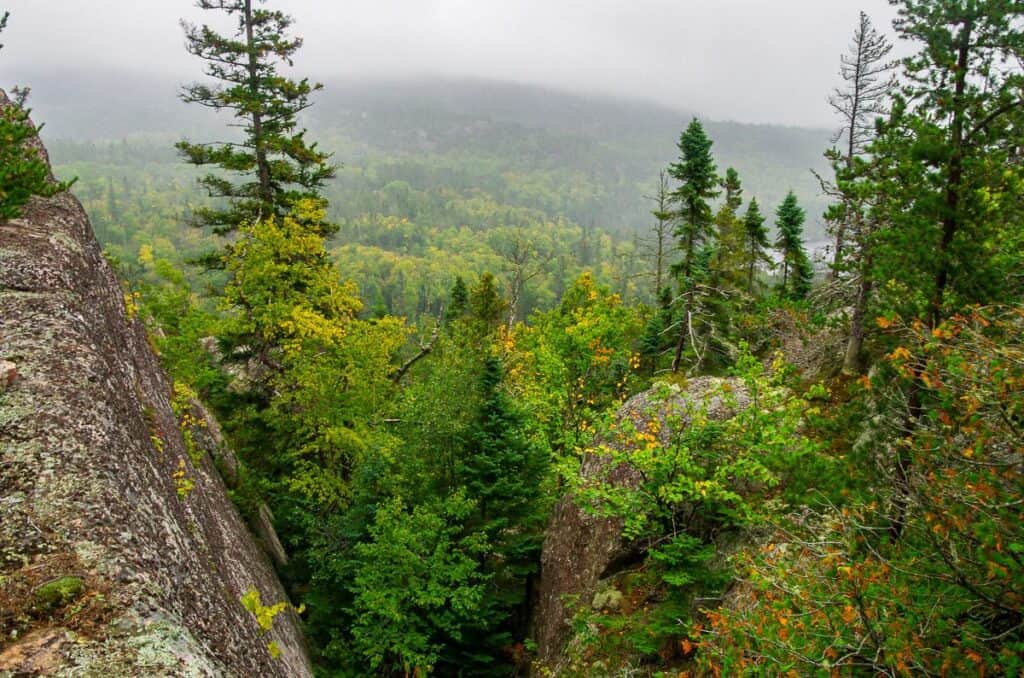
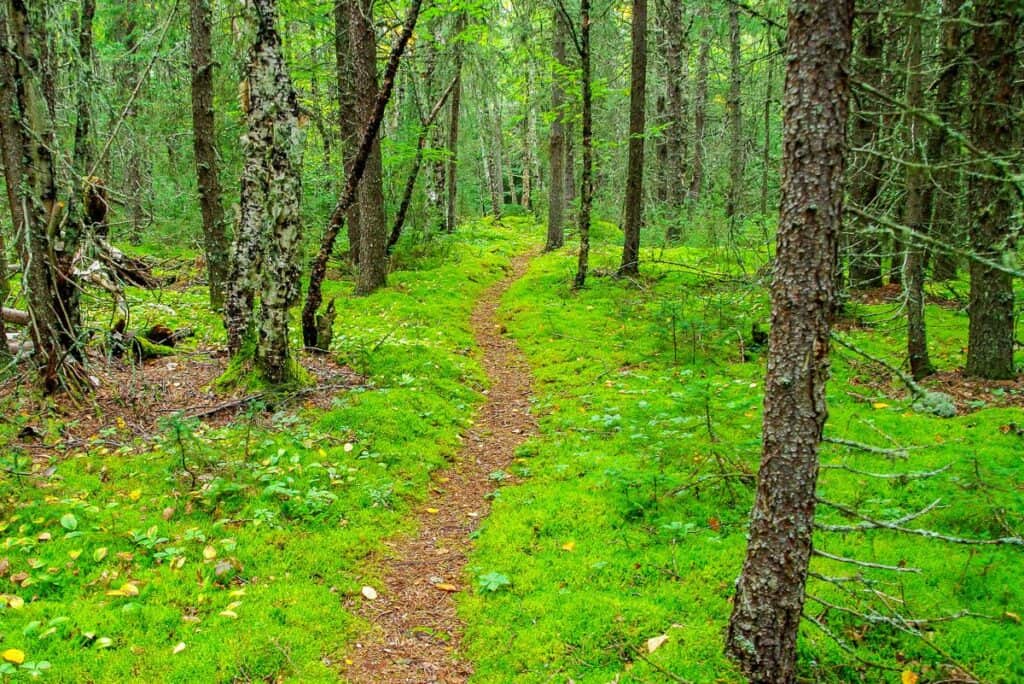
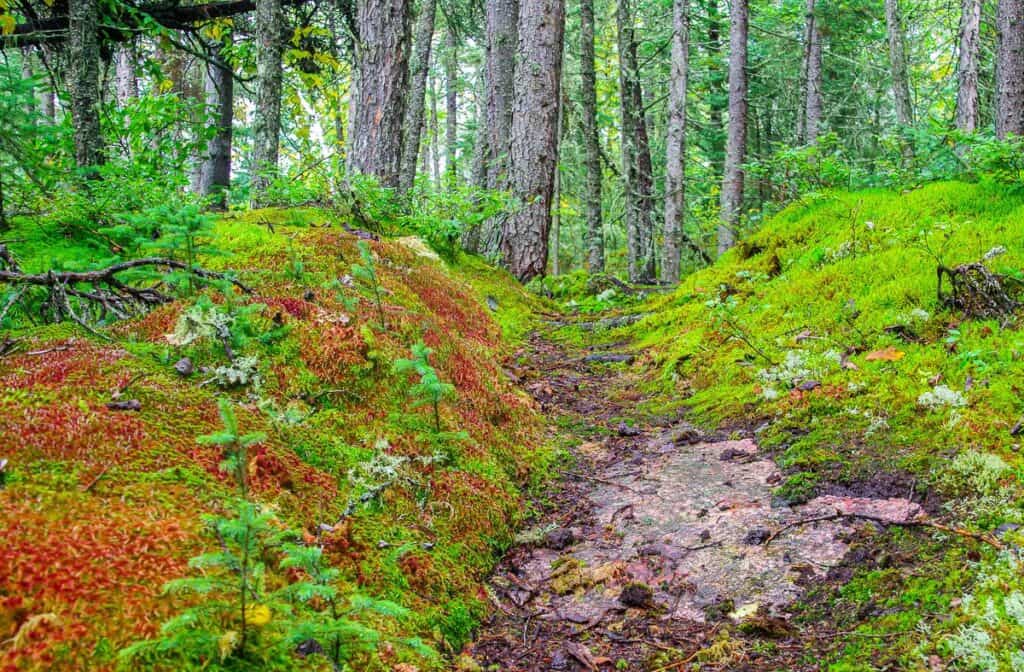
A decent night’s sleep, a cup of hot coffee, and several slices of fresh banana bread at put us in a positive frame of mind to continue. We knew that most of the day would be in the woods. It’s the one section on the Coastal Trail that I would describe as the least interesting. Still, there is lots of colour, textures, mushrooms and lichens to liven up the hike.
It didn’t take us long to realize that we made the right decision to stay put for the night on the trail. The first part of the hike took us over super slippery rocks and then up through a cleft in the rocks that I never would have found in the dark. Even in daylight it took us 90 minutes to reach White Spruce Harbour. It’s a beautiful campsite.
After a lunch stop at White Gravel River – a huge campsite that’s great for large groups – we motored on. The trail in the afternoon was tough – though if the rocks had been dry, it would have been a snap. They were slick and slippery. Every step required concentration and careful foot placement. Interestingly the Vibram soles on my leather boots didn’t grip the rock but the rubber on my $15 Crocs did a fantastic job. It’s too bad they didn’t offer the support I needed to backpack in them.
About 2 PM in the afternoon the thunderstorm that had been forecast the day before shook the ground and deluged us with rain. I regret that I hadn’t brought some short gaiters with me – to help keep my boots dry.
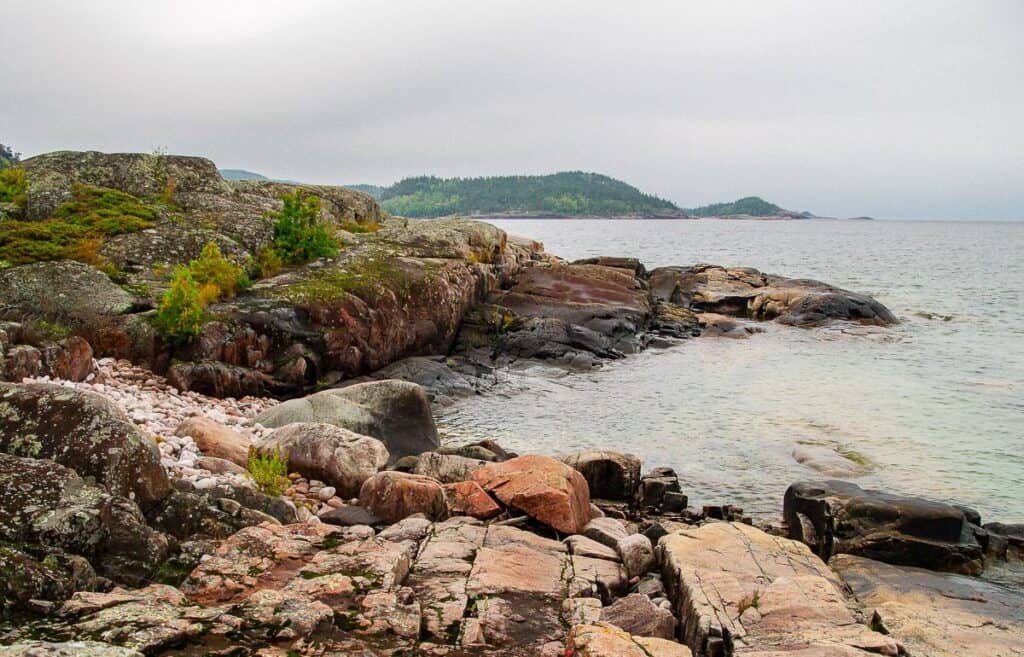
We didn’t roll into Fisherman’s Cove until 6 PM. It had been a nine-hour day and we were all bagged. Fortunately, the rain stopped before we got to camp. We were able to set up tents without getting anything else wet and eat our spaghetti dinner with a view of Lake Superior. I’d schlepped a Nalgene bottle full of red wine – so with a view like we had, a glass of wine, a warm tent and a full stomach, life now seemed pretty good.
Day 3 – The Day from Hell
Don’t get me wrong about the day from hell. The scenery for most of the day is superlative – a 9/10 in my books. It’s the trail that is the problem and it’s a twofold one.
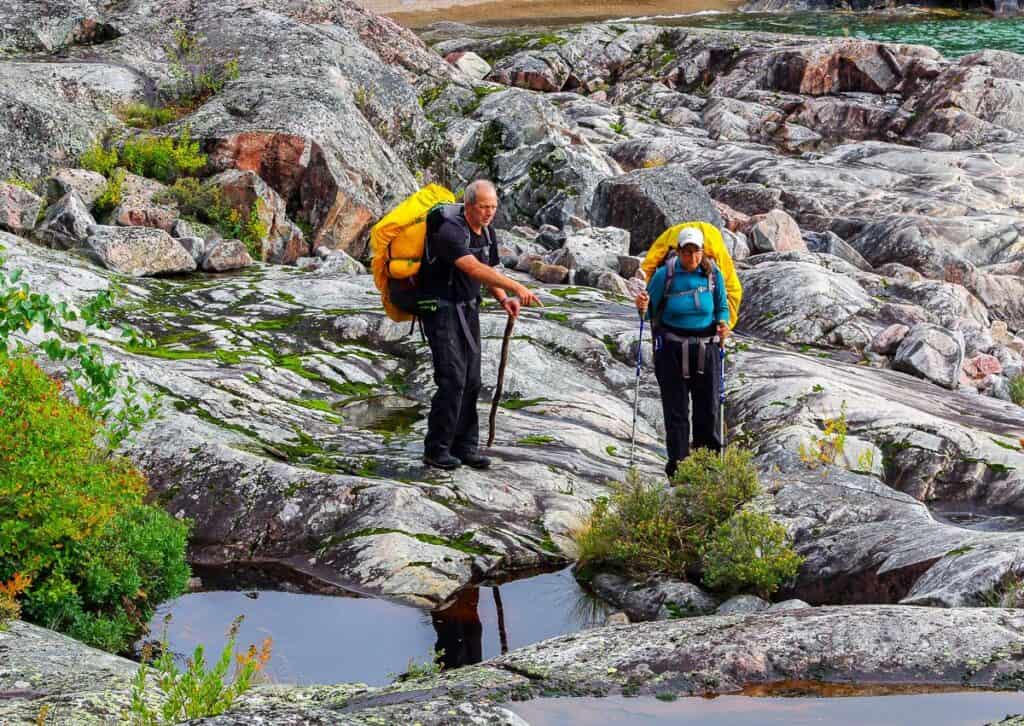
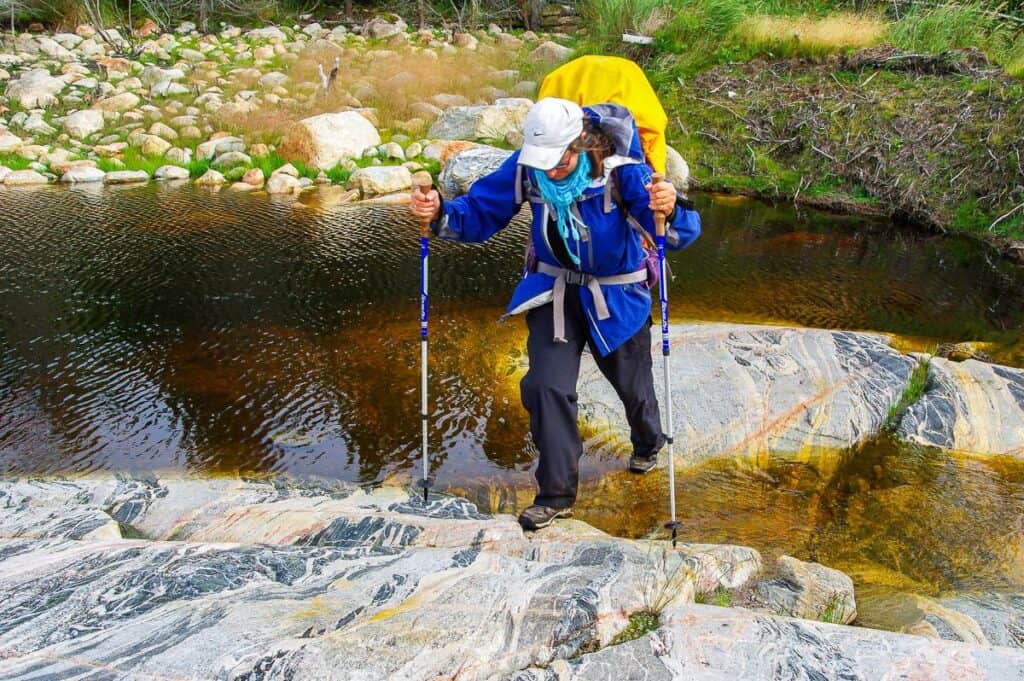
Finding the trail on occasion takes some time. And it’s particularly treacherous along the coast. Wet, slippery rocks lie in wait to derail the unsuspecting hiker. Take your eyes off your footing for a second at your peril. I have the bruises to prove it.
We start the day by going down a beach looking for a trail and taking tracks through the woods in error. By the time we’ve finally located the real trail – and waded a pond we’re already 30 minutes into the day and we’ve gone about 200 m.
Next is a stiff climb up a stream bed laced with large, mossy boulders. I’m already feeling anxious about our pace by the time we get to the top of the hill, but it still takes us another hour of walking through the woods before we reach the lake again. We haven’t even gone a kilometre.
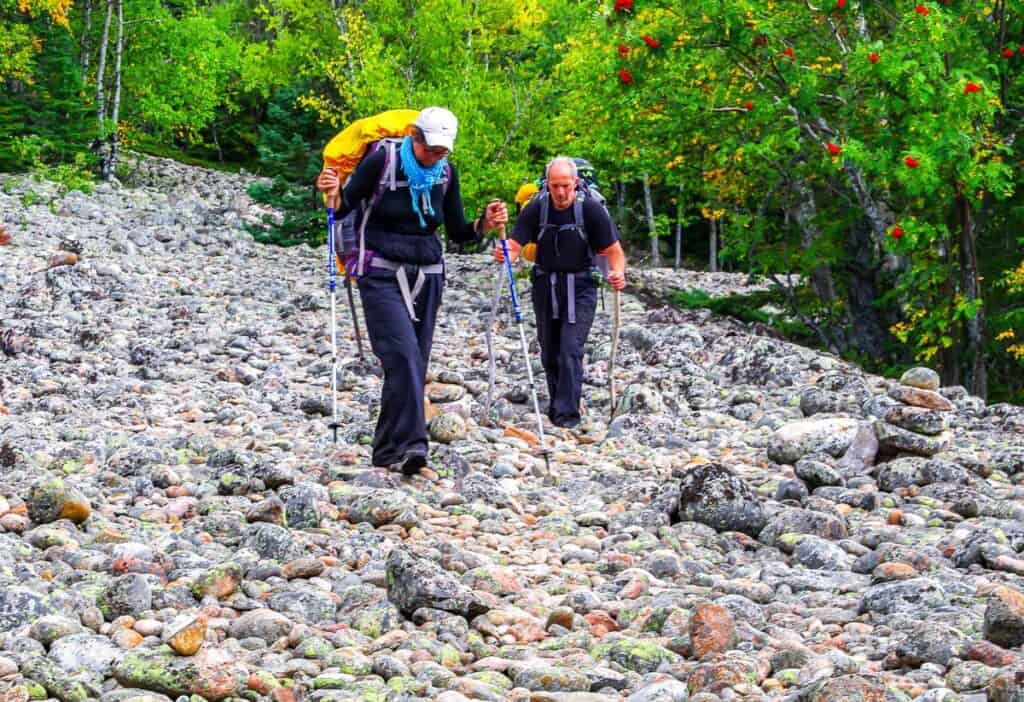
When we arrive at Lake Superior again, we look in dismay at the rocks. They’re full of fractures – and easily capable of causing a leg break or sprain. It’s excruciatingly slow going to get through the rocks and another hour slips by.
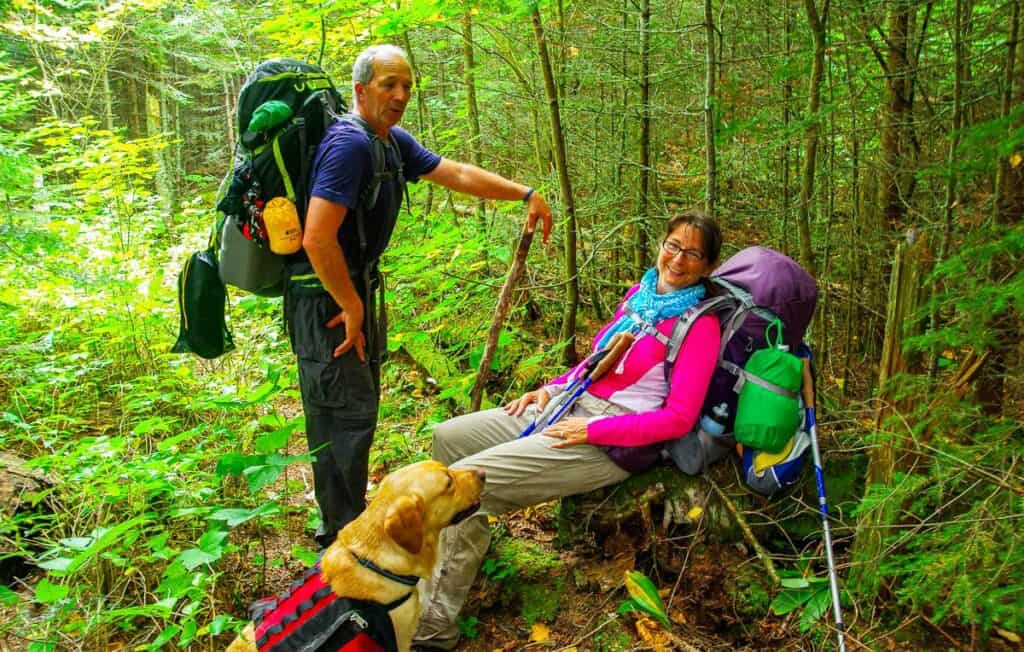
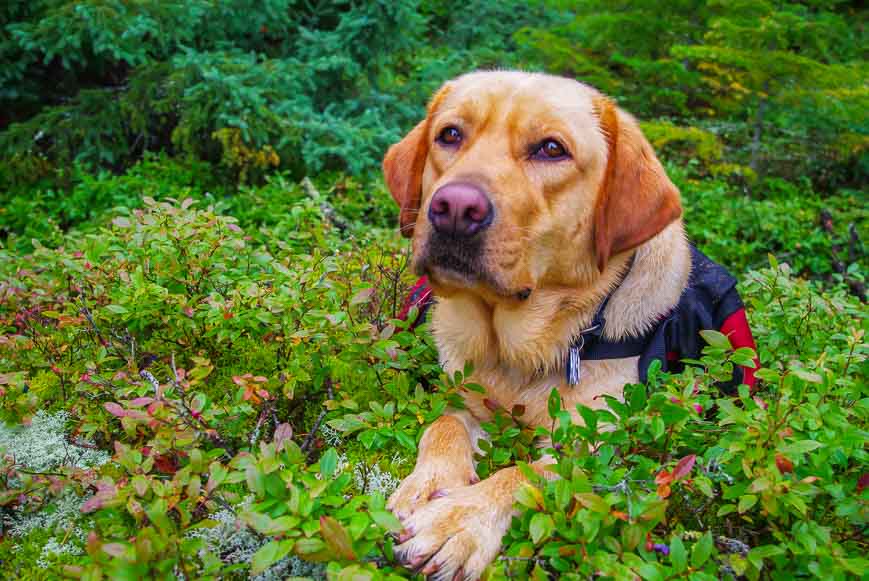
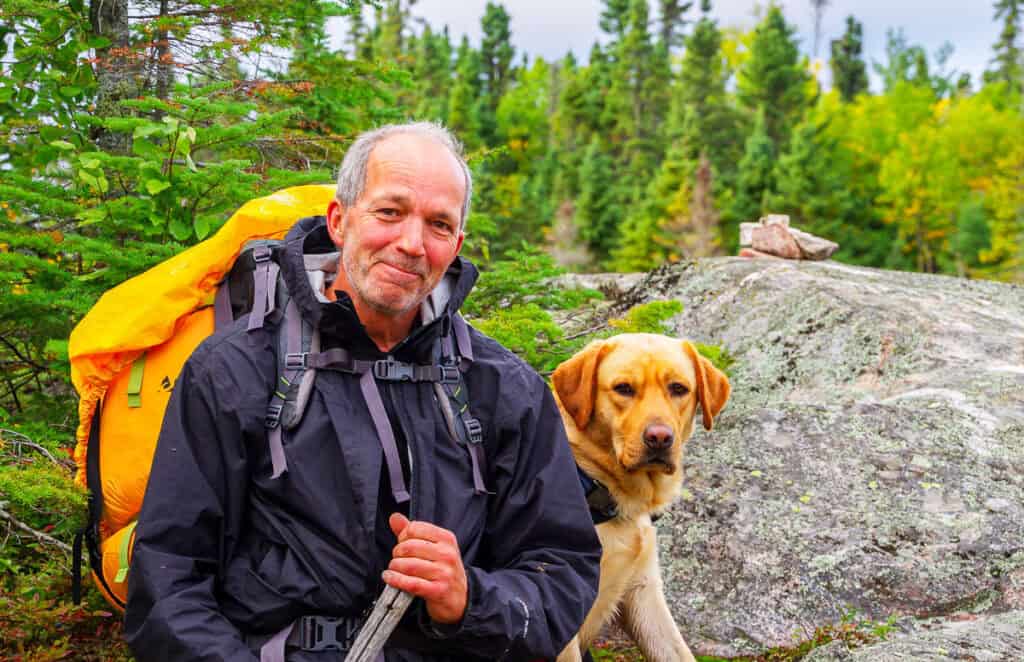
I look repeatedly at the map figuring the map must be wrong. (You do need map reading skills out here!) But that’s just wishful thinking on my part. By the time we stop for lunch we’d hiked for 3.5 hours and covered about two kilometres. Even the dog seemed disheartened.
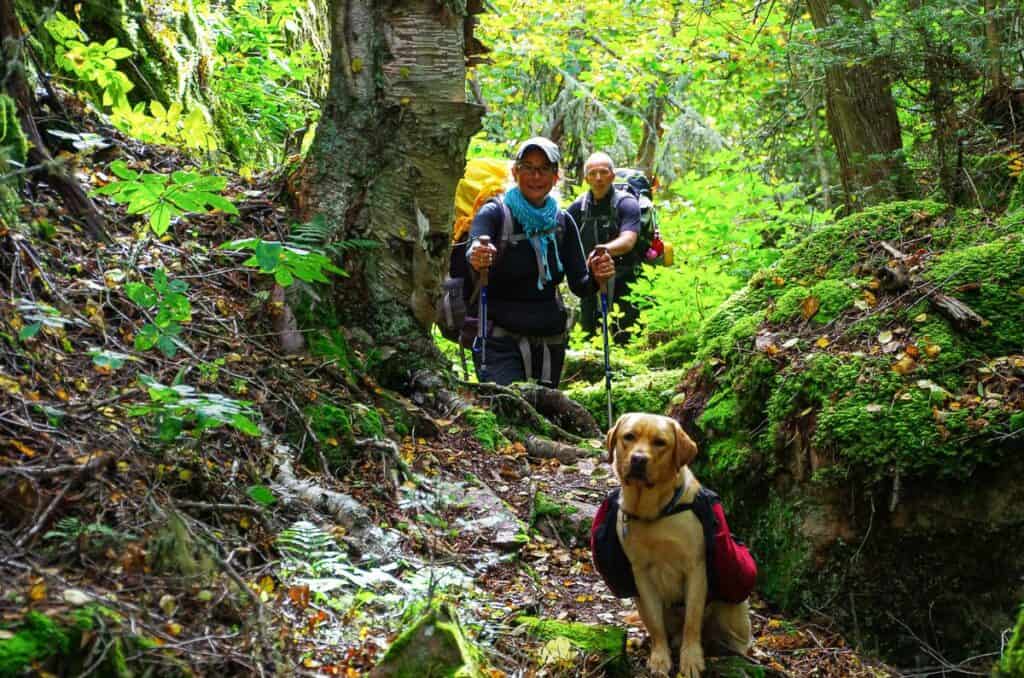
After lunch we enter the woods so for a while we make up some lost time. It seems we have an ongoing love/hate affair with the woods when it came to hiking the Coastal Trail. Today with the coast so rugged we were happy to be in the woods – and other times we’re begging for a beach. These woods are lusher and greener than I ever would have expected.
The afternoon wears on and we decide by 3 PM that there is no way we can make Morrison Harbour. Even Fish Harbour – 3.4 km closer – doesn’t seem possible. We set our sights instead on making it to Oiseau Bay.
We struggle on in the afternoon – alternating between hiking across slippery rocks, getting down on our rear ends with a heavy pack and sliding down rocks and enjoying the odd easy stretch in the woods.
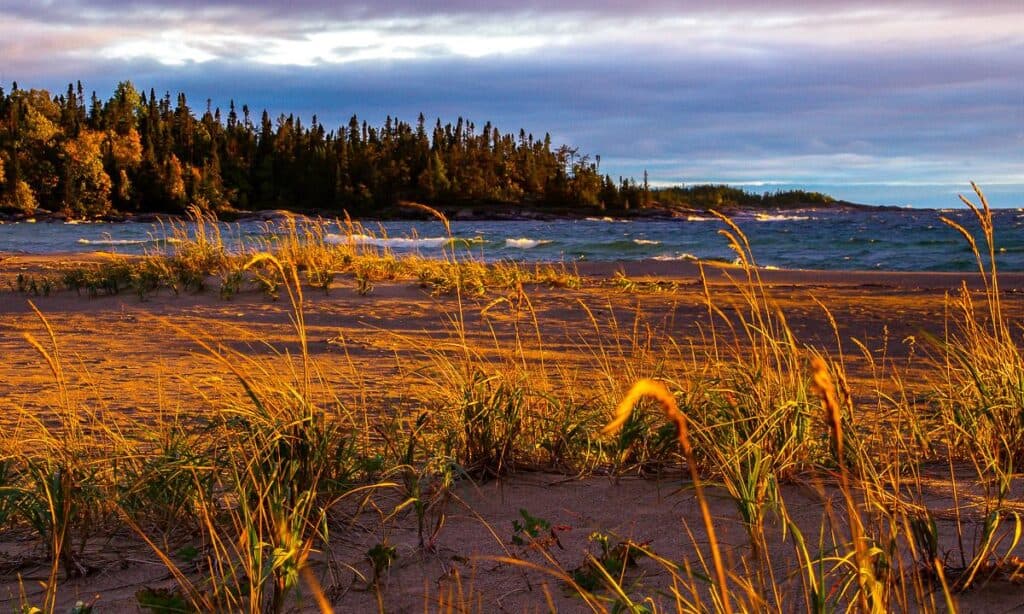
It’s 5:15 PM when we reach Oiseau Bay – and what a wonderful sight it is. It boasts a huge, deserted beach – suitable in places for camping – though the official campsites are in the woods and closer to outhouses and bear lockers.
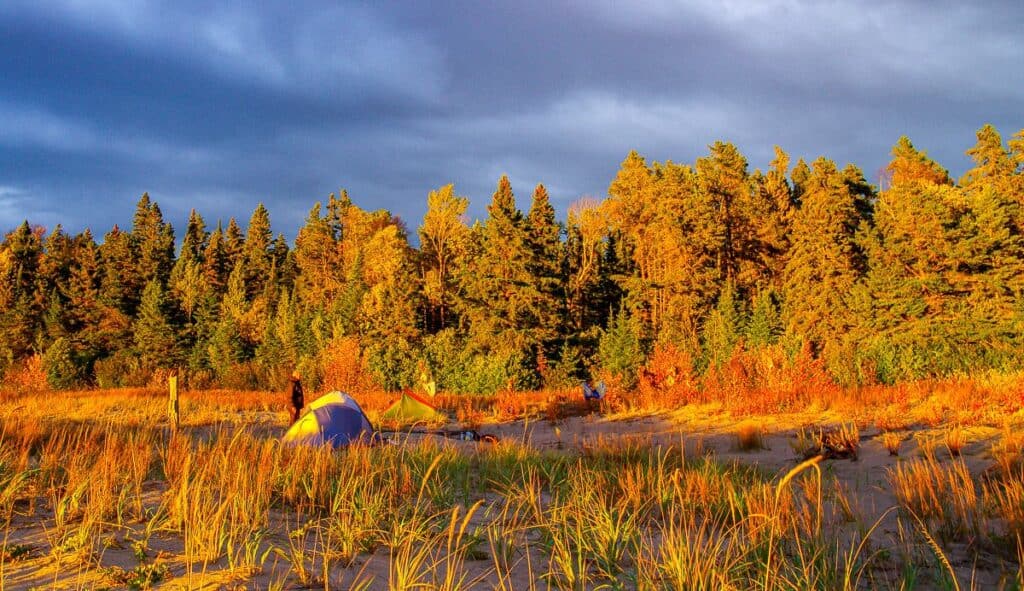
We decide to camp on the beach figuring we could dry out our clothes in the wind and enjoy the scenery from our tents. It’s more of a hike to the bear lockers, but I’d always take a beach over the woods for camping.
We hiked 7.2 km, averaging about a kilometre an hour – totally disheartening numbers. However, the beauty of the camp site, a hot meal of spaghetti with a glass of wine, and a superlative sunset provided a welcome boost to our spirits. So, the day from hell ended on a good note – but as the map reader I couldn’t help but wonder if we’d ever get off this trail.
Day 4 – Oiseau Bay to Willow River
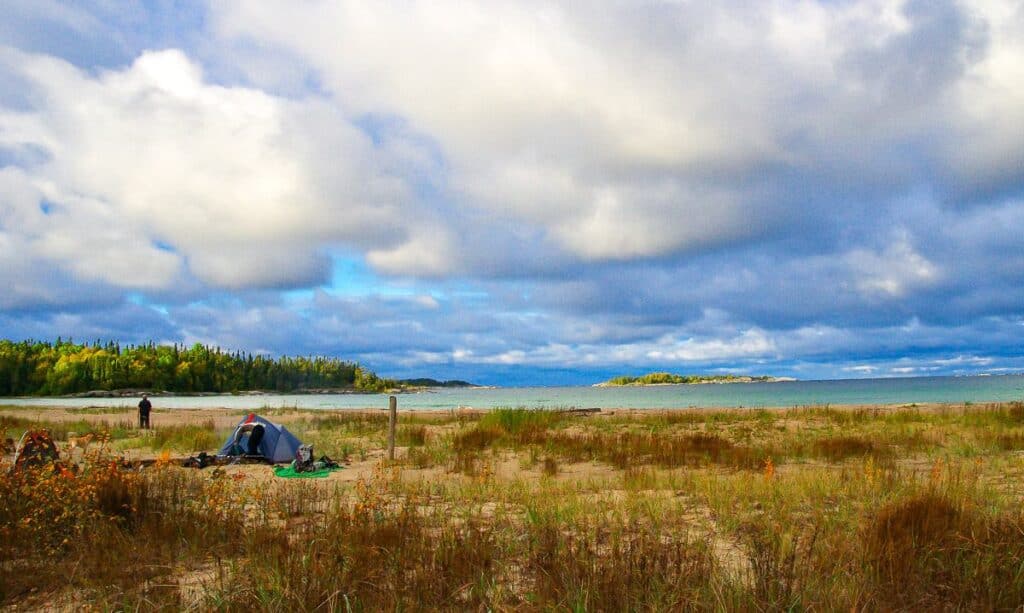
Our plan for this day was to hike 14.1 km from Oiseau Bay to Willow River. We got started at 9 AM but didn’t roll into camp until 6:40 PM. Still, we were thrilled to have made it.
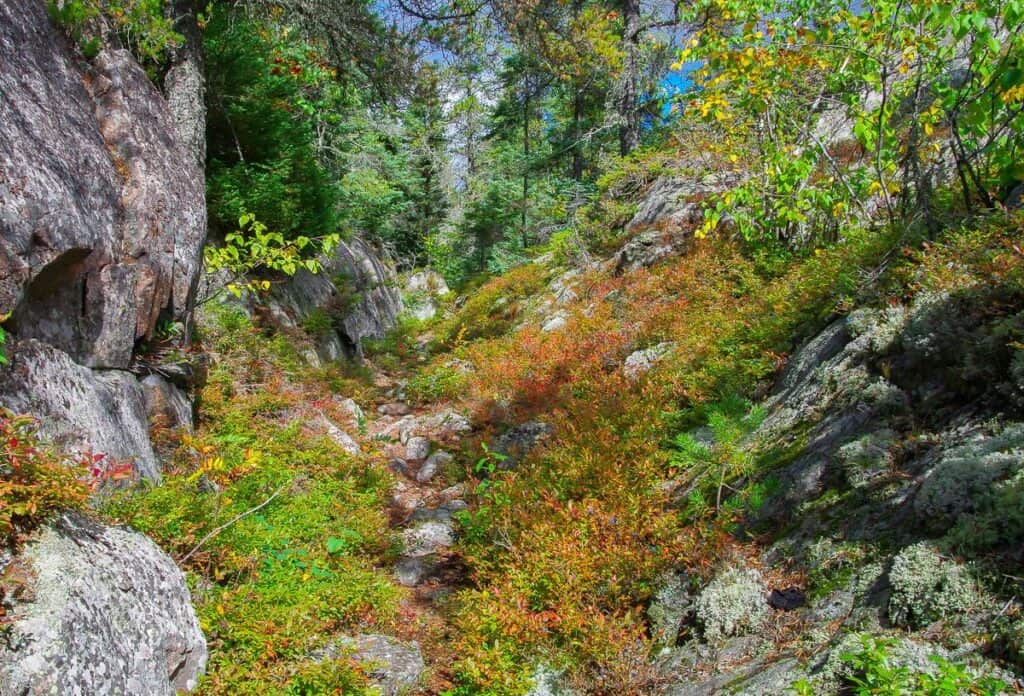
The hike was a delightful mix of woods and shoreline. The highlight was the section leading towards Fish Harbour that takes you through a cleft in the rocks and deposits you on the Lake Superior shoreline. Here you must scale a small cliff – which for us was no problem, but it required a big lift for the dog.
After lunch it was more forest hiking until we reached Morrison Harbour. We had made reservations to stay at Morrison Harbour – for the night before no less – but in hindsight I’m glad we didn’t end up camping here. It’s in the middle of bear country and the one area where you are warned at the orientation session to be on high alert for bears.
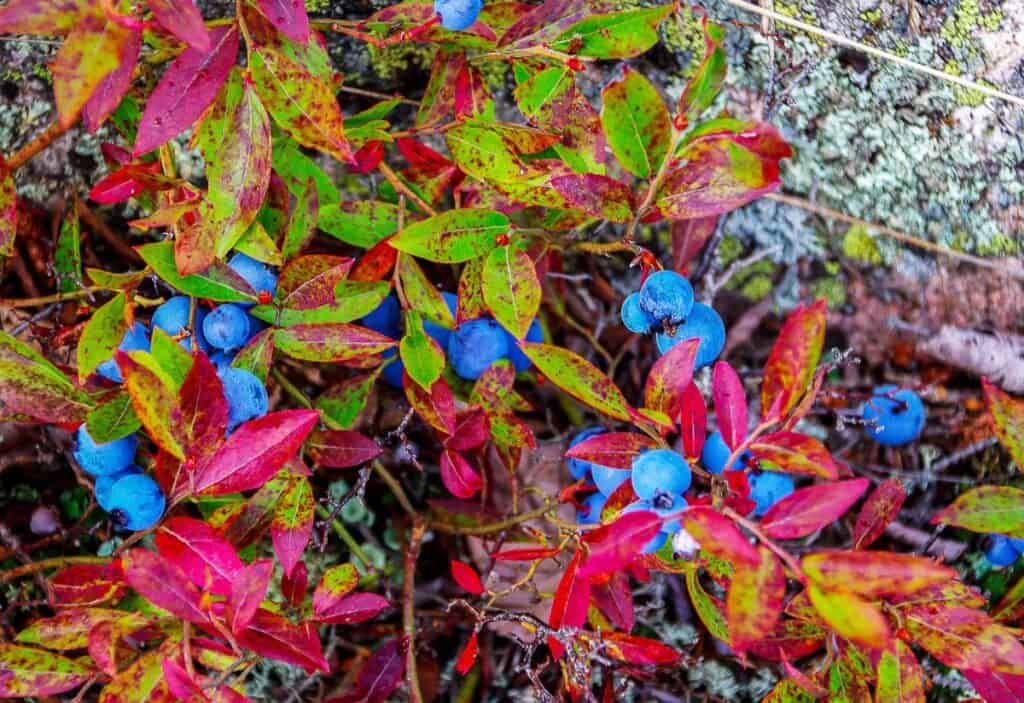
We had seen countless piles of bear scat before arriving at Morrison Harbour. I have never seen blueberries in such abundance as I did through here, so it makes perfect sense that the bears love the area.
Day 5 – Willow River to Hattie Cove
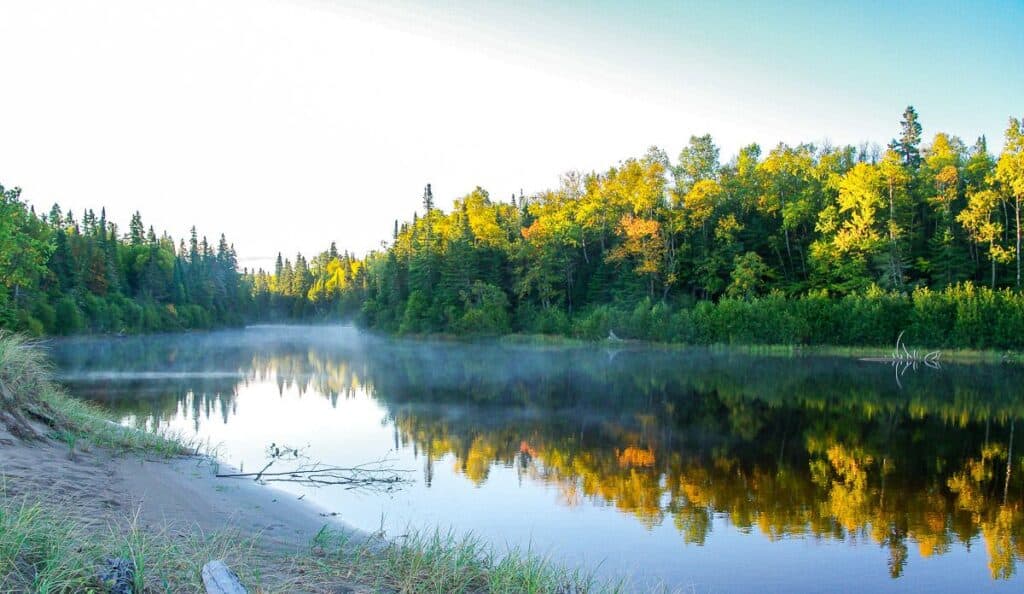
It was only 2°C according on the last morning. I had a hard time leaving the warmth of my tent but felt energized once I saw what a beautiful morning it was.
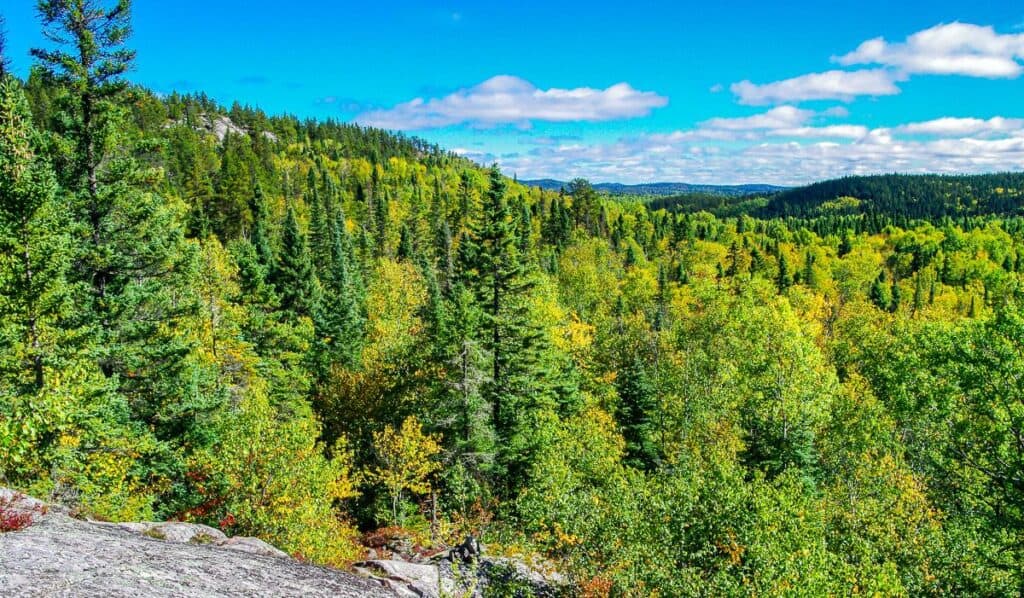
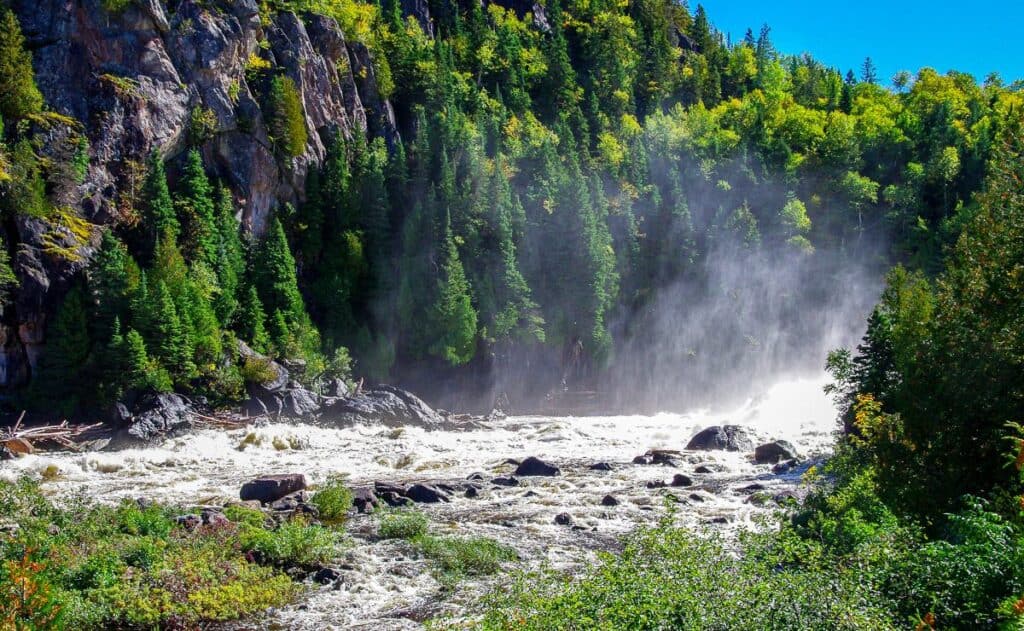
We knocked off 7.6 km to Hook Falls quickly because it was easier than expected. It was also very pretty. We passed small lakes, a waterfall and then hiked a series of ridges with views of the nearby hills. If we’d been a week later, the colours would have been at their peak.
We arrived at Hook Falls on the White River for lunch – ahead of the suggested time for once. There are a few campsites here, and in fact our reservation had been for Hook Falls, but I think the three of us were happy that we ended up at Willow River instead. Sometimes it pays to be slow.
I particularly enjoyed seeing the White River as my son had canoed it as a teenager. It’s a far more powerful river than I anticipated especially as it narrowed toward its’ end.
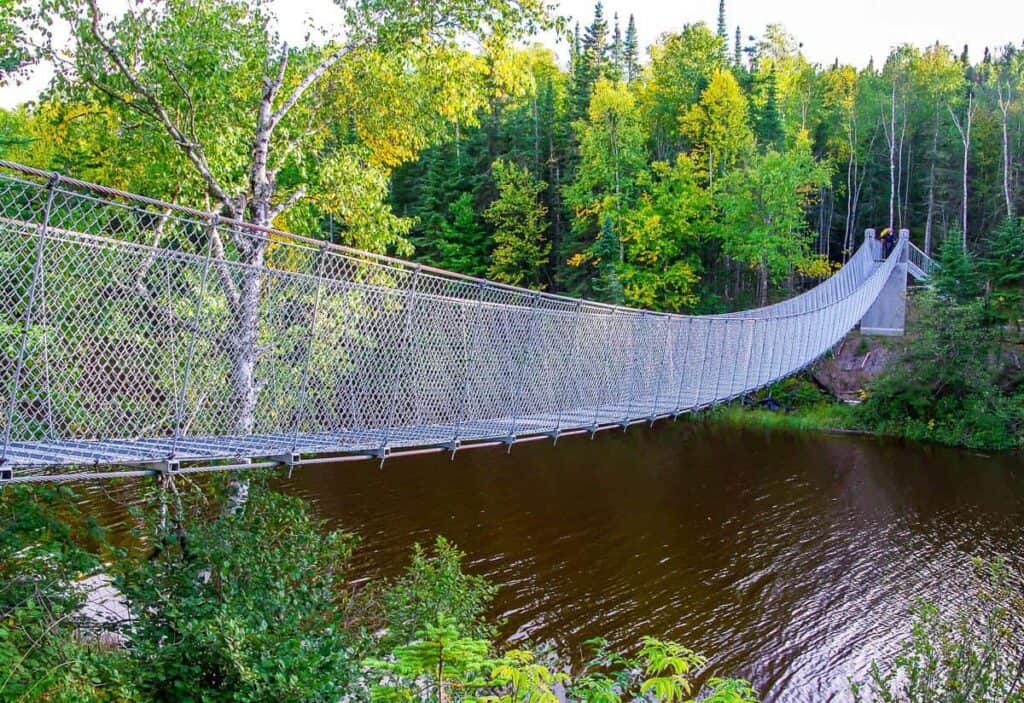
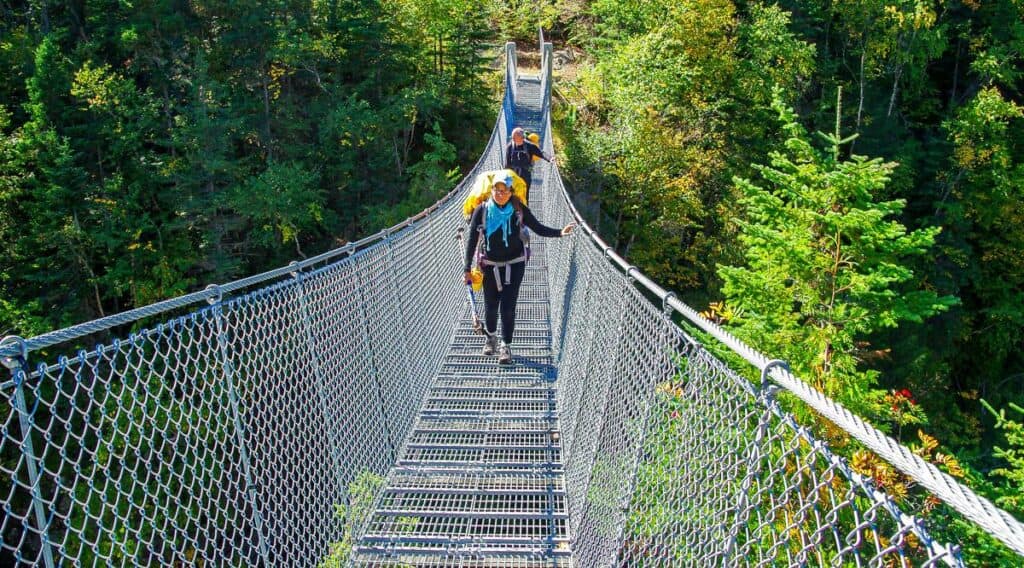
The hike from Hook Falls to the White River Suspension Bridge was quite gnarly despite looking benign on the map. It involved a lot of up and down as well as some clambering over logs left from a period of flooding.
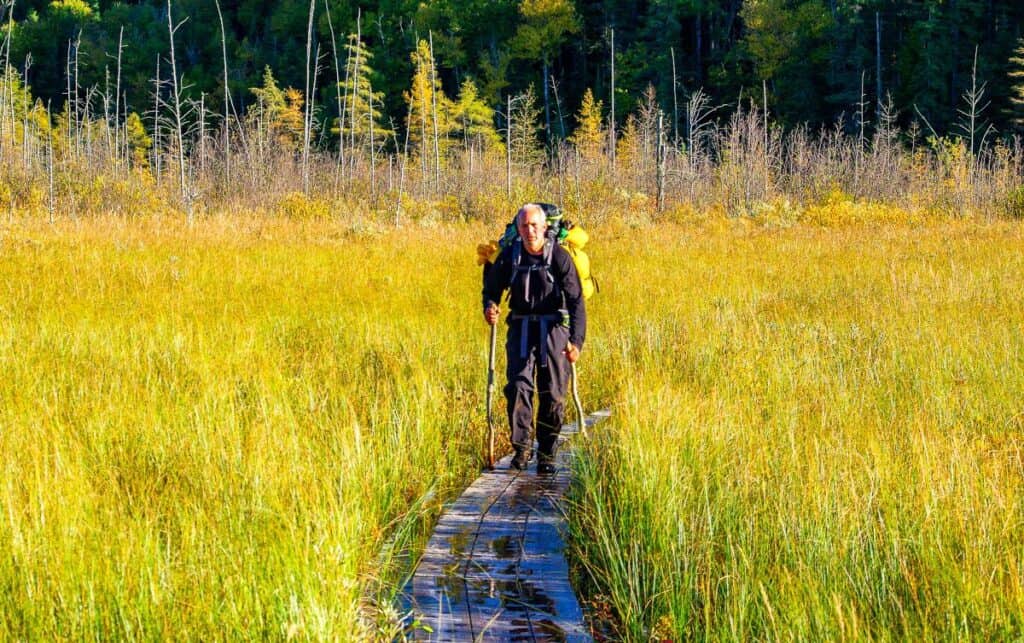
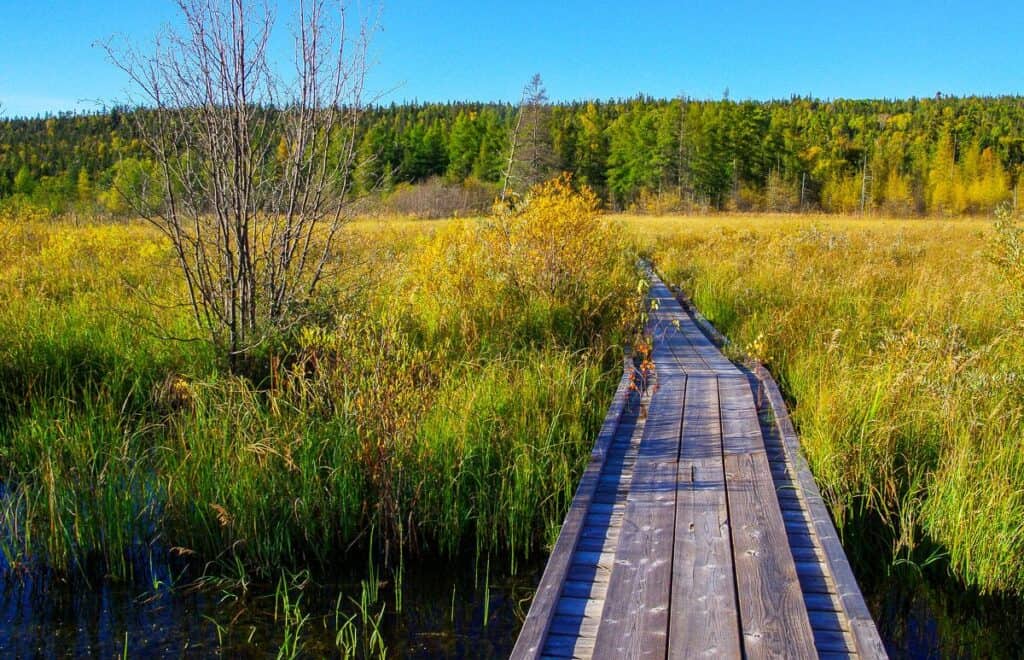
Once we made it over the suspension bridge the hiking got noticeably easier for several kilometres. It was almost like a walk in the park. Once we reached the extensive boardwalks through the swamp at the far end of Hattie’s Cove we knew we were home free. It was at most a couple of kilometres to the parking lot.
We arrived at the parking lot at 6:15 PM which I though was amazing considering how Jo’s knee had slowed us down at the end of the day. Instead, it was an underwhelming finish but my gosh it felt amazing to be finished backpacking the Coastal Trail in Pukaskwa.
What Makes the Coastal Trail Challenging
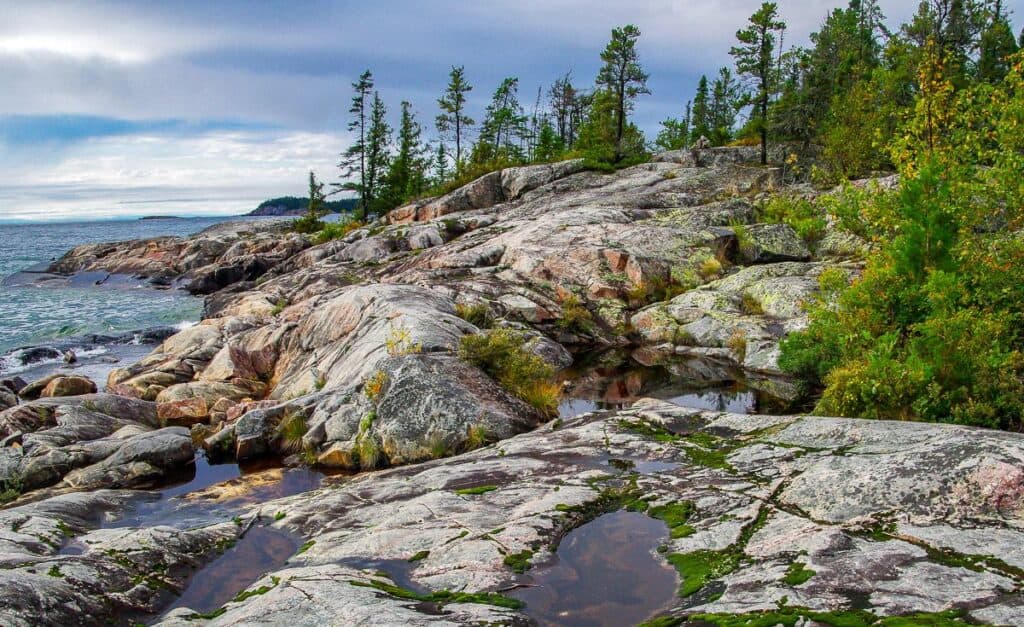
I found the slippery lichen-covered rocks to be the most challenging aspect of the Pukaskwa Coastal Trail. Long granite ridges – similar to what you see on the La Cloche Silhouette Trail – look like they are made for quick and easy hiking. Instead, we were often scooching along on our butts because you risked falling if you stood upright on a slope. In fact, Ted wore out the bottom of his backpack from dragging it.
Long days were a challenge too. And the odd bit of route-finding. I would install Organic Maps (a free offline hiking app) on my phone if I were doing it now, to get my exact position in relation to the trail. There are a few places where it would have saved some time.
What to Pack for the Coastal Trail
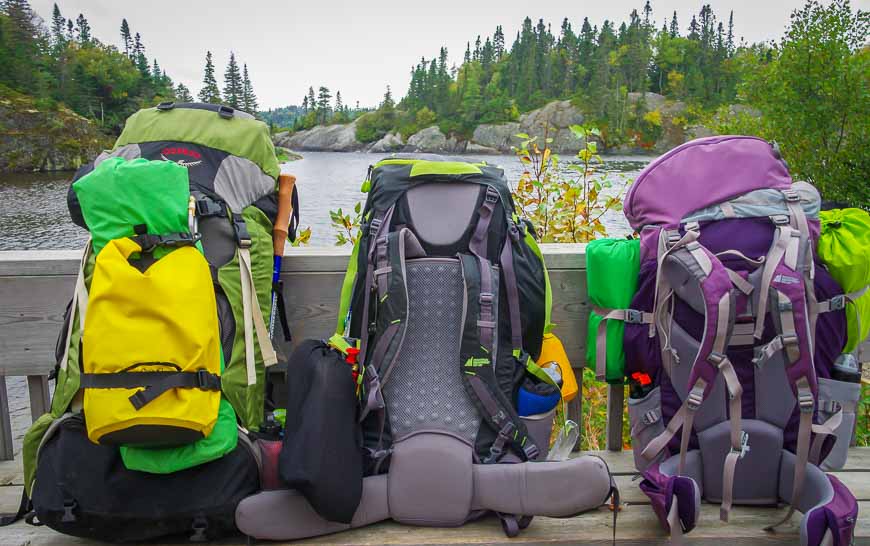
The Coastal Trail in Pukaskwa National Park should not be your first backpacking trip. Carry the 10 hiking essentials (includes first aid kit, headlamp…) the gear listed below plus a few extra days worth of food. Please practice Leave No Trace principles.
Personal gear
- Sleeping bag and sleeping pad
- Bowl, utensils and this mug
- An emergency device like a Garmin InReach Mini 2
- Bear spray
Personal clothing
- Good quality rain gear with hood
- Quick dry short and long-sleeved t-shirts
- Sun hat, sunscreen, lip balm
- Long underwear, fleece, hat, gloves, warm jacket
- Quick dry shorts or long pants
- Hiking boots, camp shoes, several pairs of socks
- Bug hat, bug jacket
Camping gear
- Water filter or water purification tablets
- Tent and tarp
- Stove/pot combo and fuel
- Cooking pot, knife, food sacks, lightweight, high-energy food
- Duct tape, gear-aid tape
Is the Coastal Trail Worth It?
Despite the difficulty and hardships on the Pukaskwa Coastal Trail, I wholeheartedly recommend it. A few weeks after finishing it I got an email from Jo saying “You know reliving the pics makes me want to do the trail again; is that a weird feeling?
It is one of my all time favourite backpacking trips in Canada. The Coastal Trail is hard, gnarly, beautiful, and desolate. It might test you, but the rewards and sense of satisfaction will never leave you. If you ever get the chance – go!
For more information about the hike and for detailed maps (and to make backcountry reservations) visit the Pukaskwa National Park website.
Tips for Hiking the Coastal Trail in Pukaskwa National Park
- Aim for a pack weight that is no more than 1/4 to 1/3 of your body weight.
- While you can hike it in 4 days, taking 5 – 6 days allows for a more enjoyable pace.
- Look for rock cairns – which are sometimes difficult to find in rocky sections.
- Be hyper aware of slippery rocks and wooden boardwalks.
- Start early in the day to maximize daylight and ensure you reach camp before dark.
- Wear sturdy, well broken-in hiking boots.
- Let someone know when you are due to finish.
FAQ’s Coastal Trail in Pukaskwa
Yes you do need a mandatory backcountry camping permit and a Parks Canada pass. Book online at parks.canada.ca or call 1-877-RESERVE.
The Coastal Trail in Pukaskwa is a challenging multi-day hike. This should not be your first backpacking experience.
Unless you like biting insects, plan to hike the Coastal Trail from late August until late September.
Most people take 4 – 6 days. I think five days is ideal, though 6 days allows you to hike at a more relaxed pace.
Black bears may be sighted especially in blueberry season. We didn’t so much as see bear scat.
Pukaskwa National Park is known for its long buggy season. I think hiking in the middle of it detracts greatly from the experience, even if wearing a bug jacket and bug hat. Go in September to avoid most of them.
The 18 km out and back hike to the White River Suspension Bridge is a popular one.
More Hikes and Backpacking Trips in Northern Ontario
- La Cloche Silhouette Trail in Ontario – A Complete Guide – A challenging 78 km wilderness loop through the rugged quartzite peaks, pristine lakes, and dense forests of Killarney Provincial Park, perfect for backcountry hikers seeking rugged terrain and stunning views.
- How Hard is the Lake Superior Coastal Trail? A 3-Day Backpacking Report – A rugged, rewarding multi-day hike with dramatic shoreline views and true wilderness solitude
- The Top of the Giant Hike in Northwest Ontario – A demanding hike to one of the highest points in Ontario, overlooking the vast expanse of Lake Superior.
- The Hike to Agawa Falls in Northern Ontario – A scenic forest walk to one of Lake Superior’s most powerful waterfalls, best visited after rain or spring melt.
- Hike the Crack in Killarney Provincial Park – A challenging climb rewarded with one of Ontario’s most iconic panoramic views over white quartzite ridges and sapphire lakes.
Click on the photo to bookmark to your Pinterest boards.
The post Hiking the Coastal Trail in Pukaskwa National Park: A 5-Day Backpacking Guide appeared first on Hike Bike Travel.