
Human-to-Human Transmission of Deadly Virus Suspected on Cruise Ship
By Zachary Stieber
A virus may have been transmitted between humans on a cruise ship that is currently off the coast of Africa, officials with the World Health Organization (WHO) said on May 5.
“We do believe that there may be some human-to-human transmission that’s happening among the really close contacts,” Maria Van Kerkhove, WHO’s chief of epidemic and pandemic preparedness and prevention, told reporters during a briefing in Geneva.
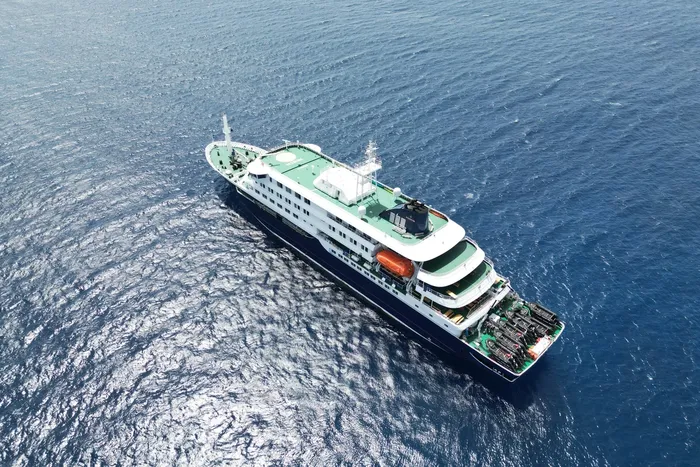
That includes a husband and wife who were sharing a cabin on board the MV Hondius. There are 147 passengers and crew on board.
Officials on Sunday reported a suspected outbreak of hantavirus on the ship, with three dead and three others sickened. The virus typically results from contact with urine, feces, or saliva from infected rodents and has a mortality rate of 30 to 50 percent. Treatment consists of treating symptoms that arise, such as difficulty breathing.
Hantavirus usually does not spread between humans, but human-to-human transmission has happened in rare cases in the past.
WHO officials said on Tuesday that the number of sick people is up to seven, with three having died. The first patient developed symptoms on April 6 and died on April 11, with his wife developing symptoms later in the month and dying on April 26. Another woman died on May 2.
One sick person has already been evacuated to a hospital in South Africa and is in intensive care. Two others are going to be evacuated to the Netherlands, according to the WHO, while the fourth surviving patient had only a mild fever and currently has no symptoms.
More than 20 nationalities are represented on board the cruise.
Van Kerkhove said the first patients, a husband and wife, boarded the ship in Argentina. She said officials believe they were not infected on the vessel, noting that people have been taking trips off board, such as bird watching expeditions, and that the cruise stopped at multiple islands off the African coast, including islands with “a lot of rodents.”
“There could be some source of infection on the islands as well for some of the other suspect cases,” she said, before highlighting how officials believe human-to-human transmission may have occurred.
Van Kerkhove also said that the risk to the general public is low.“This is not a virus that spreads like flu or like COVID,” she said.
She also said WHO has been contacted by passengers on the ship.
“We have heard from quite a few people on the boat,” she said. “We just want you to know we are working with the ship’s operators. We are working with the countries where you are from. We hear you, we know that you are scared,” she said, adding that they were working hard to get people home safely.
The MV Hondius, which carries a Dutch flag, has been off the coast of Cape Verde, an archipelagic nation about the size of Rhode Island in western Africa. It is scheduled to move to the Canary Islands. Spanish authorities have expressed their intention to welcome the ship, conduct a full epidemiological investigation, fully disinfect the vessel, and assess the risk to passengers.