
Chuck Schumer Urges House and White House to Follow Senate in Prediction-Market Ban
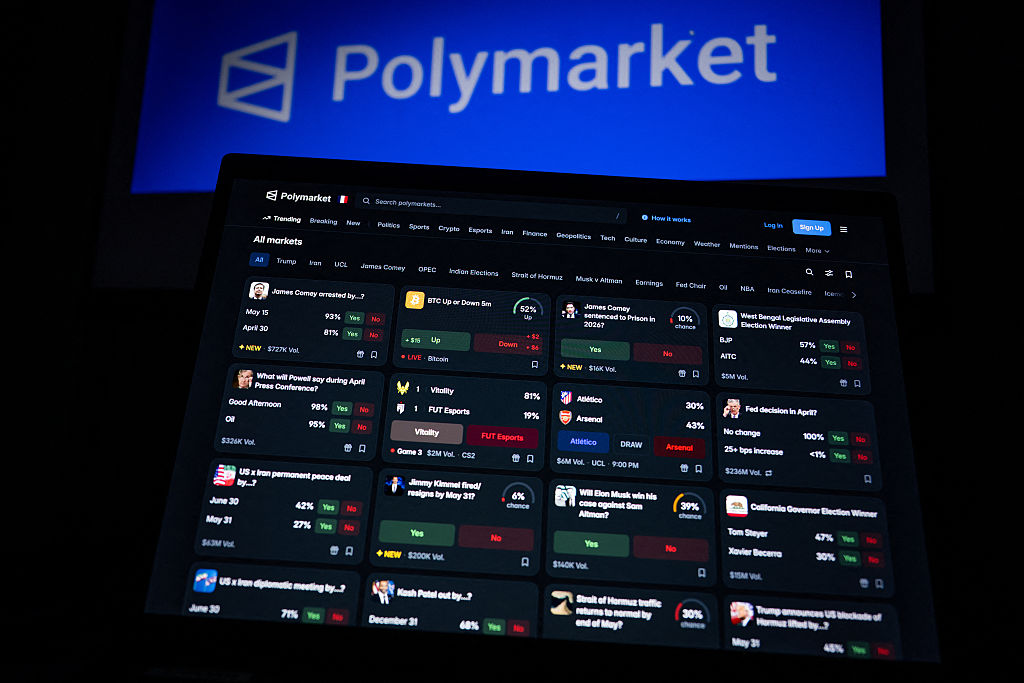
Days after the Senate banned its members and staffers from trading on prediction markets, Senate Minority Leader Chuck Schumer (D, N.Y.) on Sunday called on President Donald Trump, his Administration, and the House of Representatives to follow suit.
“We must never allow Congress to turn into a casino, and we shouldn’t let the White House, or the West Wing, be one either,” Schumer said in a statement.
The Senate on Thursday unanimously voted to change the chamber’s rules to ban Senators and staffers from using prediction markets—a move that Polymarket, a popular prediction market platform, lauded.
Schumer asked the House to implement a similar measure and for the President to sign a comprehensive federal ban covering every government official, staffer, and employee in the executive branch.
“Members and staff representing the public should never be able to gamble on wars, on economic crises, or on elections,” Schumer said. “The very possibility that a member's vote could be influenced by a bet is reason enough to slam this door shut.”
The Senate ban follows several reported incidents of suspected insider trading in prediction markets. Last month, Kalshi fined and suspended three U.S. congressional candidates from using their platform for five years for placing bets on the outcome of their respective races.
On April 23, authorities announced the indictment of a special forces soldier for allegedly using classified information on the U.S. capture of Venezuelan leader Nicolás Maduro to earn more than $400,000 from trading on Polymarket. The soldier pleaded not guilty.
Earlier in April, the Associated Press reported on new Polymarket accounts reaping hundreds of thousands of dollars in profit after placing well-timed and highly specific bets on the timing of a U.S.-Iran ceasefire.
Lawmakers have been eager to regulate these markets amid suspicious activity. Earlier this year, Sen. Todd Young (R, Ind.) and Sen. Elissa Slotkin (D, Mich.) introduced a bill that would ban federally elected officials and government employees from using insider information to bet on these prediction markets. Sen. Richard Blumenthal (D, Conn.), alongside Sen. Andy Kim (D, N.J.), in March introduced another bill seeking to regulate these markets, including banning prediction market listings related to war, death, and military action, and requiring age verification, among others. Both bills have yet to be voted on.
Trump has previously said he was “never much in favor of” prediction markets, when asked about federal workers possibly using classified information to trade on them, but he added that “the whole world unfortunately has become somewhat of a casino.”
The White House previously warned staff against using confidential information to place trades and bets, not only on prediction markets but also on futures markets.
But the Trump family stands to gain from such markets. Trump’s son, Donald Trump Jr., is linked to Polymarket and Kalshi, the top two firms in the industry. Trump’s social media platform Truth Social also announced last year plans to have its own cryptocurrency-based prediction market called Truth Predict, without a clear launch date.
Schumer said with the Trump Administration’s self-dealing and alleged track record of corruption, there is a “glaring conflict of interest” in the West Wing.
“When people on the inside can profit from what they know before the public knows it, we have a serious problem,” Schumer said. “It puts our troops at risk. It puts our intelligence at risk. It puts our democracy at risk.”