
US to Cut Troops in Germany a ‘Lot Further’ Than 5,000: Trump
By Naveen Athrappully
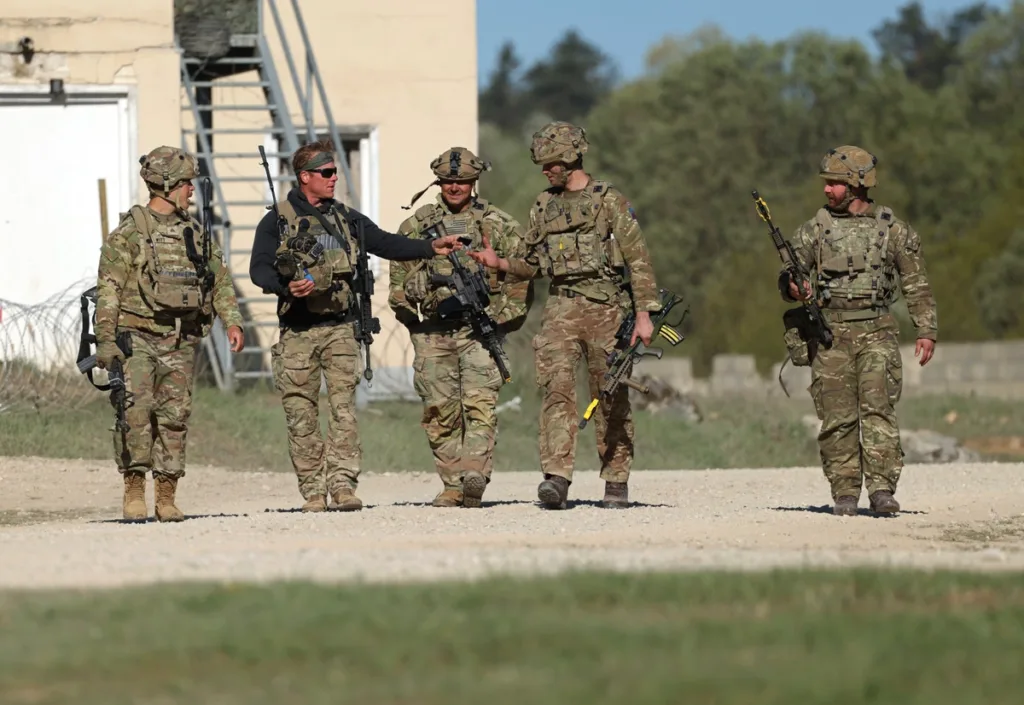
President Donald Trump said the United States will withdraw even more U.S. troops from Germany than previously confirmed amid Washington’s disagreement with Berlin over the Iran war.
On May 1, a Pentagon spokesperson said that Secretary of War Pete Hegseth had ordered 5,000 U.S. troops stationed in Germany to withdraw from the country.
“This decision follows a thorough review of the Department’s force posture in Europe and is in recognition of theater requirements and conditions on the ground,” the spokesperson told The Epoch Times, adding that the withdrawal could be completed over a period of six to 12 months.
Story continues below advertisement
“We’re gonna cut way down, and we’re cutting a lot further than 5,000,” Trump told reporters on Saturday while in Florida.
In the past, Trump had threatened to reduce the number of troops stationed in Germany, citing the country’s insufficient defense spending and other policies.
The ongoing U.S.–Israel war against Iran recently triggered criticism from German Chancellor Friedrich Merz, which was met with a sharp response from Trump.
On April 29, Merz told a group of students that “an entire nation is being humiliated by the Iranian leadership,” referring to the United States.
In a Truth Social post the next day, Trump asked Merz to stop interfering in the Middle East conflict. “The Chancellor of Germany should spend more time on ending the war with Russia/Ukraine (Where he has been totally ineffective!), and fixing his broken Country, especially immigration and Energy, and less time on interfering with those that are getting rid of the Iran Nuclear threat, thereby making the World, including Germany, a safer place!” Trump wrote.
U.S. troops have been stationed in Germany since 1945, after the end of the Second World War. During the Cold War, almost 250,000 Americans were deployed in the country. Currently, Germany houses nearly 36,500 active-duty U.S. troops; the largest number after Japan.
In a May 2 post on X, Allison Hart, NATO spokesperson, said the military alliance is still assessing the details of the United States’ decision on “force posture in Germany.”
“This adjustment underscores the need for Europe to continue to invest more in defence and take on a greater share of the responsibility for our shared security—where we’re already seeing progress since Allies agreed to invest 5 percent of GDP at the NATO Summit in The Hague last year,” the spokesperson said.
In a May 2 statement, the Republican chairmen of the Senate and the House Armed Services Committees issued a statement regarding the troop withdrawal from Germany, saying they were “very concerned” about the matter.
Sen. Roger Wicker, (R-Miss.) and Rep. Mike Rogers (R-Ala.) said that any significant change to U.S. force posture in Europe will require close coordination with Congress and America’s allies.
“Germany has stepped up in response to President Trump’s call for greater burden sharing, significantly increasing defense spending and providing seamless access, basing, and overflight for U.S. forces in support of Operation Epic Fury,” the lawmakers said.
“The reality remains that even as allies move toward spending 5 percent of GDP on defense, translating that investment into the military capability needed to assume primary responsibility for conventional deterrence will take time. Prematurely reducing America’s forward presence in Europe before those capabilities are fully realized risks undermining deterrence and sending the wrong signal to Vladimir Putin,” the statement said.
Earlier on April 12, Trump had told reporters that he was “very disappointed” with NATO. Despite paying trillions of dollars to the military alliance, they “weren’t there for us,” Trump said, referring to support in America’s war against the Iranian regime. Trump’s comments came as UK Prime Minister Keir Starmer said his country will not be involved in the United States’ blockade of Iranian ports, including in the Strait of Hormuz region.
Since then, the Department of War said it was working with European allies, especially Germany, to get NATO members to step up their defense and related responsibilities. Germany is taking a “leading role” in this, Under Secretary of War Elbridge Colby said in an April 24 post on X.
“After years of disarmament, Berlin is stepping up,” Colby said. “The Department of War is already working closely with European allies, especially Germany, to accelerate this transition to NATO 3.0.”
Jill McLaughlin contributed to this report.