New app using AI aims to expand civic engagement in Minnesota
For anyone who isn’t familiar with how legislation is written and advanced at the state Capitol, the process can feel like it was deliberately created to confuse.
Enter CivicLoon, an app that uses artificial intelligence created by a local programmer with the aim of closing that gap between what elected representatives are doing and what their constituents can see and understand.
Although the potential for mistakes and biases in AI models remains a cause for concern, researchers say that summarizing and translating documents is actually an area where models generally excel. At the same time, civic groups are pushing for any way to step up voter education and engagement, particularly as the legislative session enters its final month and lawmakers whittle down which bills have realistic prospects for passage.
“As an ordinary person, it doesn’t feel like you really have a voice. Lobbyists are there every single day of every work week the session is open. As a normal person, you might go there once in 10 years,“ said Colin Lee, a Lakeville-area software engineer who built CivicLoon largely on weekends over the course of about three weeks.
Lee, who works as a principal mobile architect for a Texas-based AI company, said the idea had been percolating for years, long before he wrote the first line of code.
As a DFL candidate who ran multiple times against longtime Republican incumbent Mary Liz Holberg for a state House seat representing parts of Dakota and Scott counties, Lee was repeatedly struck by how little voters knew about the people and policies on their ballots.
“I would ask people about the race and they would be misgendering my opponent when they’re telling me who they’re going to vote for … you just knew they had no clue,” he said.
Despite never winning the seat, he kept running on principle. He believes challengers serve a purpose even in long-shot races, if only to force conversations on substantive issues like health care that he felt other candidates were sidestepping in favor of hyperlocal concerns.
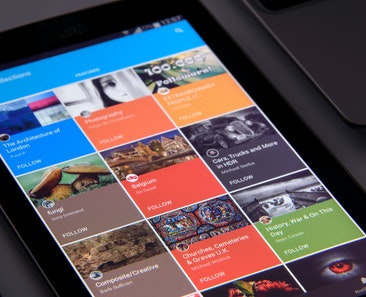
CivicLoon pulls in bill text, news coverage and committee schedules from the Minnesota Legislature and presents them to users in plain-language summaries. Lee said the app currently supports 30 languages, though he acknowledged the quality will vary. S’gaw Karen — a language spoken by a significant portion of St. Paul’s Karen community — is one he flagged as a potential weak point, noting that AI translation quality depends heavily on how much source material in a given language exists online.
One of the app’s more distinctive technical features is that it runs its AI model directly on the user’s phone rather than sending data to remote servers — a design choice Lee said was driven by both privacy and reliability.
“It has no cloud reliance,” he said. “It only depends on itself.”
While some bill summaries are available on the House and Senate web sites, they are often brief, written in the legalese common to legislation and only in English, limiting their accessibility.
An AI strength
The approach mirrors work Lee has done professionally, where he has helped develop AI chatbots designed to keep sensitive data off third-party servers.
Daniel Schwarcz, a University of Minnesota law professor who studies AI and the legal system, said that while AI bias and hallucination — when the model makes up plausible but incorrect responses — are legitimate concerns in many applications, summarization is actually a relative strength of current models.
“There’s a lot of research that one context in which AI is pretty darn good is in summarizing text that you give it,” Schwarcz said.
He said he would have “comparatively less worry” about bias in that case than in others — such as recidivism-prediction algorithms used by judges, where training data reflecting historical inequities can compound into discriminatory outcomes.
The question is less about whether the app can do what it claims to do, Schwarcz said, and more about whether the public will show enough interest in CivicLoon over other products such as Google’s AI Overview of search results.
Lee was candid about the app’s current limitations. A feature meant to assess a bill’s chance of passage is, by his own admission, still rough. This is partly because the AI model is working off of the legislative text, which can include positive and promotional language that lawmakers have included in the text.
He’s working on improvements in the app, including its ability to track and receive updates on specific bills and broader translation coverage across the app. Lee also plans to include analysis of legislators’ newsletters and public statements, which could eventually lead to more reliable predictions about which legislation has genuine momentum.
The League of Women Voters Minnesota’s executive director, Amy Perla, said that while she has not used the app, the group is in favor of anything that boosts public participation in the political process.
“Any way we can increase civic engagement and civic education, we think is worth exploring.”
—-
This story was originally published by MinnPost and distributed through a partnership with The Associated Press.
Source