
Singapore Airlines had live musicians performing for nearly a year
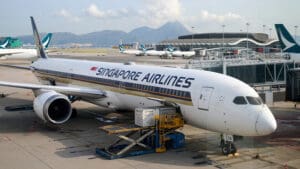
Long before seatback screens, playlists and onboard internet connection became standard, Singapore Airlines experimented with something close to a lounge show in the sky.
Back in 1976, the airline trialed live musical performances on its jumbo jets, and what began as a publicity stunt ended up as a regular part of the journey before disappearing less than a year later.
The experience of live music aboard
This story belongs to a very different era of flying. Singapore Airlines, in the mid-1970s, was still shaping its identity and looking for ways to stand out. Inflight movies and music were only just arriving with Boeing 747s, and the airline experimented with all kinds of onboard distractions. One of the boldest ideas the company tried was live entertainment: in April 1976, SIA launched a trial on the Singapore-Sydney route with a Filipino trio called Los Amigos, who performed a 45-minute set covering 13 popular songs.
For passengers, it felt unusual even by the standards of the time. Today, cabin entertainment is largely private and screen-based, with each traveler disappearing into a film, a playlist or a podcast on their own. Back then, the performance was shared by the whole cabin, creating a collective moment that modern flying rarely offers. According to MileLion, 86% of passengers enjoyed their performance, enough for the airline to move from trial mode to regular live performances the following month. The music was available to First and Economy Class passengers at no extra charge, making it a signature flourish of the company.
Still, romance and reality do not always travel well together at cruising altitude. The performers themselves found the conditions tough: singers complained that the engines were too loud, so they had to yell the lyrics, while the dry cabin air affected their voices before the flight was over. What sounded glamorous in theory quickly became problematic in practice, both for those on stage and for some of those in their seats. By February 1977, the experiment ended because of the loss of novelty and a noticeable increase in passenger complaints. The idea lasted roughly ten months as a regular feature, one of the reasons it remains a curious chapter in the airline’s history.
Airlines now offer different alternatives to their passengers
The old experiment feels even more fascinating when set against what airlines offer now. Singapore Airlines’ own current onboard offer includes KrisWorld and KrisWorld Digital, where passengers can browse films, television, audio content, and featured articles, while also accessing live TV channels, web-based games, or personal devices and in-flight Wi-Fi that can be used to access an online casino, check the latest news, or even plan activities to do once the passenger arrives at their destination.
Considering the live performances, the cabin has shifted from shared spectacle to personalized choice. Delta, for example, says its Delta Studio platform offers more than 1,000 hours of free entertainment, including movies, series, playlists, podcasts, and live satellite TV on select flights. JetBlue has gone a step further with Blueprint by JetBlue, a platform that adds watch parties, saved favorites, viewing recommendations and the ability to pick up where a passenger left off on a previous flight, while also tying the experience to the carrier’s broader seatback and Wi-Fi ecosystem.
That may be the clearest contrast with Singapore Airlines’ live-music era. In 1976, airlines were trying to surprise travelers with something they had never seen before. In 2026, the goal is usually to let passengers shape the journey themselves, whether that means streaming a series, checking live sports, messaging over Wi-Fi or syncing entertainment across devices. The tools are different, the cabins are quieter, and no one is belting out songs over engine noise anymore. But the basic ambition has not changed much: make time in the air feel a little less like waiting, and a little more like an experience worth remembering.
Read more:
Singapore Airlines had live musicians performing for nearly a year