
Judge orders Trump administration to halt White House ballroom construction
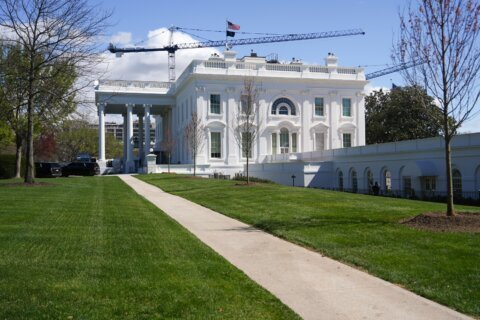
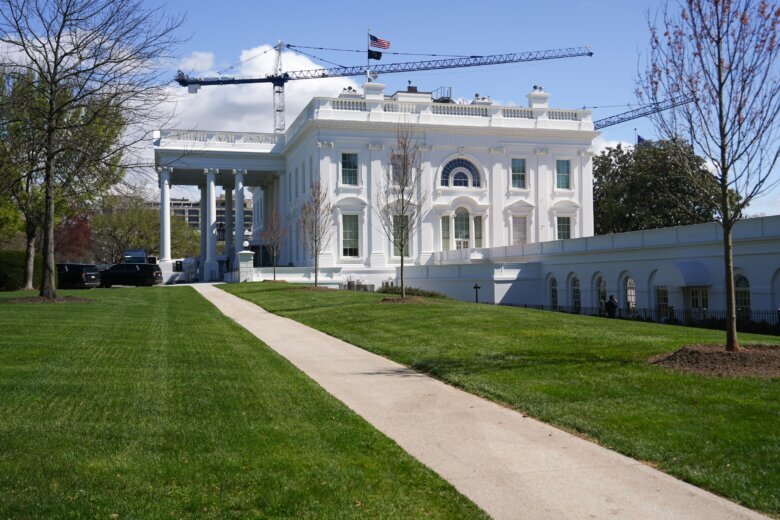
WASHINGTON (AP) — A federal judge on Tuesday ordered the Trump administration to suspend its construction of a $400 million ballroom where it demolished the East Wing of the White House, barring work from proceeding without congressional approval.
U.S. District Judge Richard Leon in Washington granted a preservationist group’s request for a preliminary injunction that temporarily halts President Donald Trump’s White House ballroom project.
Leon, who was nominated to the bench by Republican President George W. Bush, concluded that the National Trust for Historic Preservation is likely to succeed on the merits of its claims because “no statute comes close to giving the President the authority he claims to have.”
“The President of the United States is the steward of the White House for future generations of First Families. He is not, however, the owner!” the judge wrote at the beginning of his opinion.
The ruling was the first major rebuke of Trump’s sweeping efforts to overhaul the White House, but it wasn’t immediately clear what it would mean for a sprawling project in which crews have long since torn down the East Wing, radically transforming the look and feel of the historic grounds.
Construction of the ballroom would mark the most significant structural change to the White House since Truman added a balcony on the south side of the mansion.
The judge’s decision came two days before the National Capital Planning Commission, the agency that signs off on construction on federal property in the Washington region, is expected to approve the addition. A spokesperson did not immediately respond to a request for comment.
The judge suspended enforcement of his order for 14 days, acknowledging that the case “raises novel and weighty issues, that halting an ongoing construction project may raise logistical issues.” He also recognized that the administration is likely to appeal his decision.
Leon ruled that any construction work that’s necessary to ensure the safety and security of the White House is exempt from the scope of the injunction. Leon said he reviewed material that the government privately submitted to him before concluding that halting construction wouldn’t jeopardize national security.
Trump, in a social media post, criticized the trust for suing him over a project that he said is being built at no cost to taxpayers. “Doesn’t make much sense, does it?” he wrote. The White House declined to comment beyond what the president wrote.
The preservationists sued to obtain an order pausing the ballroom project until it undergoes multiple independent reviews and receives congressional approval.
The White House announced the ballroom project over the summer. By late October, Trump had demolished the East Wing to make way for a ballroom that he said would fit 999 people. The White House said private donations, including from Trump himself, would pay for the planned construction of a 90,000-square-foot (8,400-square-meter) ballroom.
Trump proceeded with the project before seeking input from the National Capital Planning Commission and another oversight entity, the Commission of Fine Arts. Trump has stocked both commissions with allies.
The trust sued in December.
On Feb. 26, Leon rejected the preservationist group’s initial bid to temporarily halt the ballroom’s construction. He said the privately funded group had based its challenge on a “ragtag group” of legal theories and would have a better chance of success if it amended the lawsuit, which it did.
Leon said the ballroom plans are in the final stages of the design approval process. The administration has said above-ground construction on the ballroom would begin in April.
“We are two weeks away,” plaintiffs’ attorney Thaddeus Heuer said during a March 17 hearing. “The imminence is now imminent.”
During the hearing, Leon sounded skeptical of what he referred to as the government’s “shifting theories and shifting dynamics” for its arguments in the case.
“I don’t think it’s a new theory,” Justice Department attorney Jacob Roth told the judge.
Leon expressed frustration at Roth’s attempts to equate the massive ballroom project with relatively modest construction work at the White House under previous administrations.
“This is an iconic symbol of this nation,” the judge said.
The administration argued that other presidents didn’t need congressional approval for previous White House renovation projects, large and small.
“Many of those projects were highly controversial in their time yet have since become accepted — even beloved — parts of the White House,” government attorneys wrote.
Leon rejected the administration’s claim that Congress gave the president virtually unilateral authority to construct anything on federal land in Washington, regardless of the funding source.
“This clearly is not how Congress and former Presidents have managed the White House for centuries, and this Court will not be the first to hold that Congress has ceded its powers in such a significant fashion!” the judge wrote.
Since returning to the White House, Trump has frequently boasted about leaving a lasting mark on the building and the presidency — a push that the injunction against him can slow but won’t entirely stop.
His extensive White House makeover efforts have already included building a patio space alongside the Rose Garden, erecting towering flagpoles in the North and South Lawns, renovating the bathroom attached to the Lincoln Bedroom and adding gold flourishes in the Oval Office and the outside colonnade.
The president also wants to build a ceremonial arch near the Lincoln Memorial, overhaul several Washington-area golf courses and is leading a push to revamp the Kennedy Center that is forcing the nation’s capital’s premier center for the performing arts to close for two years this summer.
Even as Tuesday’s ruling was issued, crews were busy removing the traditional white tiling from the colonnade floor and replacing it with black tiles.
___
Associated Press writer Darlene Superville in Washington contributed to this report.
Source