The conflict has exposed deep rifts within the president’s MAGA coalition
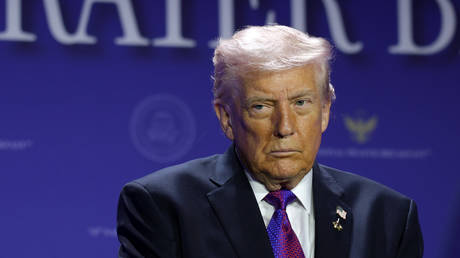
Donald Trump’s war on Iran marks the US president’s final break with his ‘America First’ allies and embrace of interventionism. It’s a decision that will haunt whoever inherits the leadership of his divided movement.
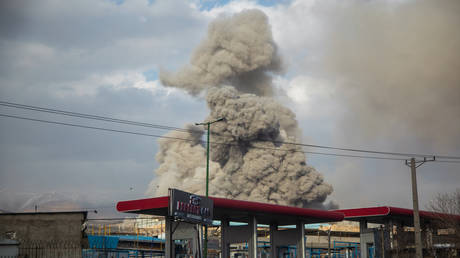
In the week since the US and Israel began striking Iran, support in Washington for ‘Operation Epic Fury’ has cleaved predictably along party lines. The Republican-controlled House and Senate rejected a war powers vote that would have granted Congress the ability to decide whether Trump could continue the conflict, while public opinion has been equally partisan: according to a CNN poll, 77% of Republicans support the war, compared to only 18% of Democrats.
Read moreTrump demands ‘unconditional surrender’ from Iran
Behind the bickering, the war has also revealed the contradictions within Trump’s administration and the broader MAGA movement. Trump and his officials have offered starkly different justifications for the attack: contrast Trump’s claim that Iran was on the verge of developing nuclear weapons “capable of reaching our beautiful America” with US Secretary of State Marco Rubio’s assertion that the US joined an Israeli attack that was going to happen regardless.
They’ve also offered different timelines for the war and conditions for victory, with Trump musing that “wars can be fought forever” until Iran offers "unconditional surrender, and Vice President J.D. Vance reassuring the public that “there’s just no way Donald Trump is going to allow this country to get into a multi-year conflict with no clear end in sight.”
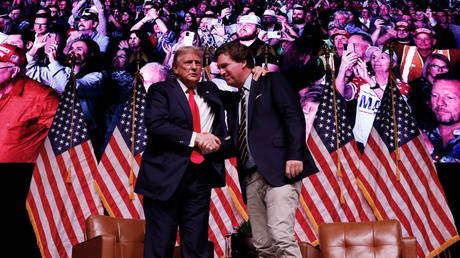
Trump’s MAGA coalition is a broad one, and some of these contradictions are inherent to such a big-tent movement. In the runup to the war, for example, Trump took advice from both pro-Palestinian Tucker Carlson and die-hard Israel-first warhawk Senator Lindsey Graham.
His cabinet includes reformed Director of National Intelligence Tulsi Gabbard, who promised that Trump would end the “neocons' agenda of costly, unnecessary wars.” It also includes US Secretary of War Pete Hegseth, a Crusader-tattooed former Guantanamo Bay guard whose erratic public speeches are riddled with threats of “death and destruction,” and promises to “unleash American power” upon the nation’s enemies.
Now that the US is at war with Iran, these differences are no longer rhetorical, and none are as stark as the divide between Vance and what seems like the entirety of the Trump administration.
Where was Vance?
”Our interest, I think, very much is in not going to war with Iran,” Vance told an interviewer in 2024. “It would be a huge distraction of resources. It would be massively expensive to our country,” he explained. Vance, a Marine Corps veteran, built a political career advocating for a US more focused on domestic issues, and was among the most vehement Republican critics of military aid to Ukraine. In 2023, he announced his endorsement of Trump in an op-ed titled “Trump’s Best Foreign Policy? Not Starting Any Wars.”
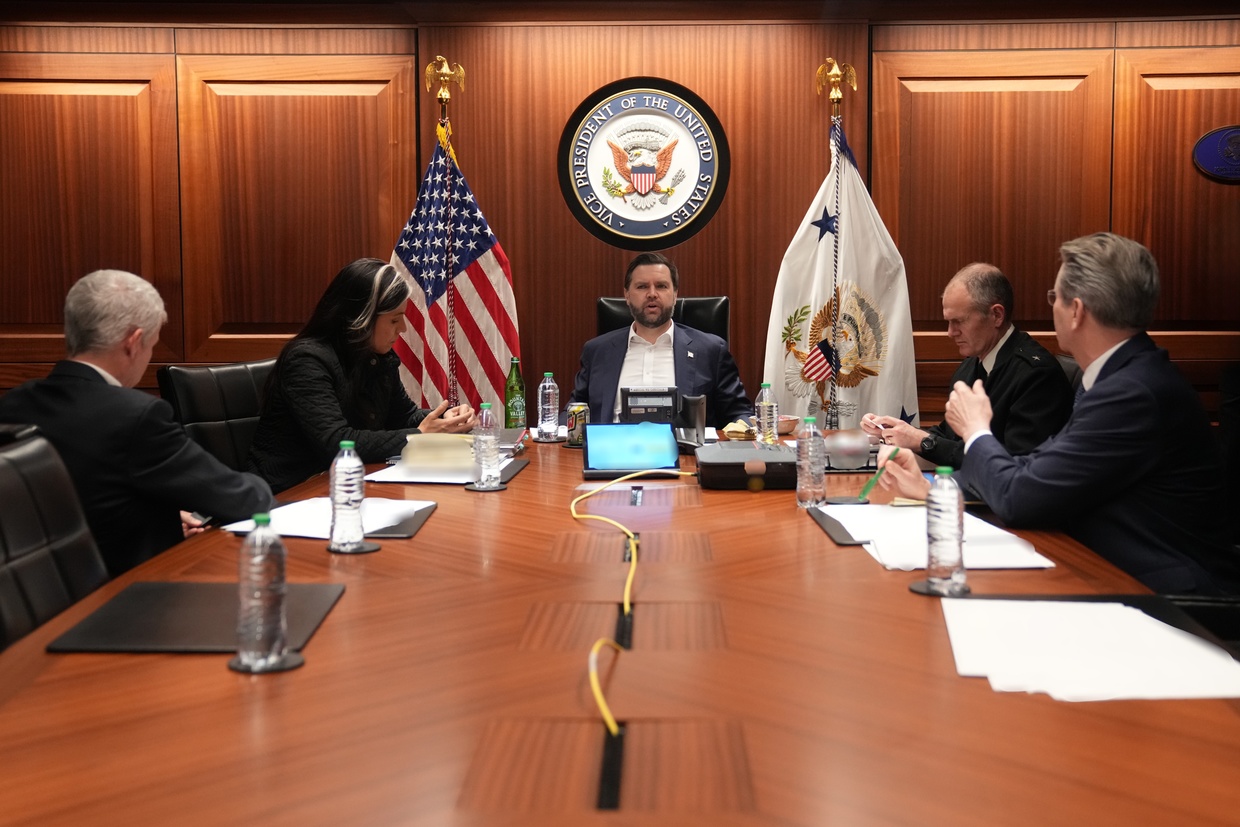
Once the war with Iran started, Vance was nowhere to be seen. He made no public statements for three days, appearing only in a series of photos released by the White House that heightened rumors of his isolation.
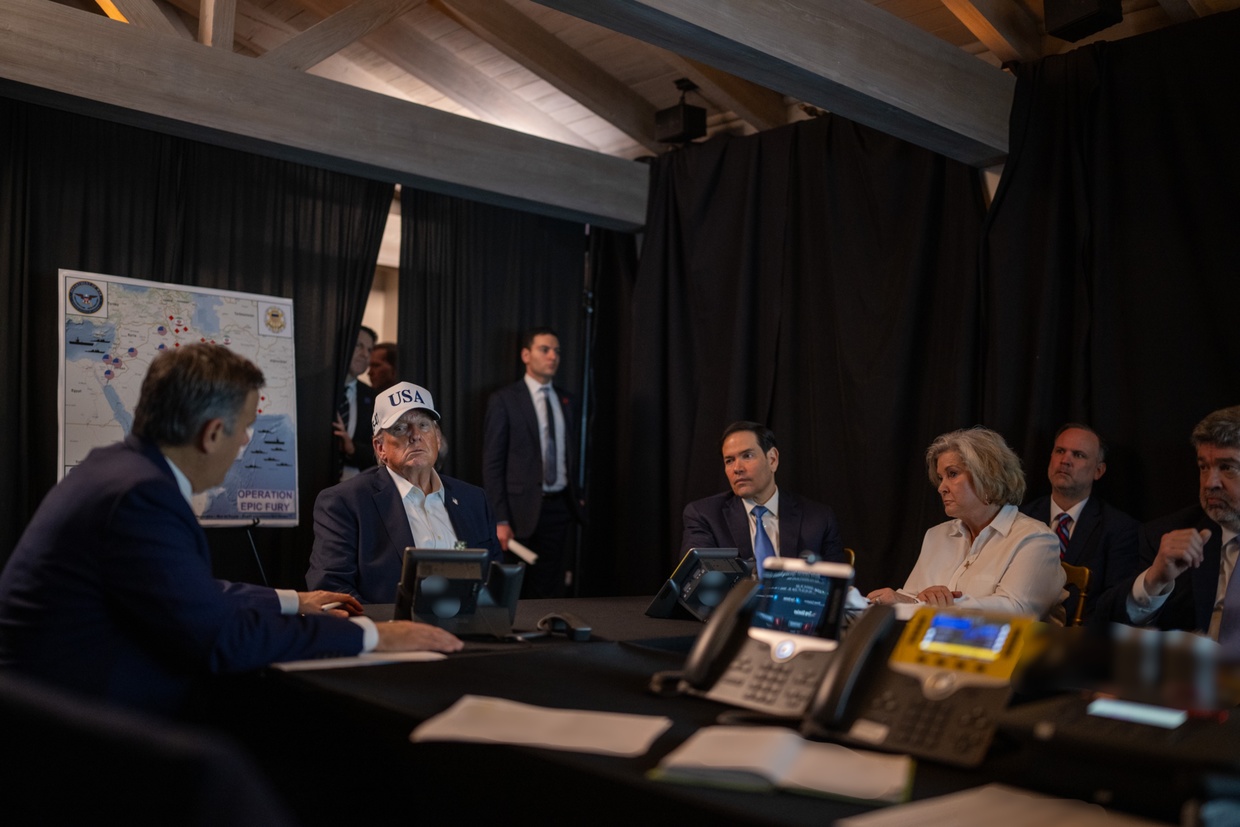
In one photo: Trump monitors the attacks on Iran from a makeshift situation room at Mar-a-Lago, flanked by Rubio and CIA Director John Ratcliffe. In the other: Vance watches the war play out from the White House, alongside Gabbard, Treasury Secretary Scott Bessent, and Energy Secretary Chris Wright.
When Vance surfaced on Monday evening, over 48 hours after the war began, he had apparently squared away his long-held opposition to war with Iran and was ready to justify the conflict to Fox News’ viewers. “The president has clearly defined what he wants to accomplish,” he told the network. “There’s just no way Donald Trump is going to allow this country to get into a multiyear conflict with no clear end in sight and no clear objective.”
Rubio’s rising star
Vance’s climbdown – from outright opposition to war, to opposing a “multiyear conflict” – was the most recent in a series of losses for the vice president. After calling for a complete halt in US funding to Ukraine and berating Vladimir Zelensky in the White House the following February, Vance has watched as the US continues providing intelligence, surveillance, and reconnaissance data to Kiev, and keeps weapons flowing into the conflict, albeit with the Europeans writing the checks.
Read moreUS preparing for months-long war with Iran – Politico
Then Vance, who once ridiculed the notion “that we should police the entire world,” sat by as Trump ordered the kidnapping of Venezuelan President Nicolas Maduro, under the pretext of a police operation.
In all of these cases, Trump has sided with Rubio – a more traditional Republican interventionist – over Vance, and over his own election night promise that he was “not going to start a war. I’m going to stop wars.” And each time, Vance has adapted his positions to justify Trump’s actions.
Meanwhile, Rubio’s star is on the rise within Trump’s administration. It is notable that Trump sent Vance to the Munich Security conference in 2025, and Rubio with a slightly more nuanced message in 2026.
Four days before the first US airstrikes hit Iran, Trump singled out Rubio for praise during his State of the Union speech on Capitol Hill. “You have done a great job,” he said, as Rubio received a standing ovation from Republicans. “Great secretary of state. I think he’ll go down as the best ever.”
Does Hegseth want a ground war?
Even among Trump’s most pro-war advisers, there are competing visions for how the conflict should play out. Earlier this week, Hegseth and Rubio were “at each other's throats” over sending ground forces into Iran, an anonymous source told Middle East Eye, with Hegseth reportedly angling for a ground invasion and Rubio more conscious of the risks involved.
The Pentagon has called the report “100% FAKE NEWS,” while the State Department has not commented.
Read moreTrump kicks Tucker Carlson out of MAGA
Whether or not the report was true, the fact that Hegseth and Rubio’s supposed argument was leaked to the press points to a serious breakdown of message discipline in Washington: factions are competing. Maintaining a united front is universally recognized as essential in times of war, and the disjointed timelines, objectives, and victory conditions put forward by Trump’s officials suggest that the operation was planned without the full involvement of the president’s entire team.
”What we’ve seen is a completely ad hoc operation where it appeared that nobody actually understood or believed that military action was imminent,” former US diplomat Gerald Feierstein told Politico. “It seems like they woke up on Saturday morning and decided that they were going to start a war.”
The bottom line
Whatever their input, all of Trump’s cabinet are now tied to, and yet divided by, this war. Additional losses, failure to deliver a quick victory, or a retreat from the Persian Gulf with the Iranian government still in power would all tarnish Trump’s presidency and all within his administration.
This could have serious consequences for Vance in particular. Despite Trump’s apparent sidelining of his vice president in favor of Rubio, Vance remains the frontrunner to take the Republican nomination for the presidency in 2028.
Between now and then, however, he faces an unenviable choice: stick to his long-held beliefs and lose the support of a president now firmly committed to interventionism, or publicly defend Trump and lose the support of his ‘America First’ base. Megyn Kelly and Tucker Carlson – two ideological allies of Vance – have respectively expressed “serious doubts” about the war with Iran and called it “absolutely disgusting and evil,” while some polls have shown shaky support from Trump’s voters. A Reuters/Ipsos survey this week showed 45% of Republicans either opposing the strikes or declining to comment.