
Mara Naaman: A Literary Voice Shaping Culture
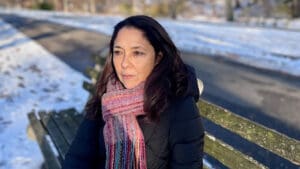
What does it mean to build a life around ideas instead of outcomes?
For Mara Naaman, it means choosing process over praise. It means writing, teaching, and thinking in ways that resist shortcuts. And it means leading in a field where cultural work still matters.
Naaman is an independent scholar, writer, and editor based in New York. She is a former professor of Comparative Literature and Arabic at Williams College. She is also at work on a novel.
But her path to this point did not follow a straight line.
Early Life and Education: From Dance to Arabic Literature
Mara Naaman was born in Oakland, California. She grew up in Michigan with a single mother who painted at night. She is an only child. Her grandparents were Iraqi immigrants. Family gatherings were filled with Iraqi cousins, large tables of food, and stories.
Art came early.
She trained seriously as a dancer through high school and college. She attended Interlochen Arts Academy, a boarding school for the performing arts. There, she studied dance and won a Young Artists Award in creative writing.
The shift from dance to literature was gradual, not dramatic.
“I don’t like to think in terms of success or outcomes,” Naaman says. “Being invested in process means being able to learn for the sake of our own enlightenment.”
At Wesleyan University, she majored in English, while continuing to dance. She began studying Arabic. She wrote her senior thesis on Magical Realism in Arabic Literature and graduated with honors in 1996.
That decision shaped the rest of her career.
She later entered a PhD program in Arabic Literature at Columbia University. She lived in Cairo for several years. She traveled across the Middle East to deepen her language skills. Her dissertation focused on literary representations of downtown Cairo. It received high honors in 2008.
Today, she is also pursuing an MFA in Creative Writing at the City College of New York.
Academic Career: Teaching, Research, and Leadership
After completing her PhD, Naaman built a strong academic career.
She served as Assistant Professor of Comparative Literature and Arabic at Williams College from 2007 to 2014. She also held roles at Columbia University, Hofstra University, and New York University. From 2015 to 2017, she worked as Associate Director of Programs at the Modern Language Association in New York.
In 2022, she received a University of Chicago Outstanding Educator Award.
Her research focuses on contemporary Arabic and American cultural production. She also studies gender and working-class identity. Her work connects literature to daily life. It asks how cities, labor, and identity shape the stories we tell.
“I consider myself a culture worker,” she says. “What we contribute to this world, how we treat others, and human connection are what’s most important.”
That mindset guides both her scholarship and her teaching.
She does not frame education as a race. She sees it as immersion.
“Thinking beyond a ‘success mindset’ means fully immersing ourselves in our lives,” she explains. “It means seeking fulfillment and a sense of purpose.”
Fulbright Scholar and Global Experience in Cairo
Naaman’s career includes several major fellowships. She was a Fulbright IIE Scholar in Cairo from 2006 to 2007. She also earned multiple fellowships through Columbia University, including a President’s Fellowship and a FLAS Fellowship in Arabic.
Her time in Cairo was not just academic. It was lived experience.
She studied at the Center for Arabic Study Abroad at The American University in Cairo. She walked the streets she later wrote about in her dissertation. She observed how literature reflects real neighborhoods and real lives.
That mix of scholarship and lived context defines her work.
She does not separate theory from experience.
“Being who I want to be in the world means a willingness to embrace uncertainty,” she says. “To accept that the world is tragic and that I am deeply flawed but to still go on seeking inspiration and trying to be a force for good.”
Writing, Process, and Life in New York
Today, Naaman lives in New York with her husband and two children. She balances teaching, writing, and family life.
Her routines are simple.
“Write lists, look at my calendar, keep screen time to a minimum,” she says.
She runs. She practices yoga. She cooks when time allows. She reads widely. She is a member of the Association of Writers and Poets.
When asked what keeps her going, she points to her mother.
“I remember how much my mother has had to fight to survive all her life,” she says. “I keep reading.”
Her focus now includes fiction. She is working on a novel while continuing her scholarly and editorial work. The move toward creative writing feels like a return, not a pivot. After all, she began as a dancer and a young writer.
Why Mara Naaman’s Work Matters Today
In a culture driven by metrics and visibility, Naaman offers a different model of leadership.
She resists efficiency language. She questions the idea that worth equals output. She encourages students and readers to slow down and think deeply.
“Being ‘success-oriented’ distracts us from what is most important,” she says. “The journey matters.”
Her influence spans classrooms, conferences, and cultural institutions. She has trained students in Arabic language and literature. She has shaped programs at the Modern Language Association. She continues to publish, teach, and write fiction.
Naaman’s leadership is quiet but steady. It is rooted in human connection. It is grounded in scholarship. And it is shaped by a belief that culture is not a luxury. It is essential.
In her words, “What we create and how we treat others are what’s most important.”
That idea defines her career. And it may define her legacy.
Read more:
Mara Naaman: A Literary Voice Shaping Culture
