
Common Mistakes That Lead To Trailer Theft
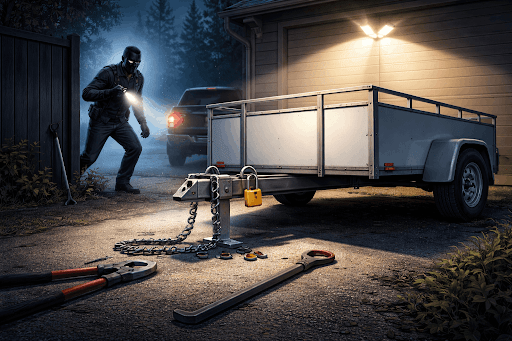 Trailer theft happens when owners leave their hitches exposed, use weak locks, or park in isolated areas, all mistakes that make theft quick and easy for criminals.
This guide will help you identify and fix the security gaps thieves look for when targeting trailers:
 Using weak or universal locks that can be broken in seconds
Parking with an exposed hitch that allows quick hitching
Leaving safety chains unsecured, providing ready-made towing tools
By understanding these common security mistakes, you can take simple steps to make your trailer a much less attractive target for thieves looking for easy opportunities.
Mistakes That Increase Vulnerability
Using Weak Or Universal Locks
Security starts with proper locking mechanisms, yet many trailer owners make critical errors in this area. Cheap, universal locks create significant vulnerabilities that thieves quickly identify and exploit. These inadequate security measures often feature exposed hasps and pry points that make breaking in remarkably simple.
Most professional thieves don’t bother picking locks: they simply cut through them. Locks with exposed hasps become particularly problematic since they can be compromised in seconds with bolt cutters or angle grinders. For proper protection, invest in specialized trailer locks, such as those offered by AMPLock, that are designed specifically for your model with hardened steel construction and shrouded hasps that resist cutting attempts.
Parking With An Exposed Hitch
How you park your trailer dramatically affects its security profile. Leaving the hitch exposed creates an open invitation for thieves looking for quick opportunities. This common mistake allows criminals to simply back up their vehicle, connect to your trailer, and drive away in under a minute.
You can significantly reduce theft risk by implementing strategic parking techniques. Position your trailer with the hitch facing a wall, fence, or other obstacle that prevents direct access. This simple adjustment forces potential thieves to spend more time maneuvering, increasing their chances of being noticed.
Another effective approach involves turning your trailer perpendicular to parking spaces or positioning it between other vehicles to block hitch access. The goal remains making your trailer more difficult to steal than nearby alternatives. Thieves typically seek the path of least resistance, so creating any additional barriers helps protect your investment.
Leaving Safety Chains Unsecured
Safety chains serve a critical purpose beyond their intended road safety function, they can become theft tools when left unsecured. Loose chains provide opportunistic thieves with a ready-made method to tow your trailer away even without proper hitch connections.
You need to properly secure these chains whenever your trailer sits unattended. Loop them through fixed points on your trailer frame and lock them securely. This prevents unauthorized towing attempts and adds another layer of security to your setup.
Professional thieves know exactly how to use unsecured safety chains to their advantage. They can quickly attach these chains to their vehicle’s tow points and drive off with your property. Making this simple adjustment to your security routine costs nothing but provides substantial protection against common theft techniques.
Storing Trailers In Isolated Areas
Location plays a crucial role in trailer security. Storing your trailer in dark, isolated areas might seem convenient, but these environments provide criminals with the privacy and the time they need to steal your property.
You should prioritize storage locations with good visibility, lighting, and regular traffic flow. Thieves avoid areas where they might be observed or interrupted during their activities. Well-lit storage facilities with security cameras and regular patrols offer much stronger deterrents against potential theft.
If dedicated secure storage isn’t available, park your trailer where neighbors or passersby can easily see it. Community visibility creates natural surveillance that discourages criminal activity. The perception of being watched often proves enough to send thieves looking for easier targets elsewhere.
Smart Security Practices
Choosing High-Security Locks
Selecting the right locks for your trailer makes a significant difference in preventing theft. Many trailer owners make the mistake of using visible but flimsy locks, which can actually attract thieves by signaling valuable contents inside.
For optimal protection, consider investing in disc locks with hardened steel bodies. These locks resist cutting attempts and provide superior protection for your trailer’s doors. Coupler locks that completely encase the hitch ball socket offer another layer of security by preventing unauthorized hitching.
Heavy-duty padlocks with shrouded shackles protect the locking mechanism from bolt cutters. Look for locks rated at least Grade 2 by the American National Standards Institute (ANSI) for adequate security.
Concealing The Hitch
Making your trailer’s hitch less accessible creates a significant deterrent for potential thieves. Several practical approaches can help you achieve this goal effectively.
Custom hitch covers provide both concealment and physical protection. These devices completely encase the coupler, making it difficult for thieves to access the connection point. Some models include integrated locks for added security.
Parking strategies can naturally conceal your hitch. Position your trailer close to walls or other barriers that block direct access to the hitch area. This simple technique creates physical obstacles that complicate theft attempts.
Specialized hitch locks work alongside concealment methods. These devices prevent the coupler from being opened and attached to another vehicle. The best models cover the entire mechanism rather than just blocking the latch.
For travel trailers, consider turning the trailer so the hitch faces away from the road or main access points. This positioning forces potential thieves to maneuver awkwardly in confined spaces, increasing their visibility and the time required to steal your trailer.
Opting For Well-Lit, High-Traffic Spots
Parking location plays a crucial role in trailer security. Most trailer thefts happen at night when visibility is low and fewer witnesses are present. This fact highlights why well-lit areas provide natural theft protection.
High-traffic locations offer passive security through constant observation. Thieves prefer to work unnoticed, so areas with regular pedestrian or vehicle movement create an uncomfortable environment for criminal activity. Shopping center perimeters, busy campgrounds, and populated RV parks all provide this advantage.
Lighting deters theft by eliminating shadows where thieves can work unobserved. Parking under streetlights or near buildings with security lighting exposes any suspicious activity around your trailer. Motion-activated lights add an extra layer of protection by drawing attention to movement near your property.
Security cameras often accompany well-lit areas, creating additional risk for potential thieves. Even if cameras aren’t actively monitored, their presence suggests that evidence might be captured, making your trailer a less attractive target.
Additional Preventive Measures
Removing Valuable Items And Documents
Taking valuable items and documents out of your trailer when not using it serves as a simple yet effective theft prevention strategy. Thieves often target trailers that appear to contain expensive tools, equipment, or other valuables. By removing these items, you significantly reduce the appeal of your trailer to potential thieves.
Registration papers and ownership documents should never remain inside an unattended trailer. These papers make it easier for thieves to sell your stolen property, as they can present themselves as legitimate owners. Many trailer thefts occur because criminals spot valuable contents through windows or doors.
Tools left inside create a double incentive for criminals – they get both the trailer and the expensive equipment inside. This practice of clearing out valuables applies to all trailer types, whether you own a utility trailer, horse trailer, or camper.
Make clearing out your trailer part of your regular routine whenever you finish using it. A quick five-minute check can save you thousands of dollars and countless headaches down the road.
Inspecting Tires And Wheel Bearings
Regular inspection of tires and wheel bearings plays a crucial role in theft prevention that many trailer owners overlook. Properly maintained tires and bearings make your trailer harder to steal quickly and quietly.
Check tire pressure monthly and before any long trip. Underinflated tires create noise and slow movement, making a quick getaway more difficult for thieves. Look for signs of wear, including cracks, bulges, or uneven tread patterns that might indicate alignment issues.
Wheel bearings require attention too. Properly greased and maintained bearings allow for smooth, quiet movement, but worn bearings create distinctive sounds that neighbors might notice during an attempted theft. Have your bearings inspected annually by a professional, or learn to check them yourself.
Pay attention to lug nuts and ensure they remain tight. Some thieves loosen these components in advance, planning to return later for an easier theft. By conducting regular inspections, you maintain both the security and safety of your trailer.
Staying Vigilant With Routine Checks
Developing a habit of routine security checks helps detect tampering or theft attempts before they succeed. Most trailer thieves scout their targets beforehand, sometimes making small modifications to test if owners notice.
Establish a regular schedule for checking your trailer – perhaps weekly or bi-weekly if stored at home, or before and after each use if stored elsewhere. During these checks, examine all locks, chains, and security devices for signs of tampering or damage.
Look for scratch marks around locks, broken lights, or new dents that might indicate attempted break-ins. Check that your VIN number hasn’t been altered or covered up, as this represents a common tactic among professional thieves.
The post Common Mistakes That Lead To Trailer Theft appeared first on Gauge Magazine.