Inside the Danish Campaign to Keep Greenland, and Placate Trump
President Donald Trump has often joked that Denmark’s defense of Greenland is so paltry that it consists entirely of “two dog sleds.” As one of the few people to have manned those sleds, Kasper Damsø bristles at the remark.
For two years in the late 1990s, the Danish elite special forces soldier patrolled the vast, frozen expanses of Greenland’s uninhabited northeastern corner, often with only eleven dogs and one fellow soldier for company. His Sirius Patrol unit underwent the kind of hardcore physical training Navy SEALs receive, endured mental resilience training from NASA, and spent long months in minus-50-degree temperatures monitoring for any suspicious activity. So, although he acknowledges that Denmark needs to increase its security investment in Greenland, Damsø says the patrols are no joke.
[time-brightcove not-tgx=”true”]“He can make fun of the dog sleds all he wants. But he should come and see what we do. Because then, no one will be laughing.”
Read more: Why Is Trump So Intent on Acquiring Greenland?
If Damsø’s words suggest a bit of steel beneath the Danes’ normally placid exterior, it is a sentiment increasingly shared at the highest levels of government. As President Trump’s long-standing desire to take over Greenland, a semi-autonomous territory within the kingdom of Denmark, has erupted into a full-blown crisis, the Danish government has been working fervently to prove itself a good ally and reach a diplomatic solution. But as Trump has continued to insist that Greenland must be taken, Denmark is also beginning to communicate, ever so delicately, that there are limits to its flexibility. And now that Trump has responded to its efforts to give him even more of the Arctic security he says he wants with more threats, the pushback is spreading throughout Europe.
“We have to work closer with our most reliable allies,” said Rasmus Jarlov, chairman of the Danish parliament’s defense committee, in an interview with TIME on Friday. “And the ones that threaten us and alienate us, we will work a bit less with in the future. Maybe a lot less, depending on how this develops.”
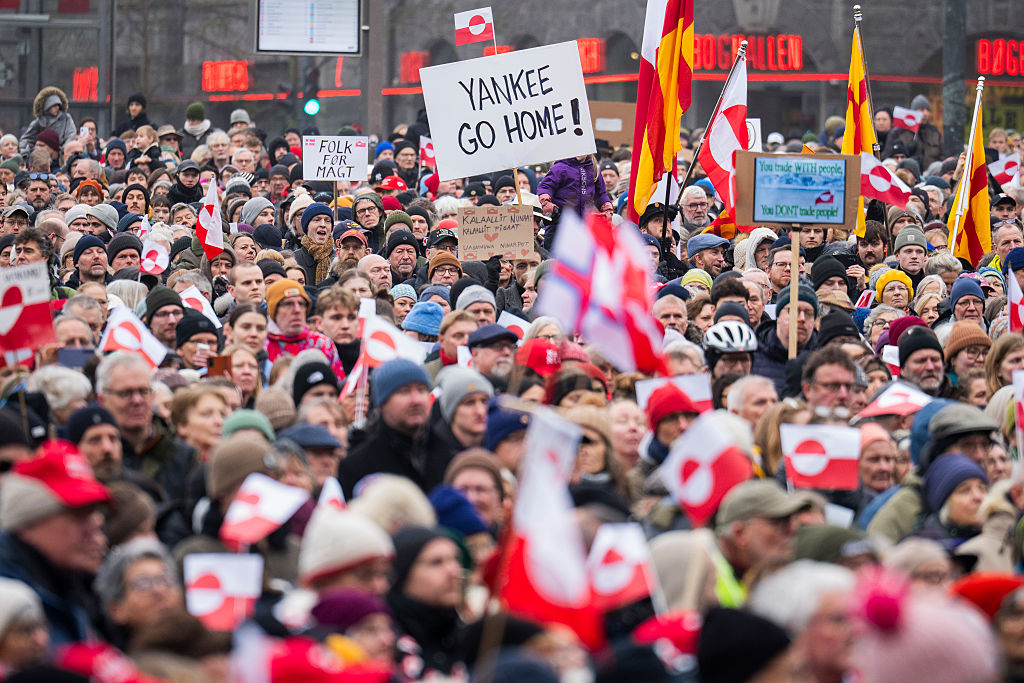
Although he initially expressed his desire to acquire Greenland for the United States during his first term, President Trump’s Jan. 9 comments that he would take the island, which has a population of 57,000, “the easy way” or “the hard way,” came as a profound shock to both Danes and Greenlanders. The surprise stemmed not only from the belligerence of a message directed toward one of the U.S.’s oldest and closest allies, but for its superfluousness. Greenland’s leaders have made it clear they would welcome U.S. business investment, while Denmark already has treaties in place that allow the U.S. to expand its military presence.
“I’m still trying to grasp what it is the president really wants,” said Stig Østergaard Nielsen, a former commander of Denmark’s Arctic Command, who is today a senior military advisor with the Copenhagen-based consultancy Rud Pedersen. “The President has been told again and again that the treaties and agreements we already have with the United States allow them to have all the services and bases they can think of.”
The Danish foreign minister, Lars Løkke Rasmussen, and his Greenlandic counterpart, Vivian Motzfeldt, sought to reinforce that point when they traveled to Washington this week to meet with Vice-President J.D. Vance and Secretary of State Marco Rubio. Although they left the meeting satisfied that both sides had agreed to a series of working meetings to negotiate options for greater security in the region while respecting what Rasmussen called the “red lines” of Denmark’s sovereignty and Greenland’s self-determination, the White House instead said that the meetings would deal with the U.S.“acquisition of Greenland.” “In that case,” Rasmussen muttered to the press, “it’s going to be a short series.”
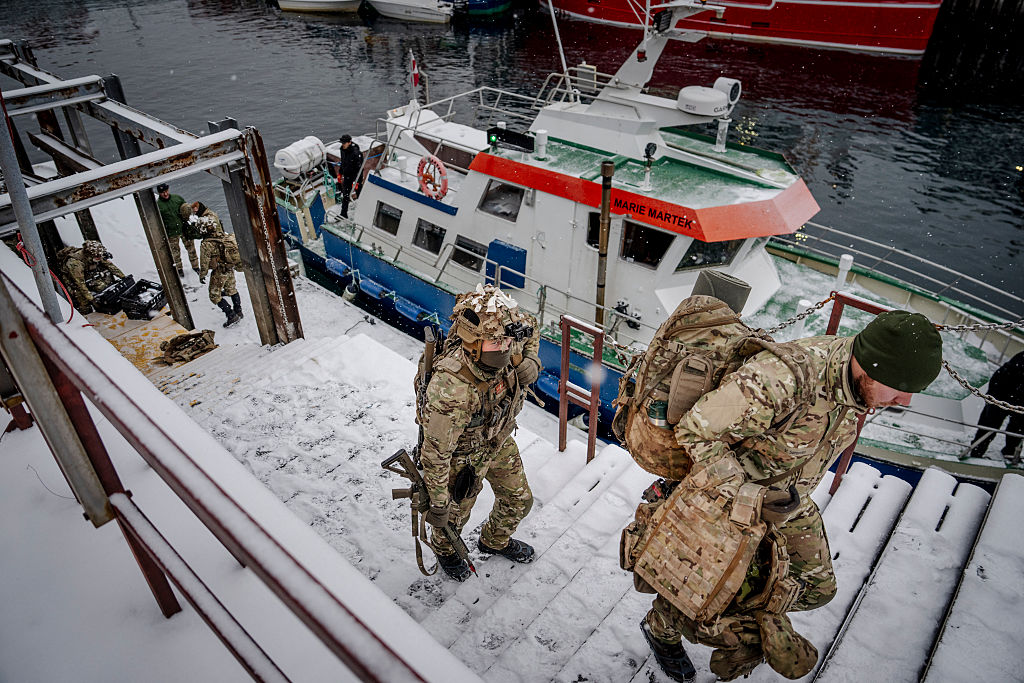
At the same time, Denmark has been busily bolstering its military presence in Greenland. A year ago, the government allocated $13.7 billion for investment in Arctic security, commissioning more drones, radar systems, and icebreaker ships, as well as an additional $37 million to increase the capacities of the Sirius Patrol, who, with their dogsleds, patrol otherwise inaccessible land. And this week, it sent more troops to Greenland, whose purpose, according to Defense Minister Troels Lund Poulsen, was “to establish a more permanent military presence with a larger Danish contribution.”
They’re not doing it alone. Although previous Danish attempts to convince NATO to focus on the Arctic with initiatives like it those it is currently running in the Baltics have failed, this time many of its European allies, including France, Sweden, the UK, Norway, and the Netherlands, sent small numbers of troops to join an exercise intended to investigate the logistical and tactical needs for a more permanent presence.
Read more: Denmark Beefs Up Military Presence in Greenland
Yet, however eager the demonstrations of Denmark’s contribution and NATO’s collective goodwill may be, a more cold-eyed rationale may lie beneath their surface. “The overt message is, let’s stand together. Let’s invest in NATO to protect this NATO territory,” says Sten Rynning, professor of war studies at the University of Southern Denmark. “And then there’s a hidden message, which is that the Allies will not accept violations of sovereignty within the alliance.” The joint participation, he argues, raises the political costs to the U.S. of intervention. “It says to the Trump administration: ‘If you’re considering a military operation, you will have to handcuff soldiers from a lot of your allies’ countries, and take them away.’ It’s not about deterrence, it’s about complicating the calculations.”
Danish Prime Minister Mette Frederiksen has warned bluntly that a U.S. military invasion would be the end of NATO. And on the diplomatic front, that threat seems to be Denmark’s strongest card, as it works to persuade Republicans, including the two who joined a bipartisan congressional delegation to Copenhagen this week, to take action against the President’s designs on the island.
Kay Bailey Hutchison, the former Republican senator from Texas who was ambassador to NATO during the first Trump administration, believes that ultimately, diplomacy will prevail. “Any malign influence is going to affect both North America and Europe,” Hutchison said. “Which is really what NATO was built to deter. So I think that with America’s lead in NATO, the way forward is to work with Denmark and our NATO allies to secure Greenland, and that negotiation is going to be the way out.”
As tensions mount, others are no longer so sure that negotiation alone is enough. Earlier in the week, Thomas Crosbie, professor of military operations at the Danish Defense Academy, warned that it was unclear how the White House would interpret those military exercises in Greenland. “There’s a bit of a paradox in that sending more troops could be seen as simply responsive to their [the Americans’] requests. Or it could be seen as escalatory, depending on how it’s framed.”
On Saturday, the world seemingly got its answer when President Trump announced on Truth Social that he would impose a 10% tariff on goods from Denmark and the seven countries supporting them on Greenland until “a deal is reached for the complete and total purchase of Greenland.”
The European parliament, which had been set to approve the tariff deal it had negotiated with the Trump administration on Wednesday, put the plan on indefinite hold.”I see no possibility for the European Parliament to give the green light to move forward with the tariff agreement, Karin Karlsboro, Swedish member of the European Parliament and trade coordinator for the Renew coalition, told Politico. “Instead, the EU must prepare to respond to President Trump’s tariff attacks, including those targeting Sweden.”
And just as European officials have been whispering—and sometimes shouting—about whether it may be necessary to fight back with the so-called ‘bazooka’ of its Anti-Coercion Instrument, so too are the continent’s security advisors quietly beginning to weigh other options. “Could it be losing access to intelligence, to bases, to overflight corridors? I have only heard rumors, so it’s hard to say,” said Rynning. “My sense is that Europeans are at the point where they’re saying it’s one thing for you to push us around and question how much we spend, or if we’re dressed improperly, or not living up to your manly standard. It’s quite another thing to violate our sovereignty. And so, there’s a sense that a red line has come into play.”
For former Sirius patroller Damsø, who also fought in Afghanistan alongside U.S. troops, the escalating situation is causing some cognitive dissonance. Although he sees the current joint exercise as “another coalition of the friendly,” he regrets that the American-led alliance that has been central in his own military career now hangs in the balance. “We all joined wars together, whether it was Iraq, or Afghanistan,” he said. “It was always together with our allies.”