Crime down 14% on MBTA from last year
Crime is down on the T by about 14% from last year, according to data from the system’s police department.
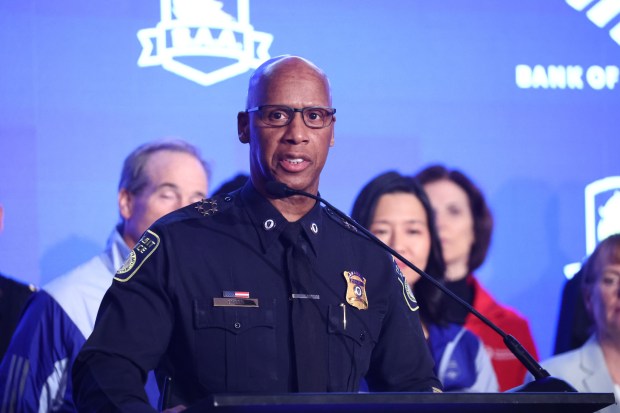
“This reduction in crime is indicative of my officers coming day in and day out, working tirelessly to ensure our system is safe for riders,” Massachusetts Bay Transit Authority Chief of Police Kenneth Green told the agency’s board at their last meeting of 2025.
The T Police work in the cities and towns that the MBTA serves, but most of the incidents they respond to are in Boston, Green said.
When presenting the data, Green looked at Part I crimes, which include homicides (which were zero for the last two years), rapes or assaults to rape, robberies, aggravated assaults, burglaries, larcenies, auto thefts, and arsons. The data represented incidents between Jan. 1 and Dec. 15 for both years.
The largest decreases by percentage and raw numbers were in the categories of robberies and larcenies, which are down 26% and 20% respectively from 2024.
Rapes and assaults to rape are up by 50%, but in raw numbers that is one more than last year, which Green said is on par with the T’s average at about three per year.
There was also a slight uptick in aggravated assaults, three more than last year, a two percent increase to 193 incidents from 190 incidents in 2024.
The aggravated category in general is pretty broad. “Some are more egregious than others,” Green said, explaining that its everything from spitting to “a terrible physical assault.”
“When you look at our trips per month, we do millions,” Green said. “I don’t want to minimize anyone being assaulted, no one should be assaulted — nobody should be— but it’s not out of control by any sense of the imagination.”
Green explained that those numbers include assaults on T workers. Although he didn’t have exact numbers, he said they see about four physical assaults on MBTA employees per month.
In the coming year, to help T police respond faster to those types of incidents and others, a police control center will be outfitted in Quincy that will allow the department to work alongside MBTA operations. Green called the control center “a game changer.”
T Police also plan on hiring more officers in 2026. Changes to civil service, the rules that govern police hiring processes, are now allowing the department to hire from a more diverse pool of applicants, Green said.
The academy class that starts next spring will have 30 prospects, he said, “the largest recruiting class in over a decade.” A new contract with officers also raised pay and will help retain more officers. Previously, T officers were making less than those at other local departments, according to Green.
Still, the department has 217 officers and would be fully staffed at 278, he said.
The decrease in crime comes as the T tries to ramp up its service to pre-pandemic levels.
The MBTA saw its best average weekday ridership numbers since COVID in October, with 943,932 rides across all modes, which include subway, bus, commuter rail, ferry, and paratransit service for people with disabilities.
Those ridership increases ran parallel to improvements in the service on the Red, Orange, and Blue Lines, with the number of scheduled weekday trips up 55%, 50%, and 16% respectively from Spring 2024.
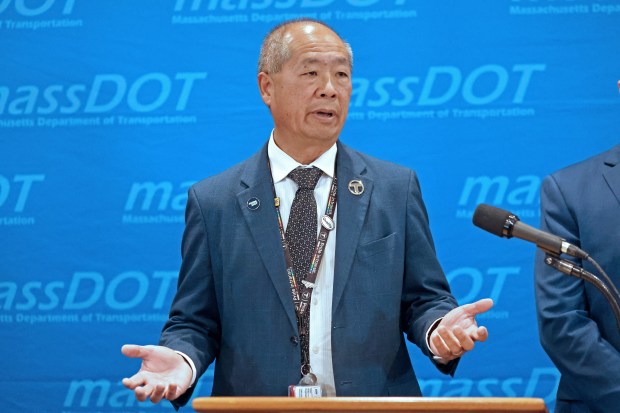
In an October letter to U.S. Department of Transportation Secretary Sean Duffy (who may have once taken the T when he was on the original Real World: Boston season), the MBTA’s General Manager Phillip Eng touted the agency’s safety and increased service. Eng is also the interim head of Mass DOT.
“As we make our system safe and more accessible, we are making transit not just an option but the preferred choice,” Eng wrote.
At the time, the U.S. DOT had been requesting safety data from transit systems around the country following the fatal stabbing of a Ukrainian refugee on a North Carolina train over the summer.
The Trump administration had also tossed around the idea of a federal takeover of South Station, which it had already done with Washington D.C.’s Union Station.
Eng cited lower crime numbers in the letter to Duffy, writing it was important that “all riders must be safe — and feel safe — while using any part of our network.”